


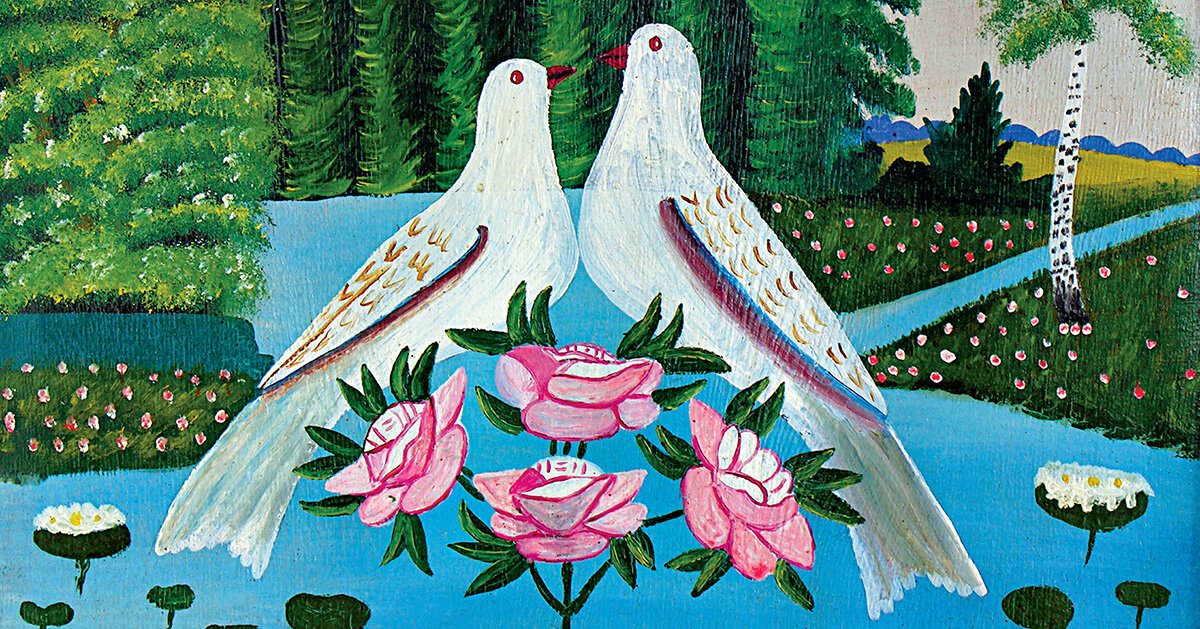

NAÏVE MY LOVE Brings Ukraine’s scattered folk art together
As the official media partner for the London launch, designboom joined GUNIA Project and Assouline on September 17th, 2026, as they marked the launch of Naïve My Love: Ukrainian Folk Art of the 20th Century at Maison Assouline on Piccadilly. Developed by GUNIA Project founders Maria Gavryliuk and Natalia Kamenska, the 304-page publication brings together Ukrainian naïve art from the twentieth century, drawing on museum collections, archives, private collections, and the knowledge of researchers and local custodians. Edited by Kyiv-based curator and publisher Lidia Lykhach, with text by Ukrainian journalist Anna Lodygina, the book traces a visual culture shaped outside academic institutions while examining its relationship to Ukrainian folk traditions and the European avant-garde.
The publication results from a research process that began years before the Assouline edition. Since founding GUNIA Project in 2017, Gavryliuk and Kamenska have worked through collections and archives, developing a broader understanding of Ukrainian cultural heritage. For Naïve My Love, that research became an attempt to assemble a dispersed history, bringing together works that had been preserved by museums, private collectors, families, and cultural institutions across the country. ‘The book grew out of years of research that began long before we imagined it as an Assouline edition. Since 2017, our work with GUNIA has taken us into museum collections, archives, private collections and conversations with researchers and people who have preserved this knowledge locally.’ Natalia Kamenska and Maria Gavryliuk share with us.
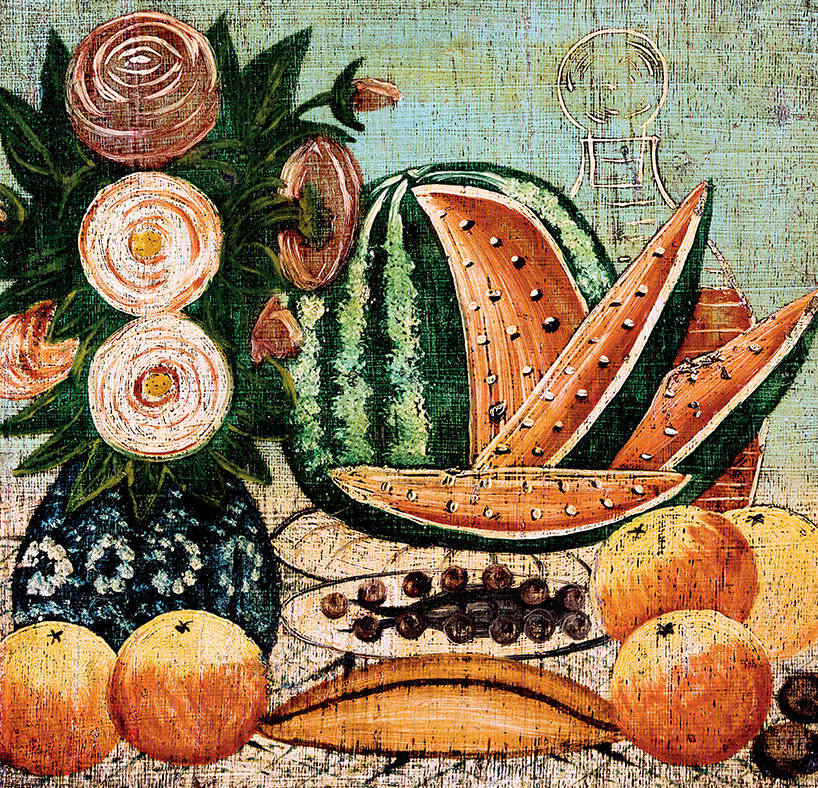
image courtesy of The Ivan Honchar Museum National Centre of Folk Culture (Kyiv)
A visual language rooted in everyday life
The book draws on works held by organizations including the Ivan Honchar Museum National Centre of Folk Culture in Kyiv, the National Museum of Decorative Arts of Ukraine, the National Museum of Folk Architecture and Life of Ukraine, Zaporizhzhia Regional Art Museum, and collections and foundations in Kyiv, Lviv, Cherkasy, Poltava, and elsewhere. ‘What became especially important was understanding that Ukrainian naïve art cannot be told through a single institution or a single region. Its story is dispersed across the country, and bringing these works together meant building a dialogue between museums, scholars, communities and individual archives. In many cases, it also meant bringing attention back to artists whose names had been overlooked or almost forgotten,’ GUNIA Project founders tell designboom.
The selection of works included in the book moves between paintings, textiles, decorative objects, woodwork, carving, embroidery, and other forms of domestic and folk production. Among the documented works are Maria Prymachenko’s Our Army, Our Guardians from 1978, Sofia Homeniuk’s Separation from 1971, Vasyl Dovhoshyia’s Hare from the 1920s, Dmytro Perepelytsia’s Still Life with Watermelon from the 1930s, and Panas Yarmolenko’s Portrait of Uliana, the Artist’s Wife from the 1920s. The book also records works whose histories extend beyond museum collections. Family on the Road, attributed to an unknown artist and dating to the 1930s, sits alongside Cossack Mamai, also by an unknown artist and dating to the eighteenth century. Hanna Hotvianska’s Bleaching Canvas demonstrates the continued presence of textile traditions in later twentieth-century work, while Polina Raiko’s paintings of her own house in Oleshky, Kherson Oblast, made between 1998 and 2004, represent a particularly fragile part of the archive: the house was later destroyed in a Russian attack.
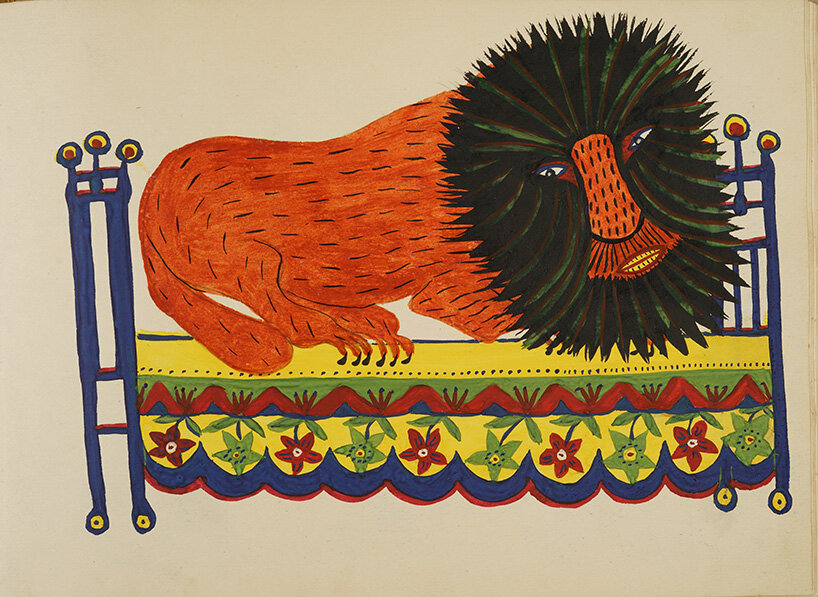
Lion in Bed. Second half of the 1940s (album sheet). Paper, gouache. 21.1 × 27.4 cm
Turning the archive into a living source
Gavryliuk and Kamenska point to a broader visual language shaped by everyday surroundings and inherited cultural knowledge. ‘For decades, Ukrainian culture was often presented internationally through Russian or Soviet frameworks, which blurred its distinct identity. Ukrainian naïve art makes that difference immediately visible: it has its own visual vocabulary, rooted in local landscapes, domestic life, spirituality, ornament, humor, and an extraordinary freedom of colour and proportion,’ they note. The artists featured in Naïve My Love worked largely outside the academic art world, drawing instead from their surroundings, traditions, and everyday lives. Their work spans painting, textiles, decorative objects, and other forms of folk art, with each artist developing their own approach to color, composition, and storytelling. ‘What fascinates us is that naïve art is not constrained by academic rules. Its artists created highly individual worlds from what surrounded them. This freedom makes the work feel surprisingly contemporary today — direct, emotional and experimental. We believe Ukrainian naïve art deserves to be considered within the international history of art, rather than remaining in an ethnographic or regional category,’ the creative directors explain.
The book places this language in relation to the European avant-garde, tracing connections between Ukrainian folk traditions and artists including Kazimir Malevich, Alexandra Exter, Sonia Delaunay, and Larionov. In doing so, Naïve My Love treats folk art as part of a wider history of modern visual culture. For GUNIA, the archive also has a direct relationship to contemporary making. The founders describe their own design practice as one that studies historical techniques and symbols before translating them into present-day forms. ‘An archive becomes meaningful when it continues to generate new ideas. We never wanted Naïve My Love to function as a catalogue of something that has disappeared; we wanted it to become a source that designers, artists and researchers can return to and reinterpret,’ they say. ‘This is very close to the way we work at GUNIA. We do not reproduce historical objects. We study their logic, techniques, symbols and visual language, and then translate them into something that belongs to the present. For us, this is how cultural continuity happens — not through repetition, but through transformation.’
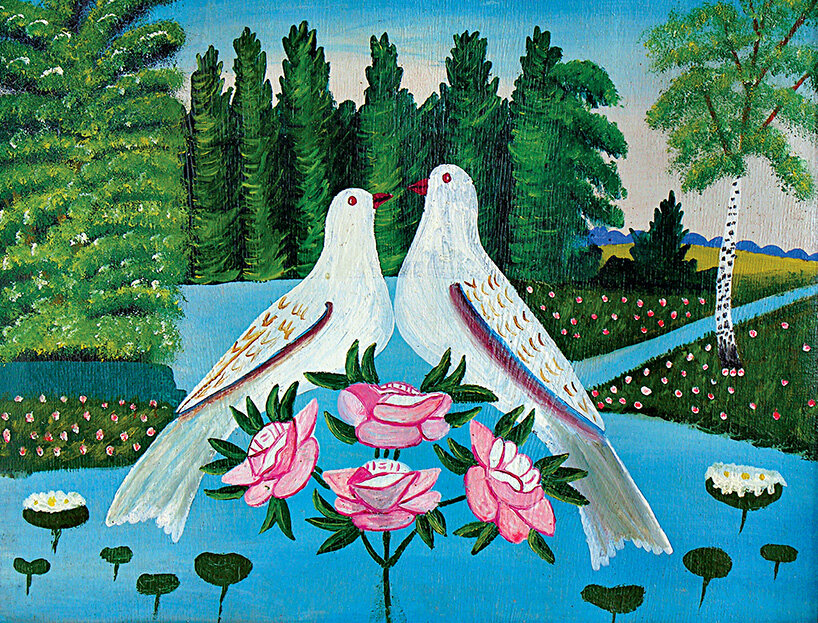
image courtesy of Mykola Babak Foundation (Cherkasy)
how the book came together
Turning that research into an international publication required a network extending beyond GUNIA. The collaboration with Assouline developed over more than three years, including approximately a year of intensive work on the book. Lidia Lykhach selected and curated the works, while Anna Lodygina wrote the accompanying texts. Museums, collections, researchers, foundations, and cultural organizations contributed to the process. ‘The idea developed naturally from the research that had already become fundamental to GUNIA. At a certain point, we understood that the material was much larger than the brand itself and deserved an independent international platform.’ Natalia Kamenska and Maria Gavryliuk tell us.
‘The journey with Assouline took more than three years, with approximately a year of intensive work on the book itself. GOGOLA became an important bridge in this process, helping initiate and develop the dialogue with Assouline and turn an ambitious cultural idea into an international publishing project. But the book itself is the result of a much wider collective effort — researchers, museums, experts, authors and everyone who helped us build a rigorous picture of Ukrainian naïve art.’ they add.
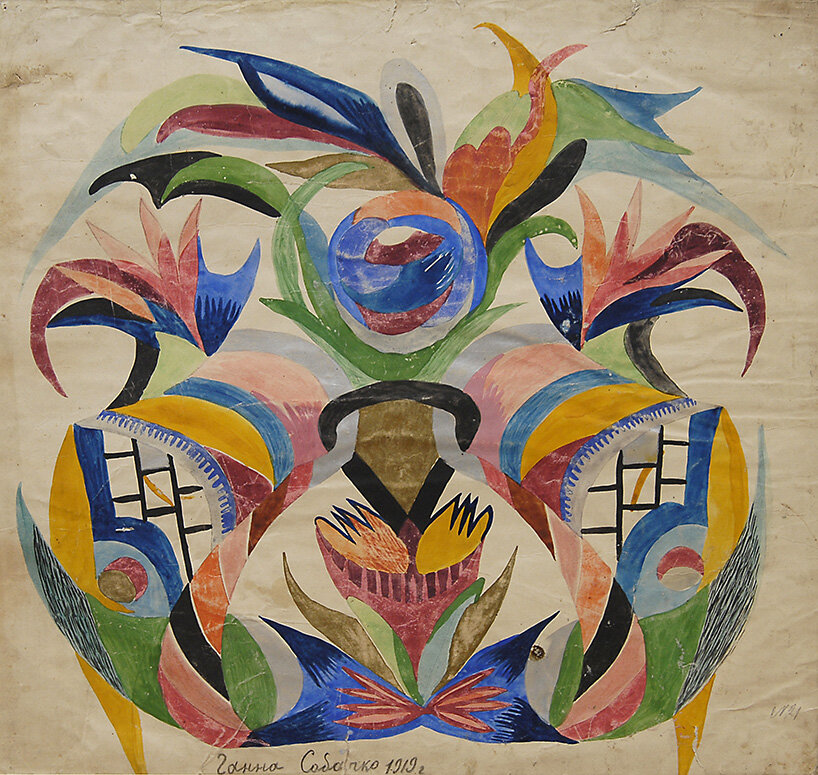
Color Movement. 1919.
Why documenting Ukrainian culture matters
For the GUNIA founders, this project is significant beyond the publication itself. Documentation becomes particularly urgent when the institutions and physical places that hold cultural memory are vulnerable. ‘Because culture is not secondary to what is happening in Ukraine — it is one of the things being fought for. When museums, archives, monuments and cultural memory are threatened or destroyed, research and documentation become acts of preservation, but also acts of cultural sovereignty,’ they emphasize. Gavryliuk and Kamenska see investment in Ukrainian culture as a way of building longer-term structures for research, education, and creative exchange. ‘At the same time, we do not want Ukrainian culture to be visible internationally only because Ukraine is at war. Investment today can create institutions, research and knowledge that will remain long after the current news cycle. Ukraine needs the opportunity not only to preserve its heritage, but to study it, reinterpret it and participate in the global cultural conversation on equal terms,’ they continue.
In this sense, Naïve My Love operates as a record and as a point of departure. Its 304 pages gather works that might otherwise remain scattered across institutions and private collections, while the collaboration with Assouline gives that material a new international context. The book brings these histories, makers, techniques, and visual languages into wider circulation, giving a new generation access to a body of Ukrainian art that has often remained dispersed. ‘We hope it gives Ukrainian creatives a stronger sense of the extraordinary visual territory they inherit — not as something they are obliged to preserve unchanged, but as material they have the freedom to question, transform and take forward,’ Natalia Kamenska and Maria Gavryliuk envision.
And, internationally, the founders hope the book can shift how that history is framed: ‘Internationally, we hope the book helps change the frame through which Ukrainian culture is seen. Ukrainian naïve art should not need to be explained through Russian or Soviet culture, nor treated simply as regional folklore. It has its own history, its own names and its own visual language — and it deserves its rightful place within the global cultural canon.’
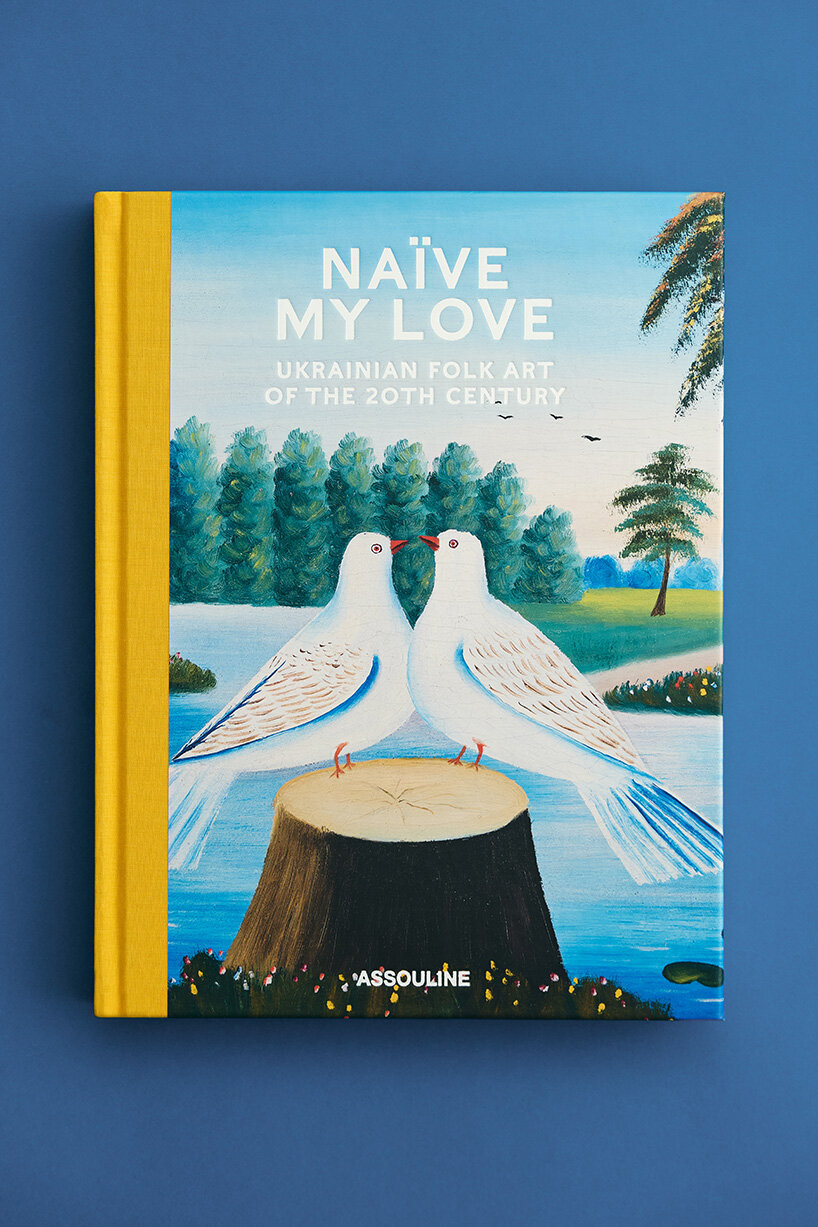
Naïve My Love: Ukrainian Folk Art of the 20th Century at Maison Assouline | image courtesy of GUNIA Project and Assouline
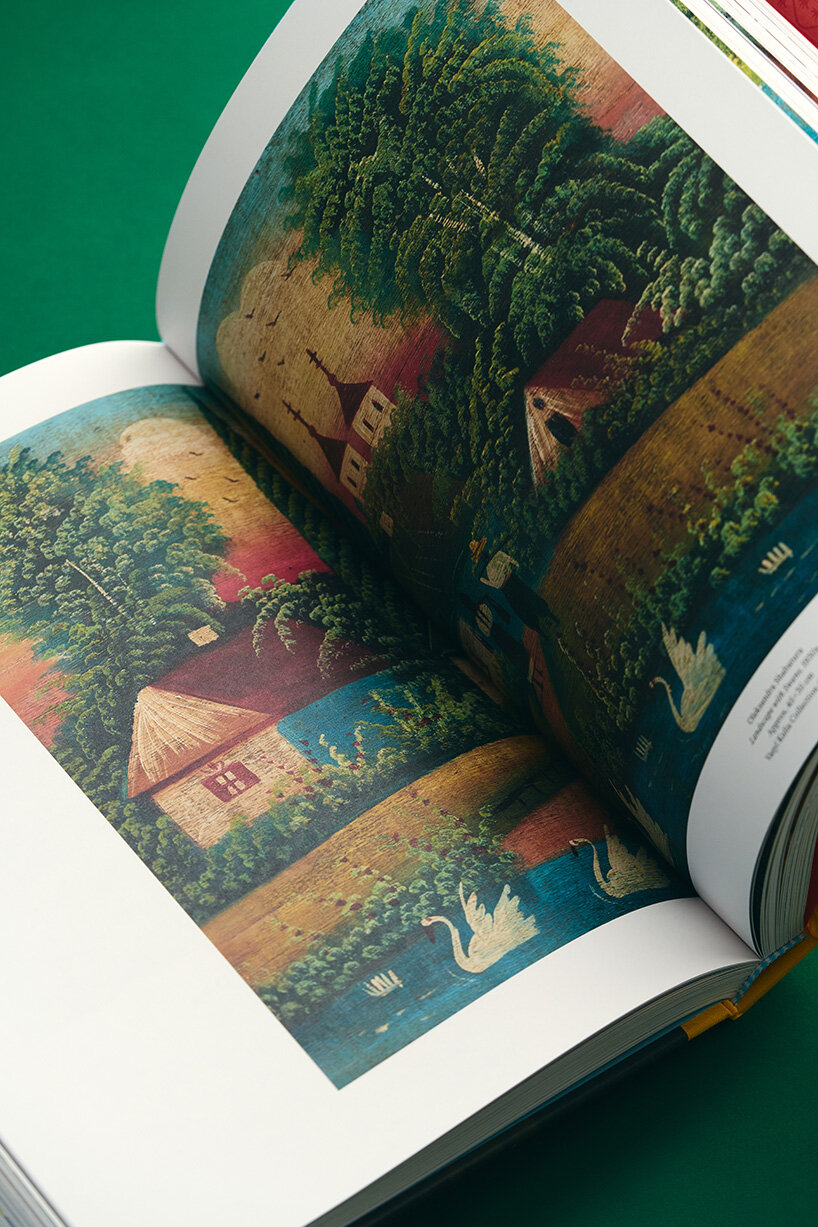
the 304-page publication brings together Ukrainian naïve art from the twentieth century | image courtesy of GUNIA Project and Assouline
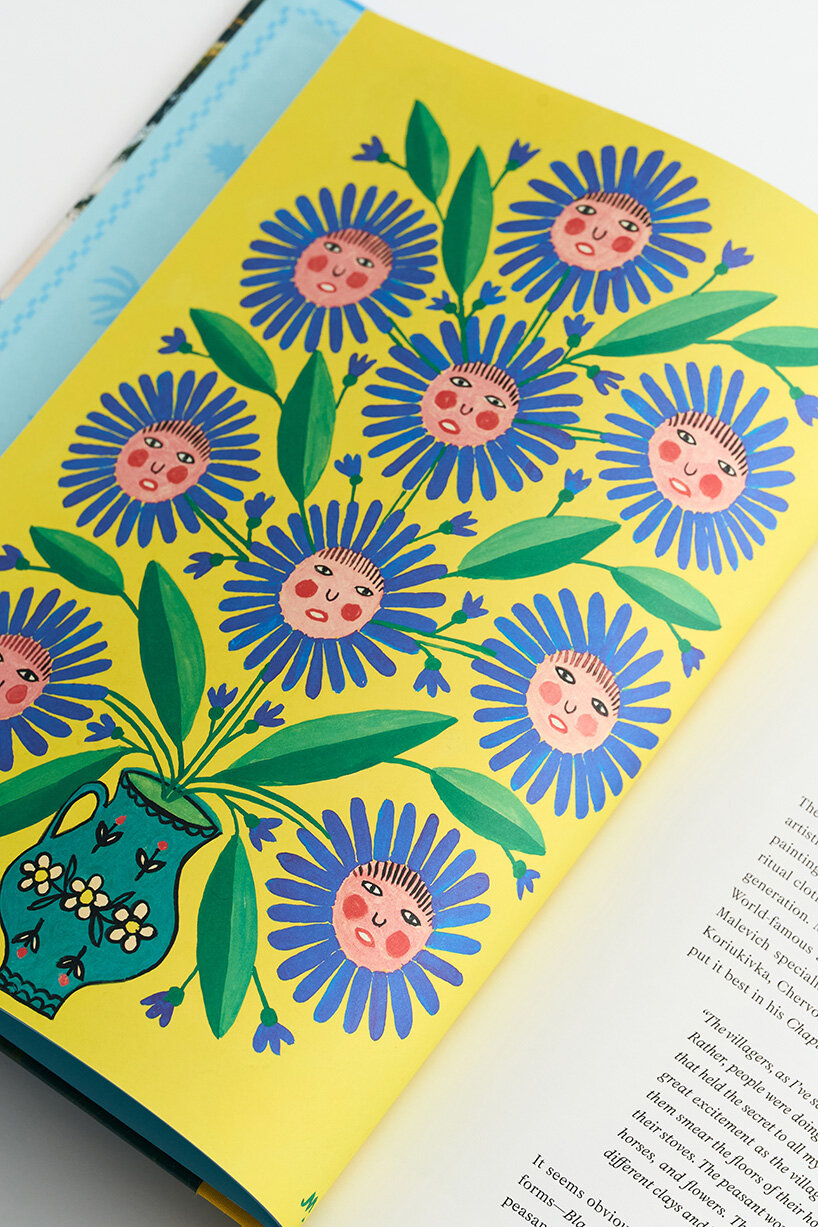
the publication results from a research process that began years before the Assouline edition | image courtesy of GUNIA Project and Assouline
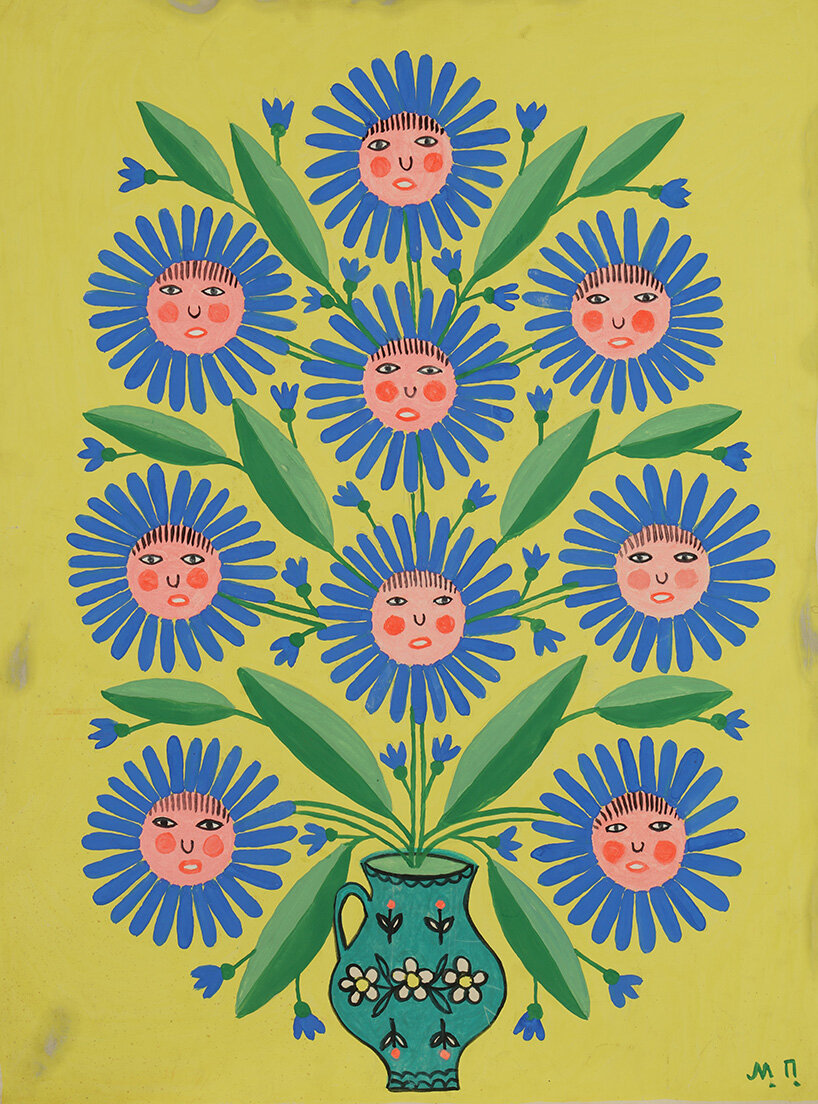
Maria Prymachenko, Dear Women, / Extend My Greetings to All of You Across the Land on March 8…. 1988, 61×84 cm, Taras Shevchenko National Museum (Kyiv) © Prymachenko Family Foundation