



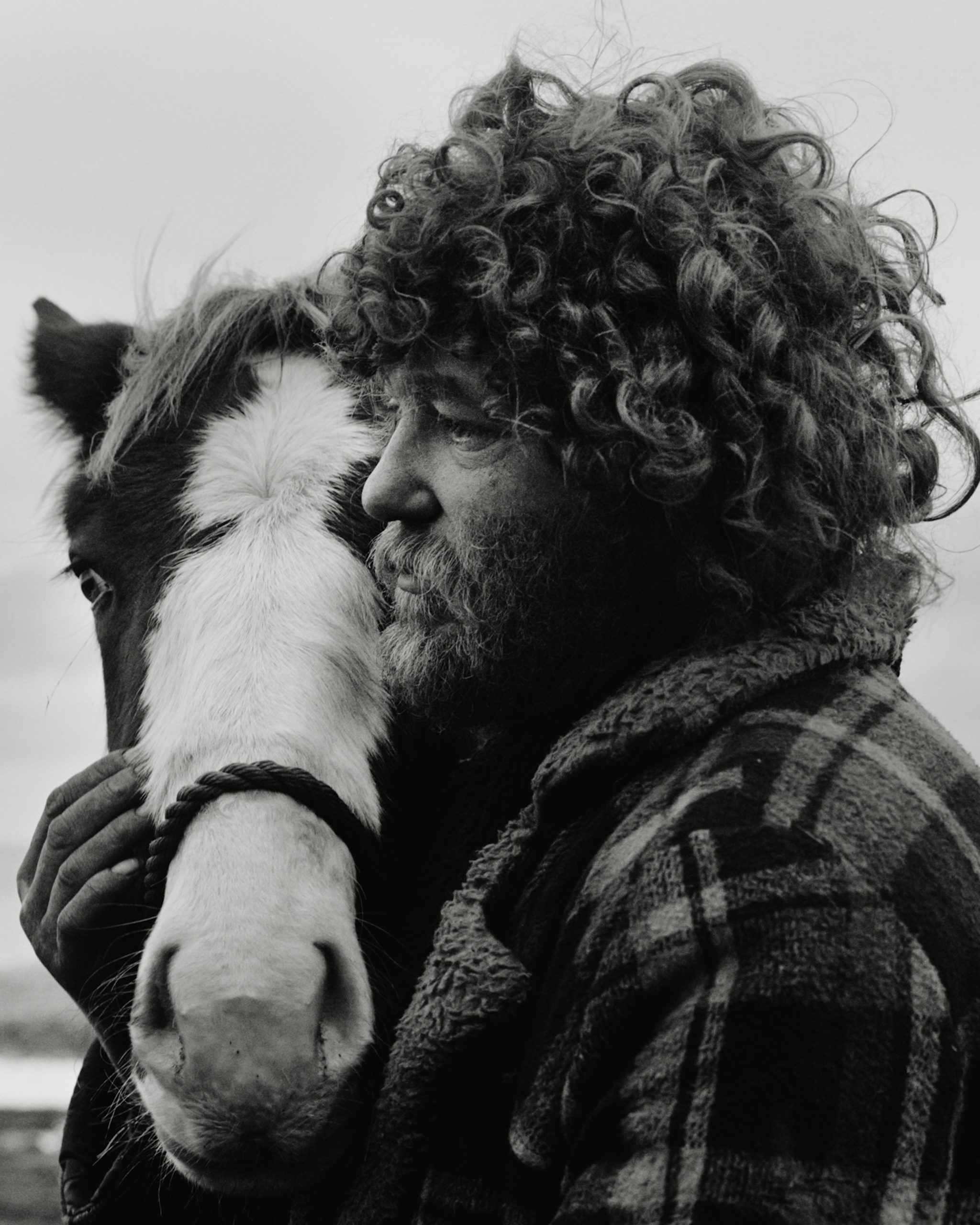

Killip’s slowly measured, formally controlled photographs possess what Holborn describes in North as a “pictorial grace”, sometimes so pronounced that it almost contradicts the stark reality being depicted. Yet what strikes Holborn equally is their tenderness. “It’s a very brutal world, and within this brutal world there are remarkable scenes of tenderness,” he points out. Children are held and embraced; dogs and puppies are handled affectionately; horses on the sea-coal beach are more than beasts of burden. “There is great picture-making, but within those pictures there is enormous humanity.”
That humanity complicates the familiar shorthand of Killip as a photographer of Thatcher’s Britain. The central photographs in North begin in 1975 and were made under Labour and Conservative governments alike; to reduce them to opposition to Conservative power, Holborn writes, is “far too simplistic”. What Killip was witnessing was a larger, more fundamental historical transformation.
“He was photographing a world that was passing as he photographed it,” Holborn says. “It was a world in transition, and the old world was decaying and collapsing all around.” The difference is that Killip and the original audience for In Flagrante were still living inside that transition. “At the time Killip was making it, he sensed it, but it was still there,” Holborn says. “Now it’s gone.”
Time has therefore altered the images as much as it has the places they describe. Holborn realised while working on North that the distance separating a young reader today from Killip’s North East is roughly equivalent to that separating the 1980s from the Second World War. Photographs that once described an unfolding present have become historical evidence, and some have moved beyond photographic history into collective memory; “When someone wants to find imagery of the north of England in the late 20th century, they will turn to Killip.”
North is an attempt to defamiliarise that familiar body of work – to return to the archive, remove many of the pictures through which Killip has come to be known, and construct another route through the landscape he photographed. Holborn describes the relationship between photographer and editor as a process of “osmosis”, in which each gradually absorbs the sensibility of the other. With Killip no longer present to approve or reject his choices, that relationship now depends on something more elusive.
“I’ve made a living with my eyes,” Holborn says. “How to look is how I’ve made my living for the last 40 or 50 years. I have to trust that.”




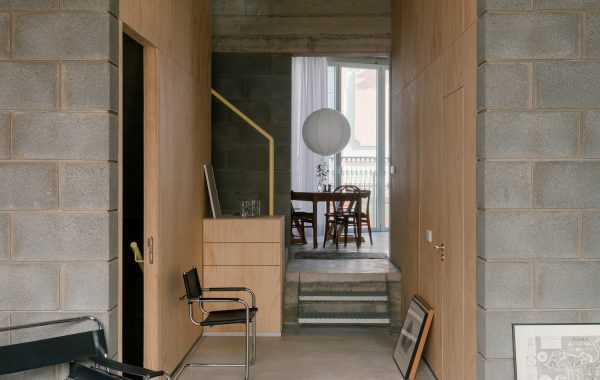


 Estudio EA