



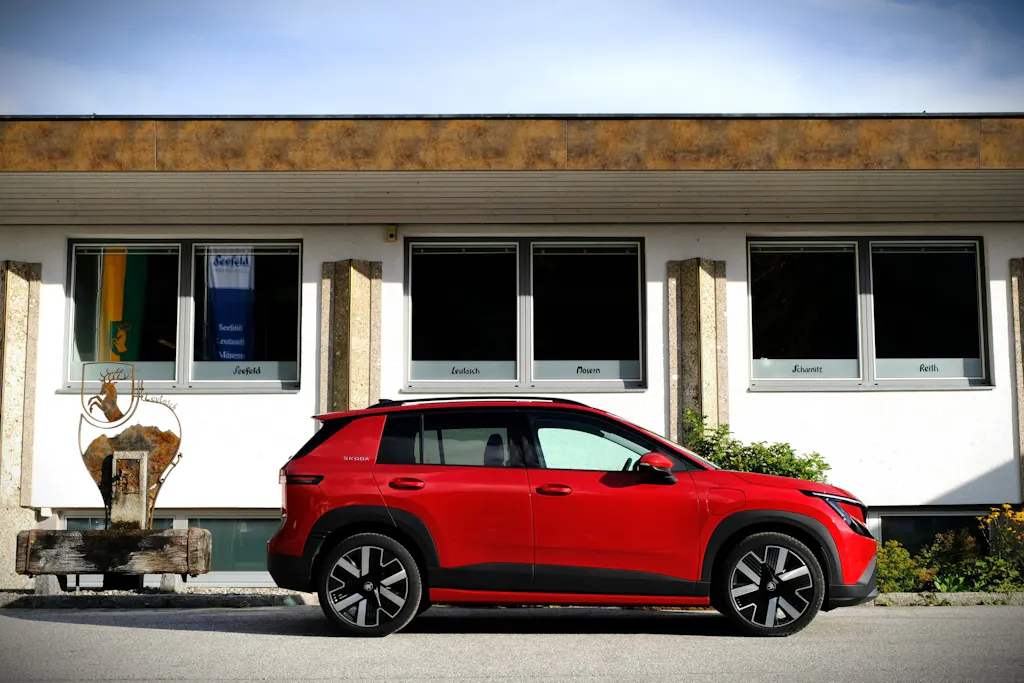

I stood there, staring at the Epiq I’d just been driving around Tyrolean roads, unsure exactly where to place it. I had an article to write about it, but everything was just… fine.
You see, criticism is easy. I wanted to be able to say “it’s a bit basic for your average designer.” I wanted to say “the interior is dull and uninteresting,” or “the exterior styling is tedious.” Except I couldn’t say those things, because they weren’t true. The Epiq is not ugly inside, it’s not basic, and the outside is not tedious. In fact it’s genuinely pleasant with some thoughtful touches.
Comfortable in any context
Of course, it’s not going to be a design classic on display in museums, but that’s the point of a Škoda, isn’t it? Not to stand out too much and draw unwanted attention. I wouldn’t be entirely surprised if the design brief included something along the lines of “create a car on the MEB+ platform that is as comfortable in a train station car park as it is pulling up to an expensive hotel.”
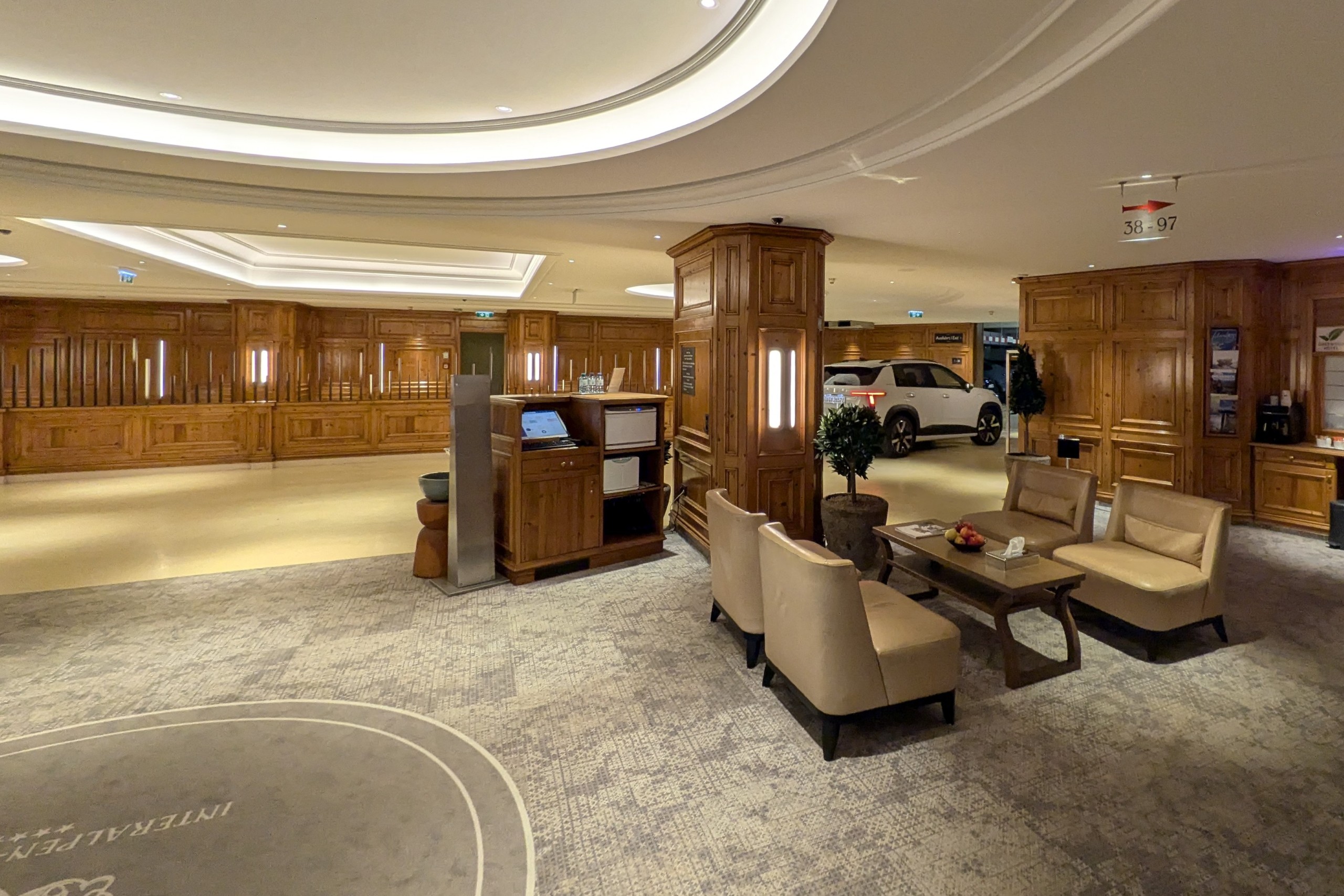
I didn’t get to test the train station car park, but I did pull into the subterranean parking lobby of the Interalpen-Hotel Tyrol – a grand venue refreshed by Monoplan in Alpine Tyrol style where you hand your car over directly for the valets. Driving straight into a drive-in hall that feels better than most hotel lobbies could easily make a modest car and it’s driver look out of place. Yet I didn’t feel ridiculous at all.
In fact, I’d somehow failed to realise that I was driving the smallest of Škoda’s new EVs simply because it was so thoroughly pleasant for the two-hour drive from the airport. It was also fun and sporty enough after I turned onto an empty mountain pass and nailed the throttle as I carved out some hairpins.
The car’s not supercar quick like some EVs, but in my opinion the best performance range for a road car is about where the Epiq 55 sits – with 0-60 in 7.1 seconds. And I say that as someone who’s held a race license – there’s a performance point when on a public road a car turns from fun into liability even if you’re experienced at fast driving. Suffice to say that even up steep mountain roads the Škoda was adequately fast whilst handling the hairpins and curves well.
In the past, Rolls Royce would declare power and performance as ‘adequate’. And if 1970s Rolls Royce chiefs had ridden in a modern day electric Škoda they’d have been so stunned by the refinement and build quality they’d have dropped their cigars.
The handling and ride is perfectly well tuned for this type of car also. If you’re clumsy with the steering, the relatively soft suspension will make it feel wobbly, but smooth drivers will enjoy the experience and get into a steady flow, even on challenging roads.
Tactile intelligence: inside the cabin
I think the interior is where the real design cleverness lies. Externally, the Epiq conforms to the current industry tendency towards safe shapes and muted exterior shades, but thankfully toes a different line inside. The cabin features two particularly interesting interior choices: the Loft Mint, with its vibrant green accents, and the soon-to-be-available Suite variant with its sophisticated brown and charcoal combination.
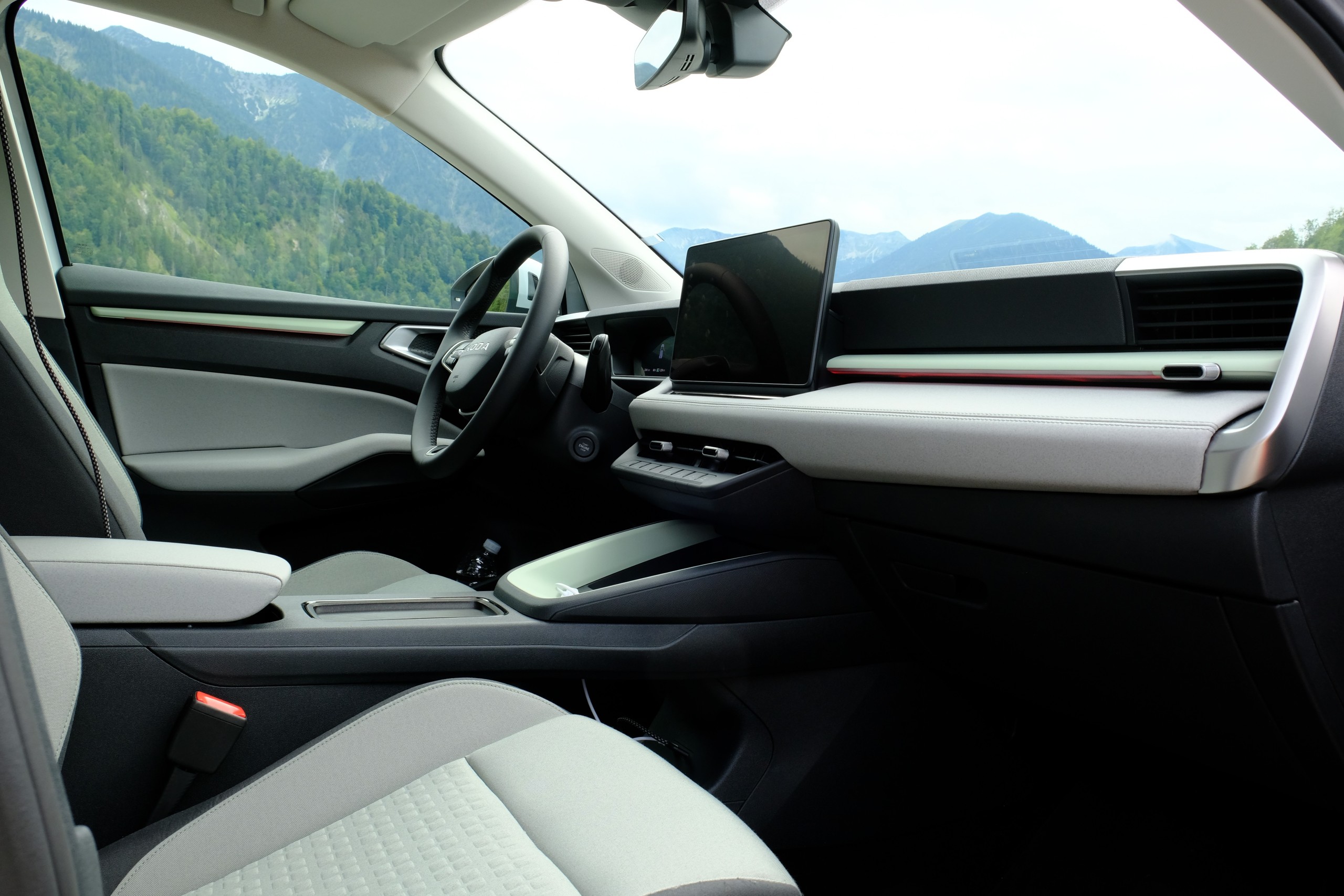
All but the base Essence trim use a soft-touch material across the dash, doors, and console that’s stitched like leather, but looks nothing like it. It’s its own thing – not trying too hard to be a cheap imitation. It’s called Techtona in Škoda-speak, and it’s rather well chosen.
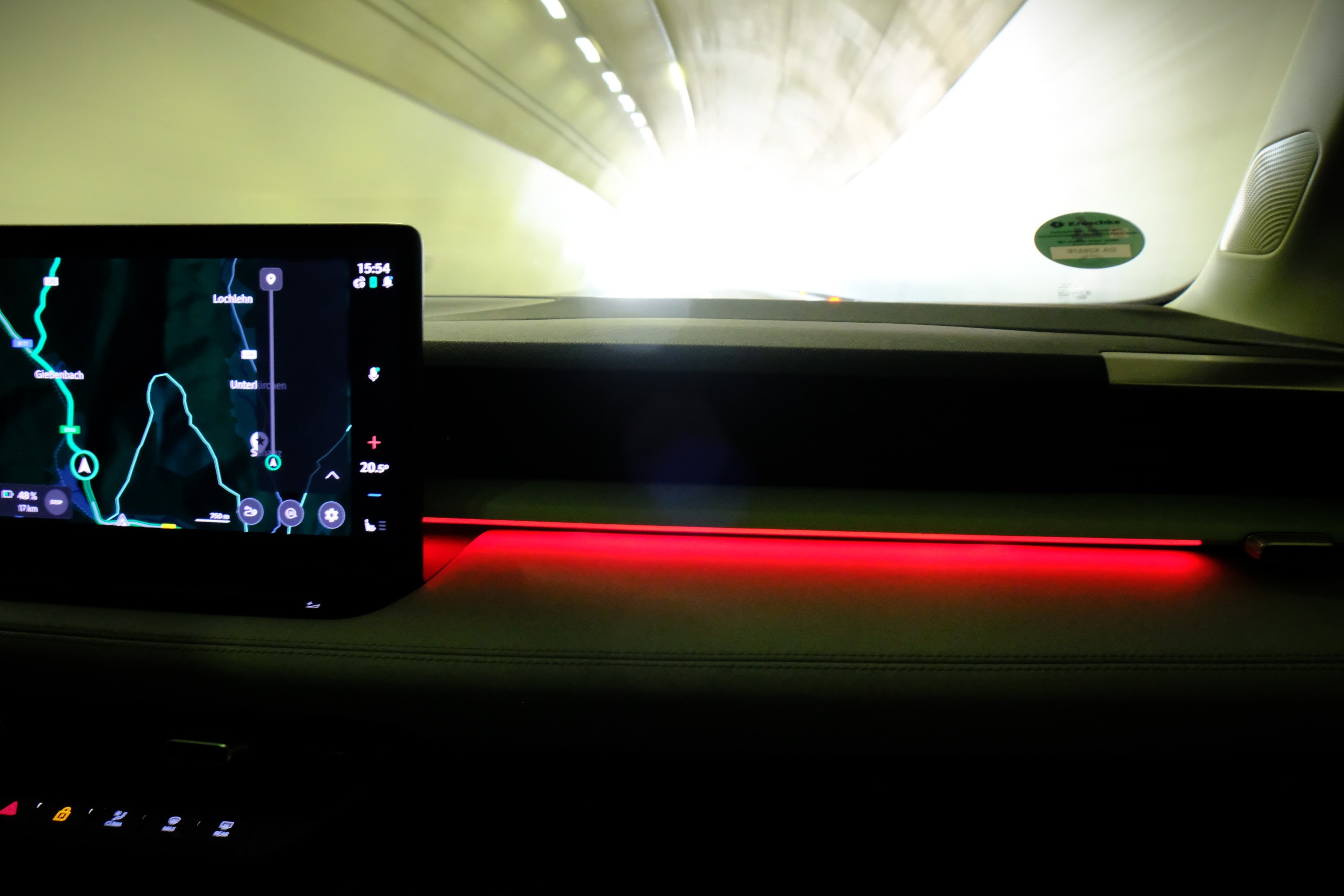
Even the air vent knob surprised me. It’s a neat little detail where the control appears to float under the vents on the other side of the trim panel – a touch most won’t notice, but one I found well-executed, un-gimmicky, and plain pleasant. You also get well-implemented ambient lighting across the dashboard at night or when passing through a tunnel.
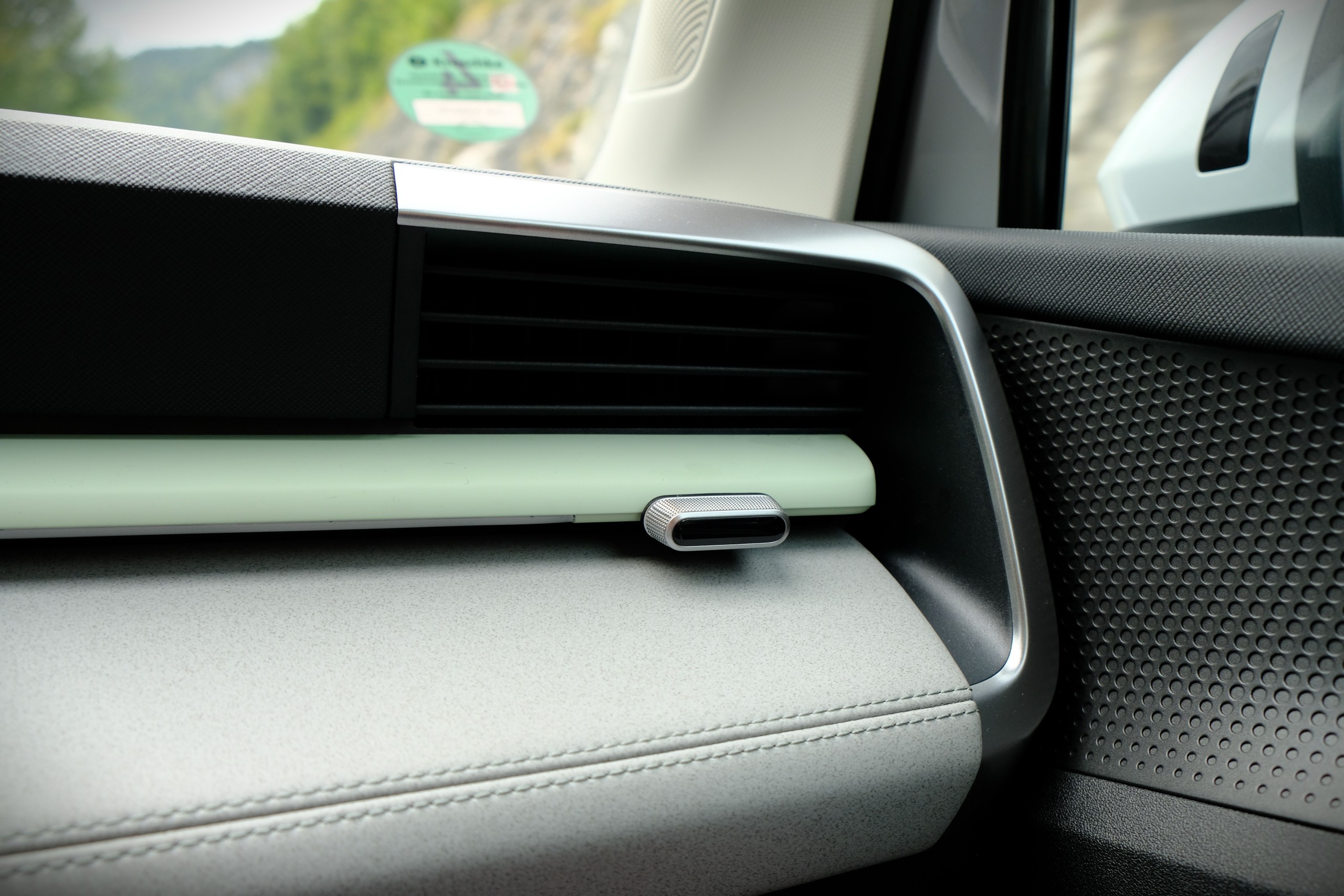
When you compare this interior with competitors like the Volvo EX30, a car of roughly similar dimensions, you find that while the Volvo is by far the faster vehicle, its cabin mood is distinctly more austere. Do we need to feel more austere? If you’re a lover of Ingmar Bergman films, staring out to sea on a rainy day and contemplating the inevitability of death, perhaps that’s your vibe. It’s not mine. I much prefer the Škoda. The reality is that as an owner, you’ll spend far more time facing the interior of the car than the exterior. If you jumped out of the basic £33k Volvo EX30 Core into the top-spec Epiq Edition 55 at £30.5k, I think you’d feel like you’d just had an upgrade which is quite impressive given the price difference.
Form, function, and the Tech-Deck face
Of course, aesthetics and tactile feel aren’t everything; practicality matters just as much. Here, the designers have carved out an impressive amount of space for a vehicle of this footprint. The boot offers 475 litres seats-up, expanding to 1,345 litres with the rear row folded.
On the exterior, shape is inevitably dictated by packaging and aerodynamics. Car makers can sculpt more dramatic forms, but usually at the expense of everyday utility. Škoda is fundamentally about sensible practicality, so their silhouettes were never going to set the world on fire. Still, being able to style the sheet metal independently allows each VW Group brand to maintain a distinct identity while sharing underlying architecture and durability.
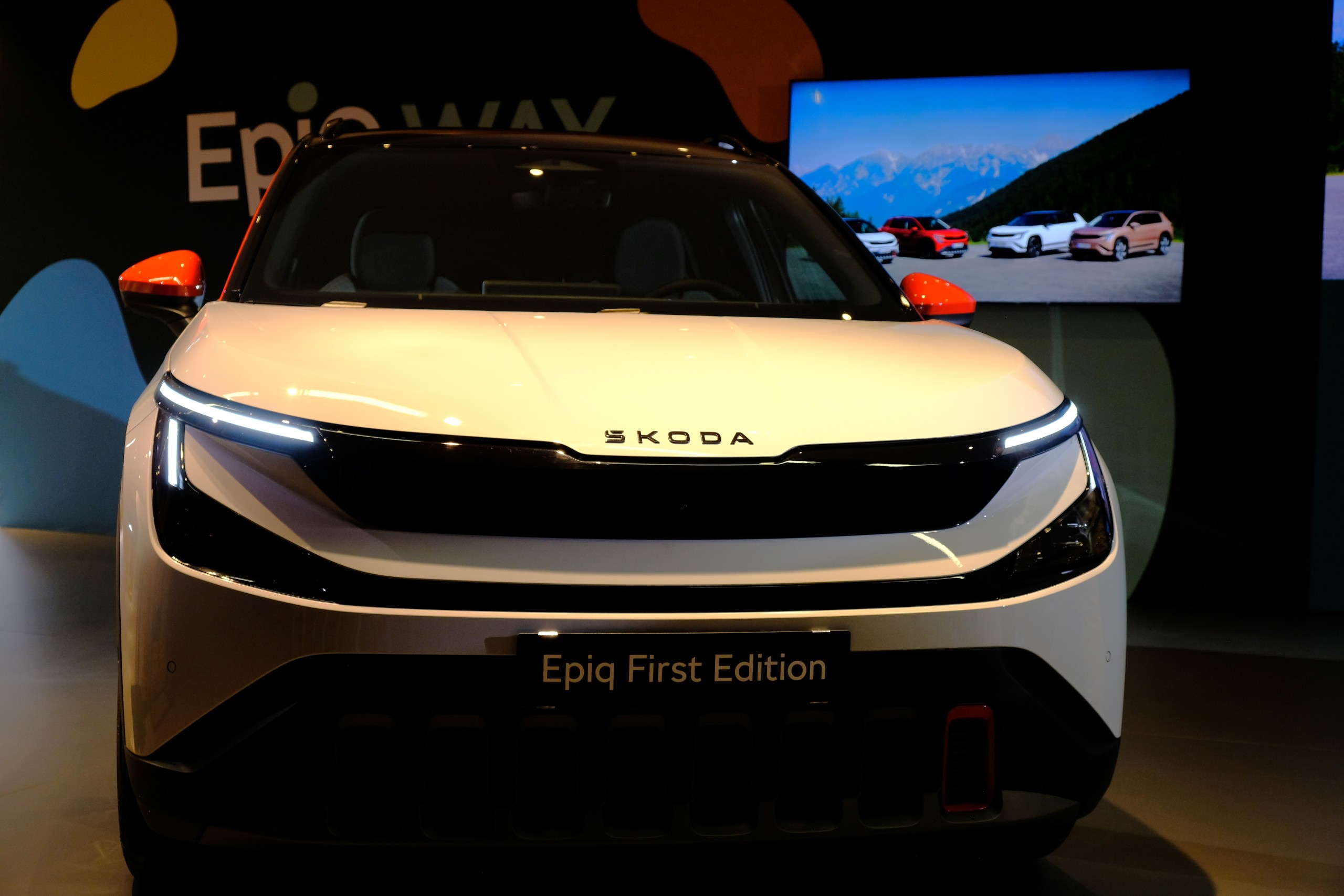
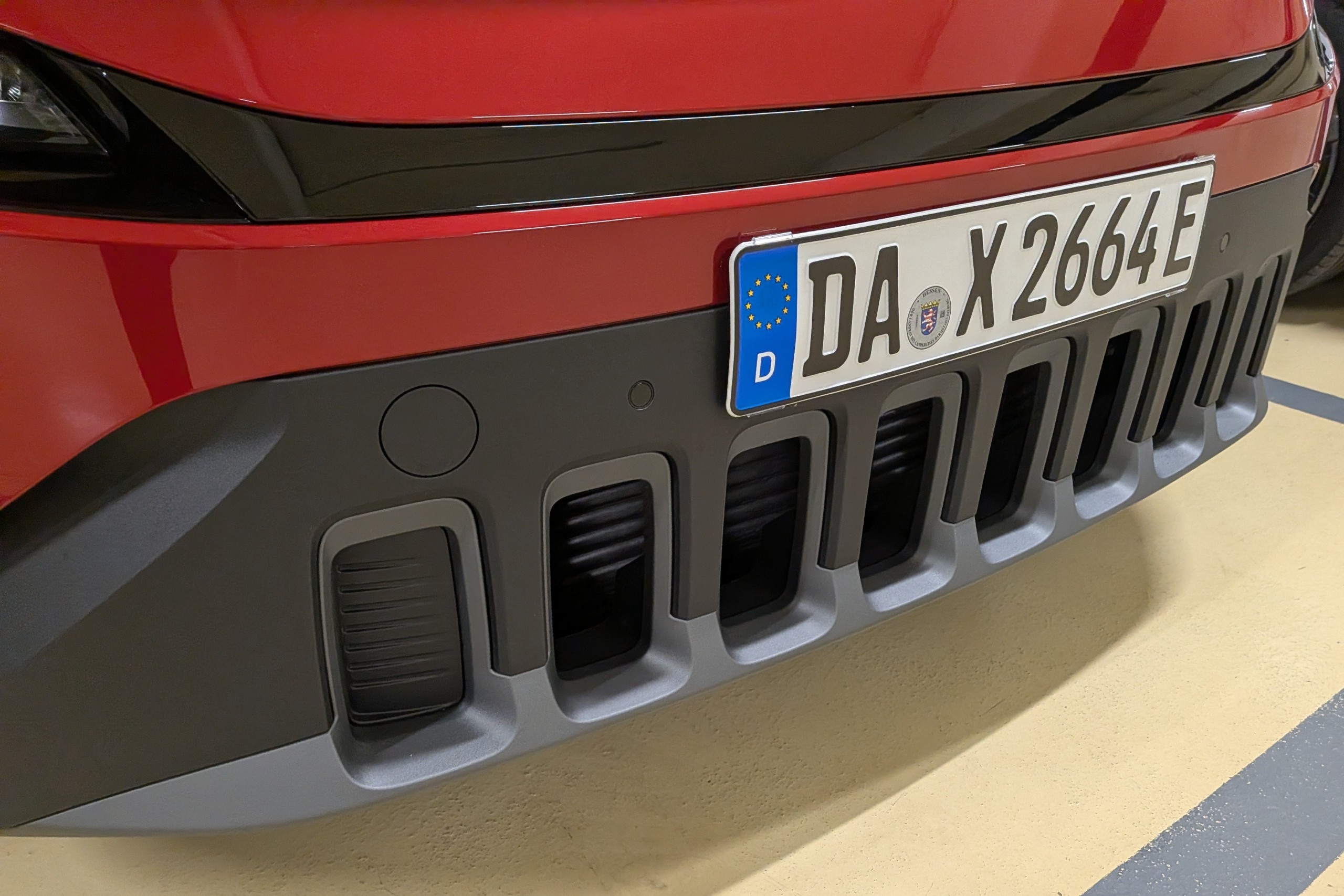
One interesting variation among modern EVs is how different manufacturers package airflow alongside the sensor array required for driver-assistance systems. Škoda uses what they call the Tech-Deck Face, creating space for distinctive front-end styling without leaving a featureless plastic blankness. The front and rear lights follow a T-shaped motif designed for a clear visual signature, which is a pleasant idea, even if the segmented breakup takes some getting used to. Active shutters beneath the front number plate control airflow to the climate systems and drivetrain, closing at speed to reduce drag and boost range – a crucial priority for electric propulsion.
In brief, the new ‘Modern Solid’ Škodas look perfectly smart. Whereas a Volvo EX30 is like wearing a well-fitted Hugo Boss suit, the Škoda Epiq feels more like an outfit from Reiss: good quality, sensible, and suited to a wide range of environments. Formal versus smart casual; corporate versus independent. For an everyman car built to fit in anywhere, it’s the right approach. Nobody laughs at a Skoda owner anymore, and nobody assumes you’re pinching pennies either.
The human-machine interface
Moving back inside, we come to the HMI – Human-Machine Interface – the term designers use for what everyone else calls infotainment. It encompasses how humans interact with the car’s systems via physical buttons, instrument displays, voice control, gestures, and the central screen. Well implemented, it makes a driver’s life effortless; poorly implemented, it causes frustration or even dangerous distraction.
Built on the Android Automotive OS, Škoda shares an app store ecosystem with other VAG brands. While curating a car app store requires strict safety vetting, it offers digital designers an exciting new space outside traditional automotive OEMs. Speaking with members of both the exterior and HMI design teams, they highlighted their visual freedom: while core software architecture is shared across the group, visual elements like typography, color palettes, and UX flows remain uniquely Škoda. The result is a clean, consistent system with excellent driver-centric information hierarchy.
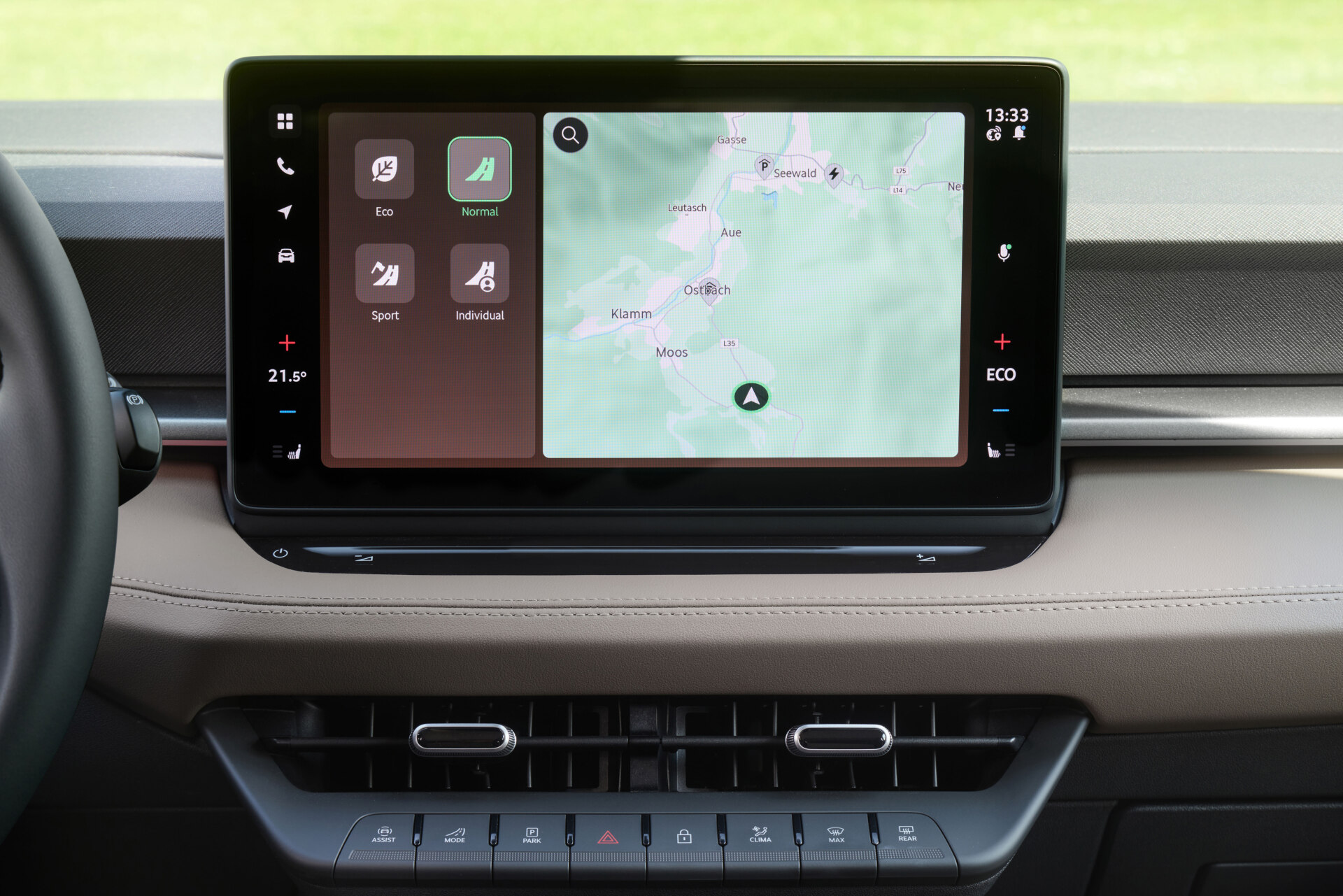
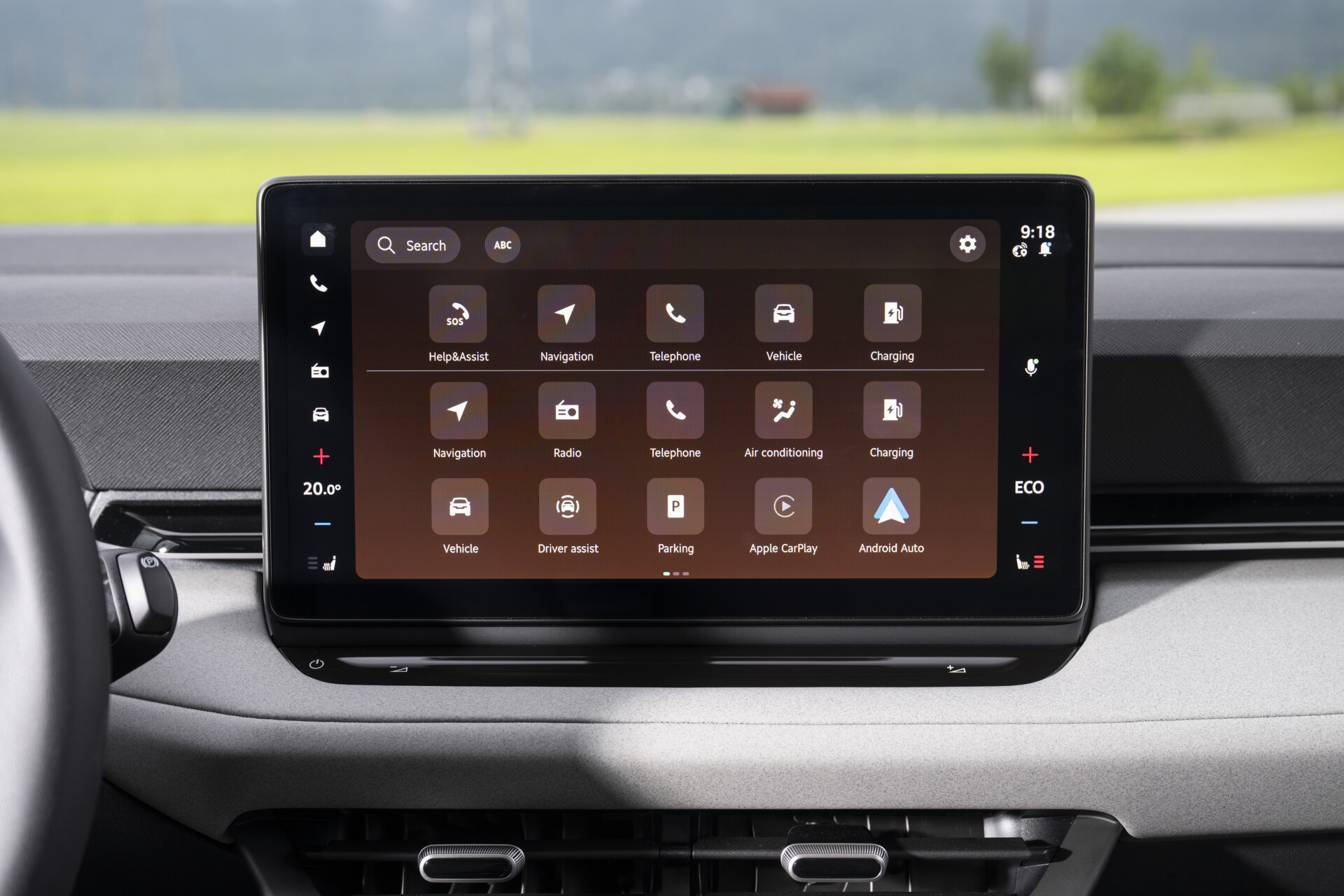
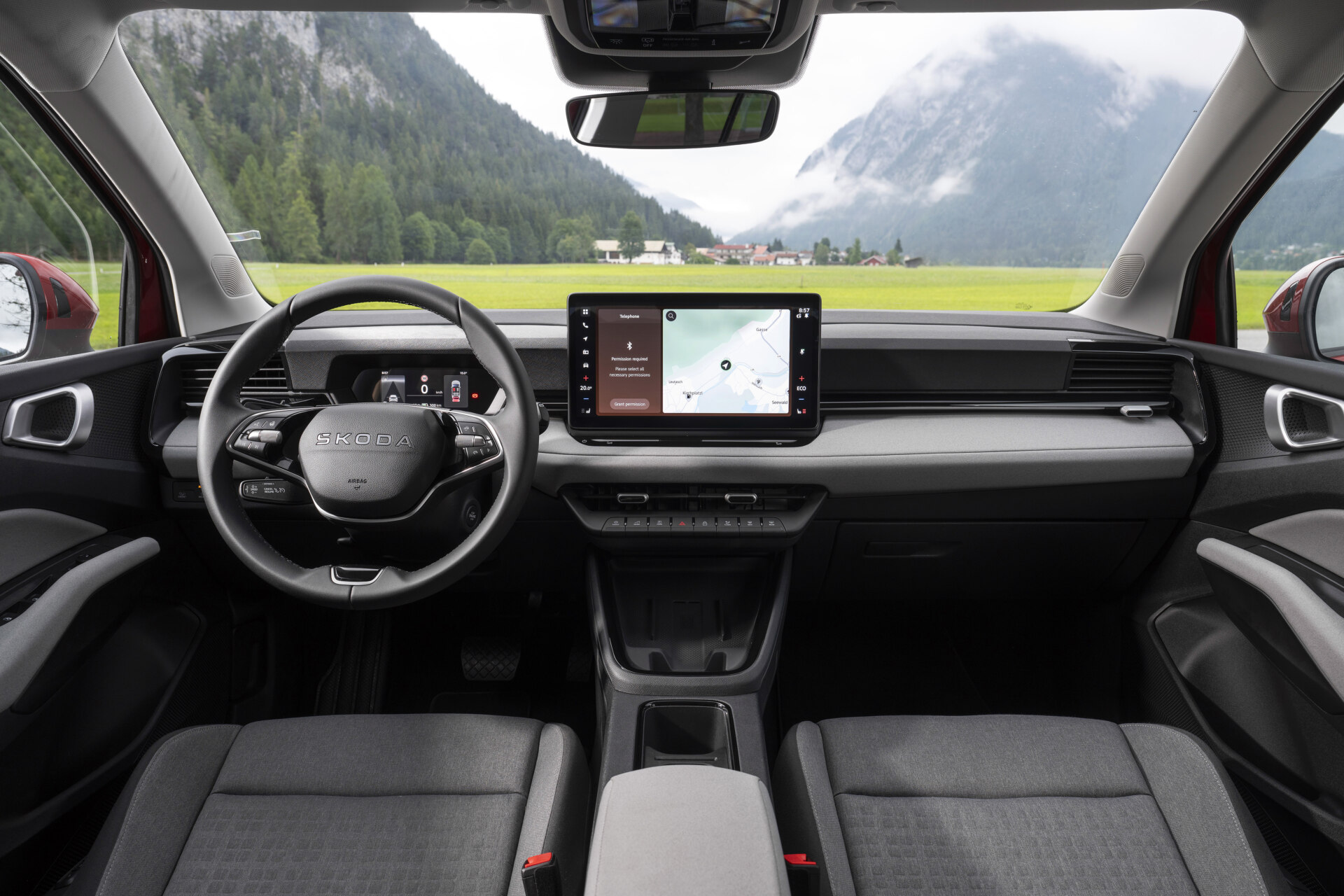
Naturally, there’s also an AI voice assistant named Laura (nodding to a historic Škoda model once sold in India). Like most in-car AI assistants, it can be somewhat picky about phrasing. Ask whether the rear seats split-fold, and you might get a blank refusal of understanding. Yet for routine tasks like tweaking the cabin temperature or setting navigation, it works reliably. I suspect the friction stems less from systemic failure and more from our workspace AI tools inflating our expectations of what a car can process over patchy cellular connections.
Open-source design and 3D printing
Interestingly, Škoda’s design team isn’t keeping all hardware solutions strictly in-house. The brand has created a official suite of 3D-printable designs hosted directly on Printables, ranging from practical cabin accessories like phone brackets and coin boxes to scale models. For independent industrial designers, this presents a subtle but exciting opening. By publishing CAD files with baseline geometry and mounting dimensions already worked out by OEM engineers, Škoda is handing external creators a ready-made blueprint.
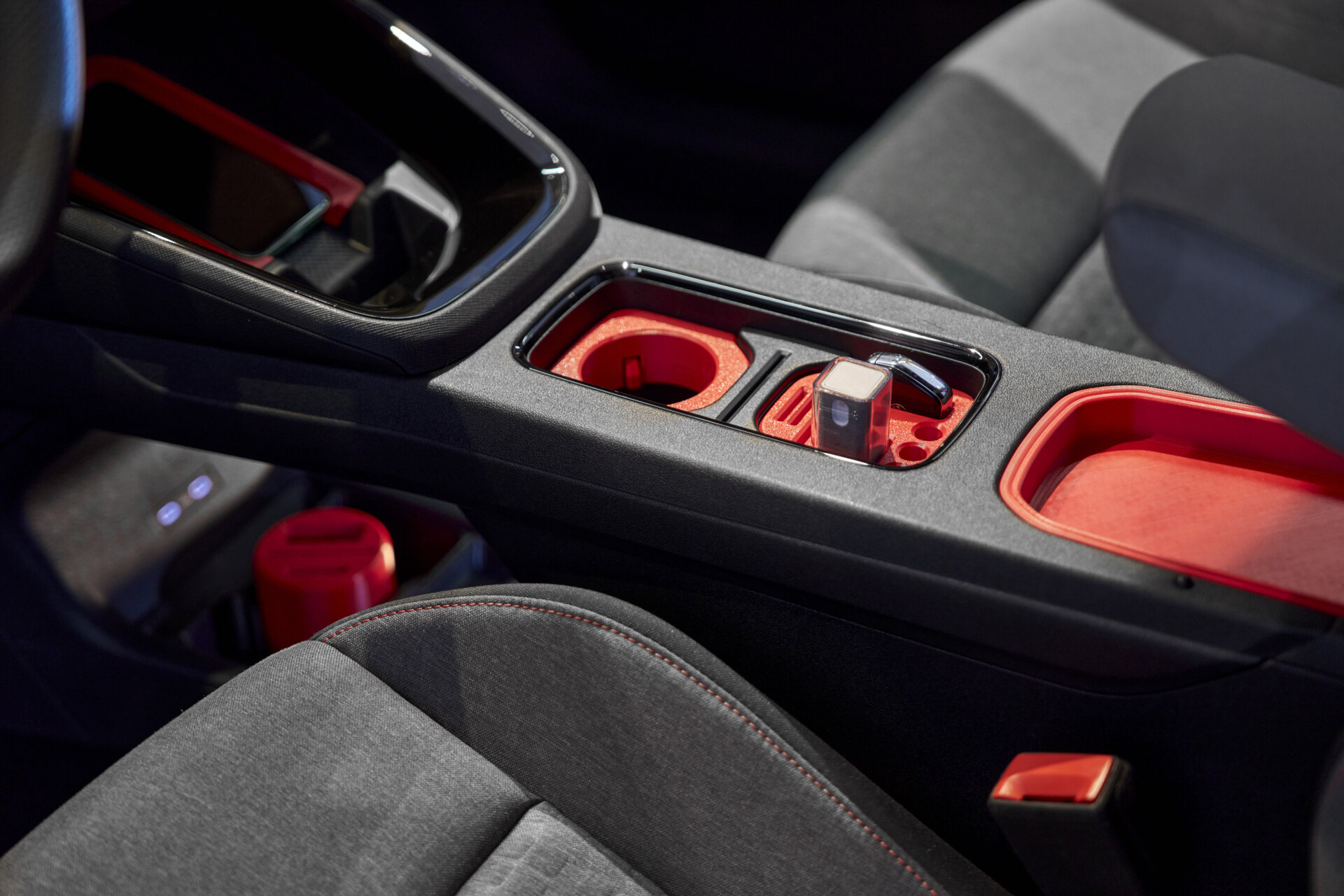
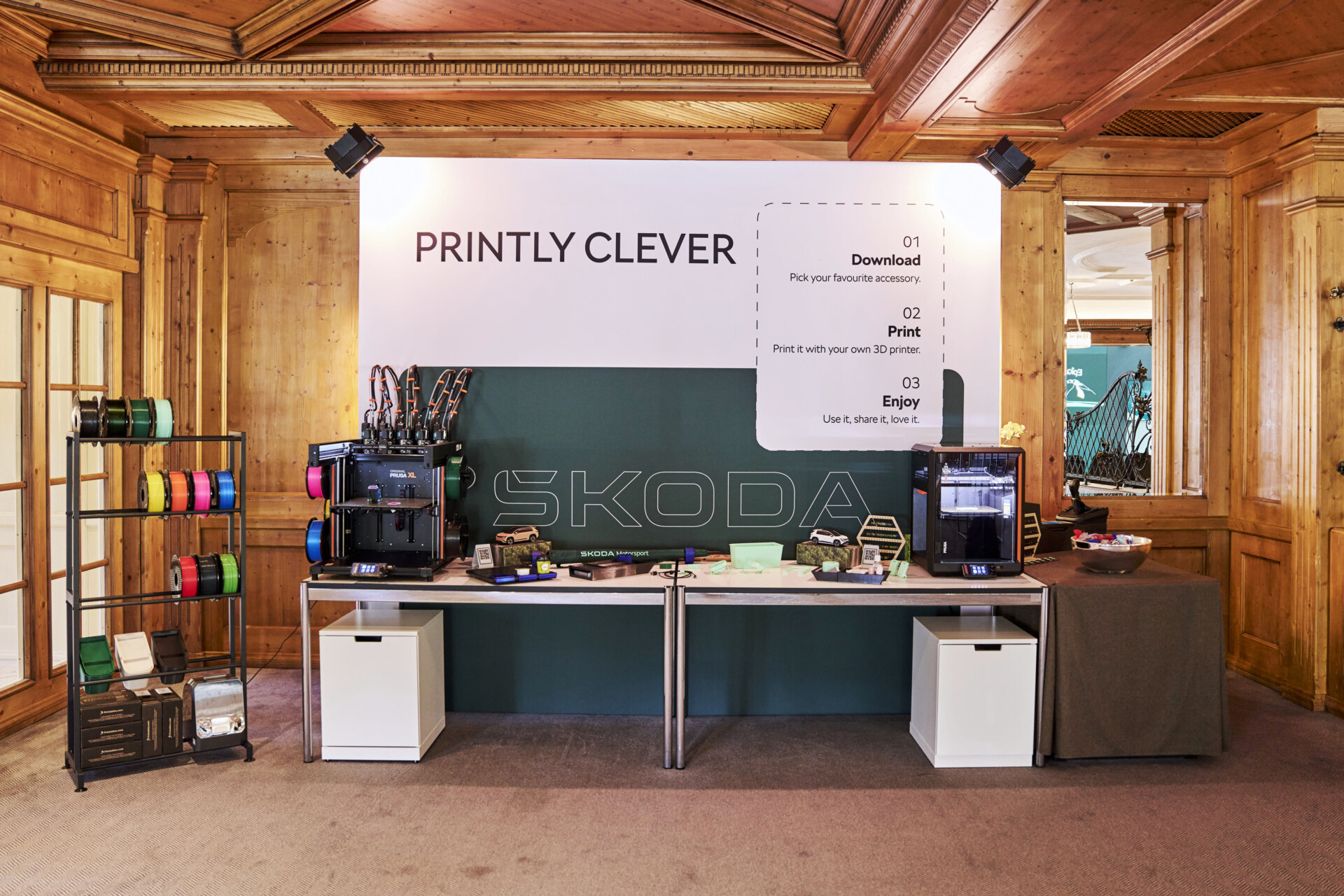
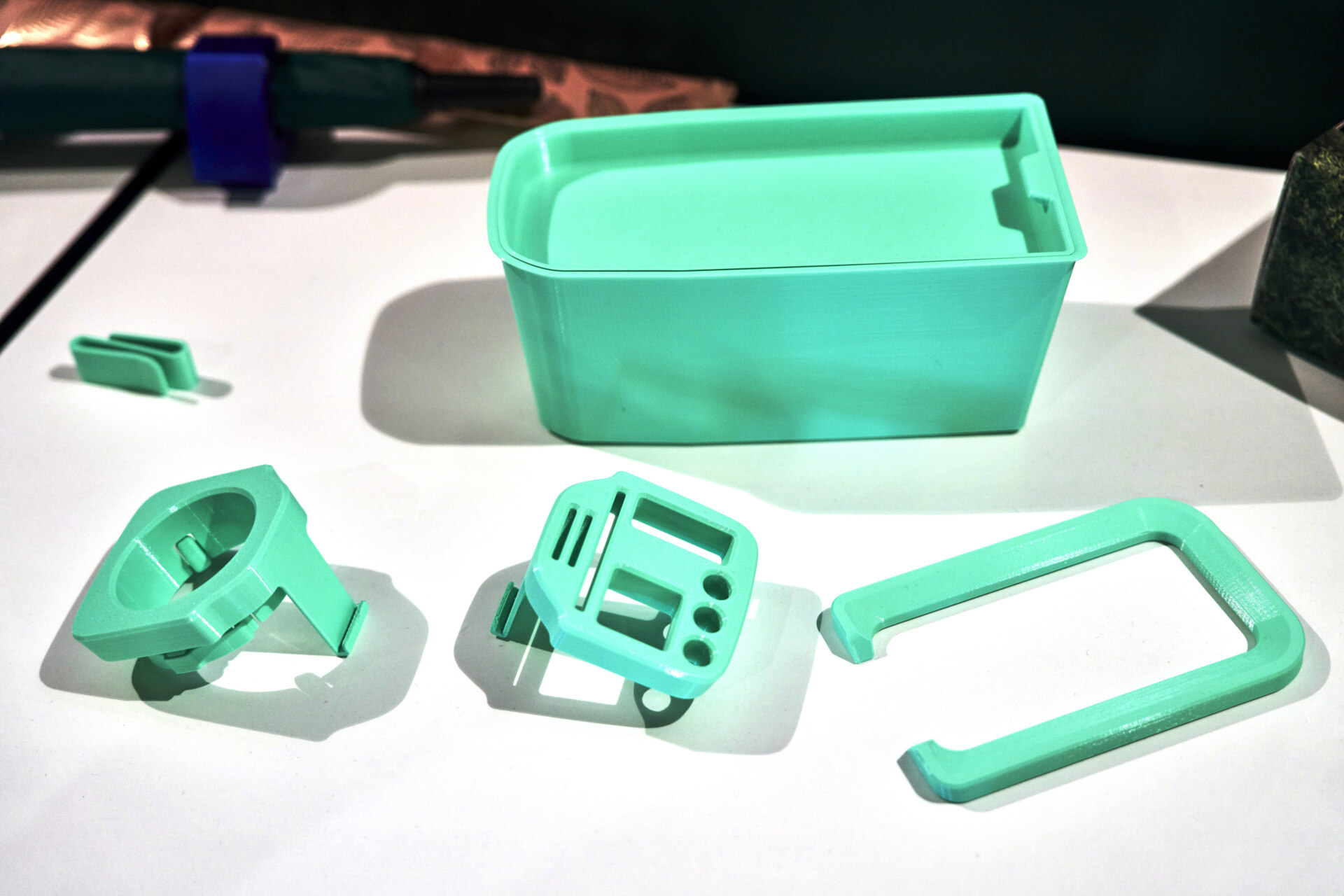
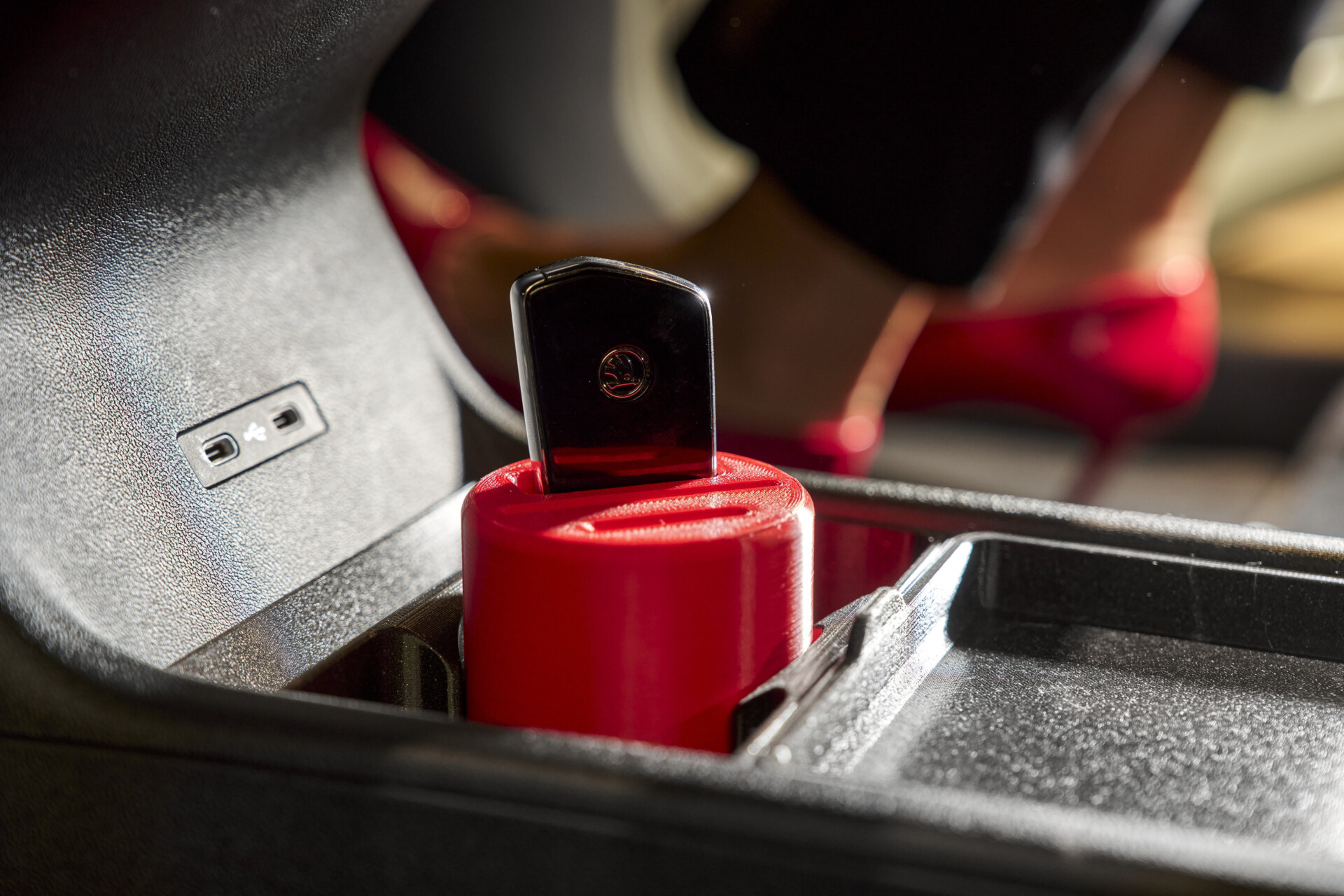
It gives smaller studios and solo designers a springboard to develop custom, highly tailored cabin solutions for car owners – effectively extending Škoda’s ‘Simply Clever’ philosophy into an open-source ecosystem. Sadly the license doesn’t encourage customisation or even derivatives of the files. Come on Škoda – relax a little… what’s the risk here? Open source it the accessory designs so people can come up with clever ideas and get a little bit of a reward out of it.
The verdict: Modern Solid
Ultimately, if asked to judge whether the Epiq is well designed, I’d say Škoda has nailed their strategy. It’s attractive, satisfying to drive briskly, and offers exceptional value. In a market increasingly flooded with Chinese EV newcomers, the Epiq delivers a level of design sophistication and execution – a tightness in its “Modern Solid” philosophy – that few rivals at this price point can match.
Our reviews analyse products through a design-first lens, evaluating aesthetic, material, and user-experience choices alongside practical suitability for their intended market.
Become a Design Week member for £4/month or £40/year
Already a member? Sign in.




 Estudio EA