



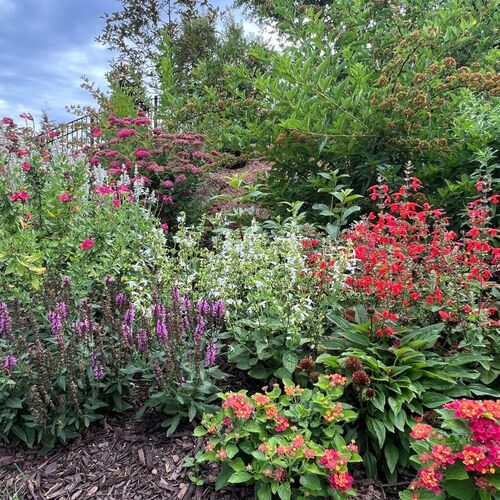

Happy Thursday, GPOD! Today we’re visiting Rachel (@rachelgrowsga) in Atlanta, Georgia (Zone 8a). My first reaction to these photos was, Whoa, how much land does she have? Somehow, this incredibly full garden sits on just a quarter-acre lot. The slope and dense plantings give it so much depth that parts of the landscape remind me of something you might see at a botanical garden. There’s also no shortage of plant-combination inspiration here, with color spilling through nearly every bed.
I garden on a quarter-acre lot that is mostly a steep, full-sun slope. When we moved in just over five years ago, the soil had been heavily compacted by new construction, and honestly, the hillside was an eyesore. All I could think was, “How are we ever going to sell this house? This is a maintenance nightmare.”
My goal has been to create a low-maintenance, drought-tolerant garden that supports pollinators, leaning heavily on native plants. The slope brings plenty of challenges: wet clay soil at the bottom where water channels downhill, dry, tough soil at the top, and chunky clay in between. This hillside has become the best garden teacher I’ve ever had.
It has also taught me to love depth. I don’t have to plant short to tall. I can put short plants up the hill, tall plants farther down, and mix them freely. That vertical dimension is something I never knew a garden could have until I had a slope. Now we see this garden from every window, and what was once an eyesore has become a statement piece I’m truly proud of.
My style is natural and unpolished, the kind of view you might stumble upon on a hike or a walk through a park. Ninebark is one of my favorite shrubs because it captures that feeling perfectly. My favorite perennial is phlox; I would plant a whole field of it if I could! And whenever I see bees on a plant at the garden center, that’s the one coming home with me. I want my garden to feel alive.
When I’m not gardening, I’m a meteorologist, so I always have my eye on the sky. I try to choose plants that work with our weather, not against it. No two gardens are alike, and that’s the beautiful thing: your garden will always be yours.
The wildlife keeps things interesting too. I contend with armadillos, rabbits, the occasional deer, spider mites, Japanese beetles, and tons of chipmunks that seem to have built an entire neighborhood under my plants.
Someday I’d love a bigger lot with room for more of the plants I enjoy. But I think I’ll always have a hillside garden. They’re a lot of work, but they are incredibly satisfying spaces.
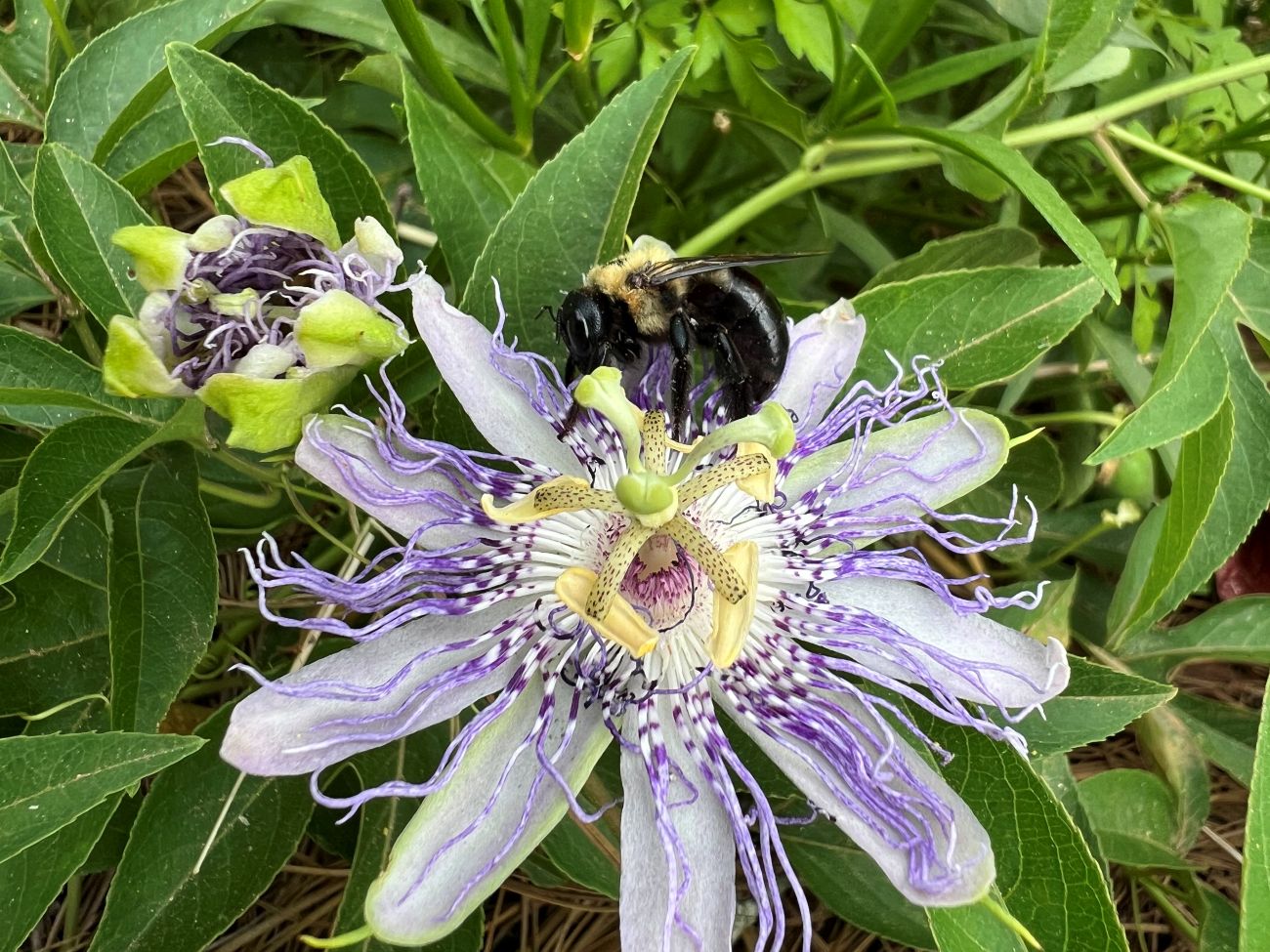
Native purple passionflower (Passiflora incarnata, Zones 5–9) is a host plant for gulf fritillary and variegated fritillary butterflies. I grow it in my sunny hillside garden to support their life cycle.
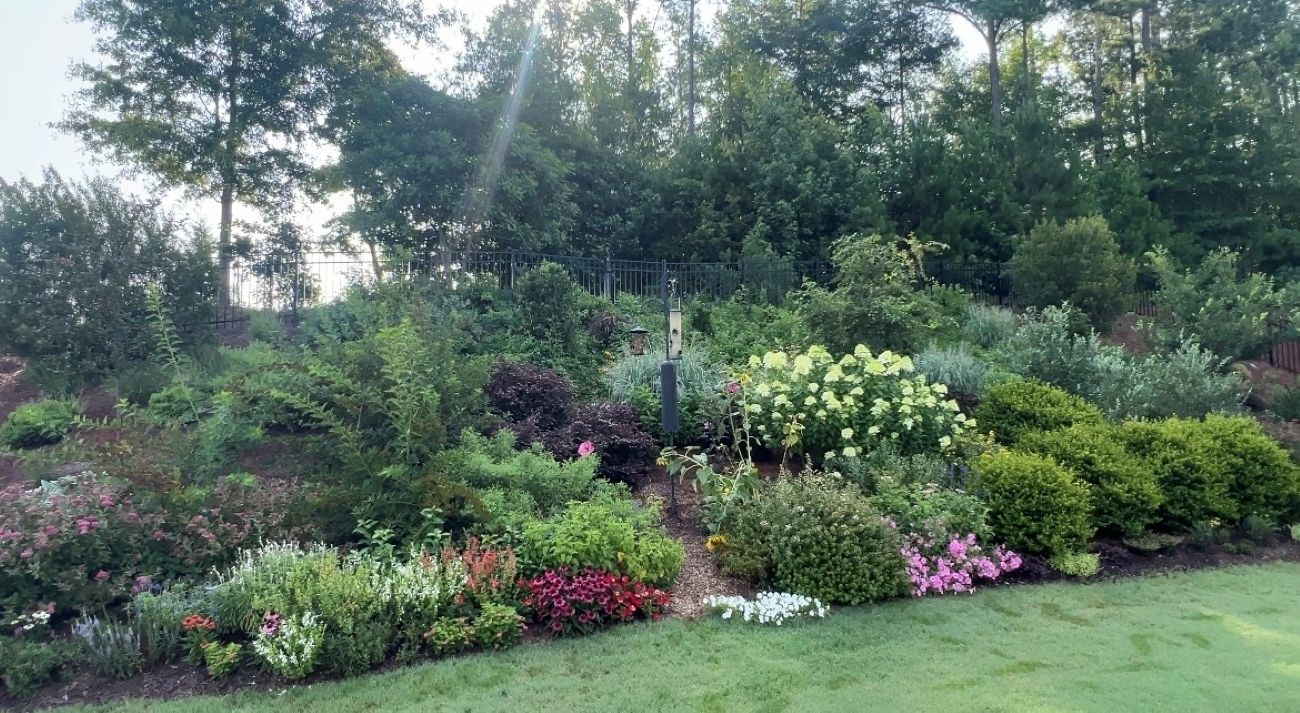
View of my hillside garden from my back porch. I enjoyed the blooms of Bobo panicle hydrangeas (Hydrangea paniculata ‘ILVOBO’, Zones 3–8) all summer. This was the first year they weren’t eaten by deer.
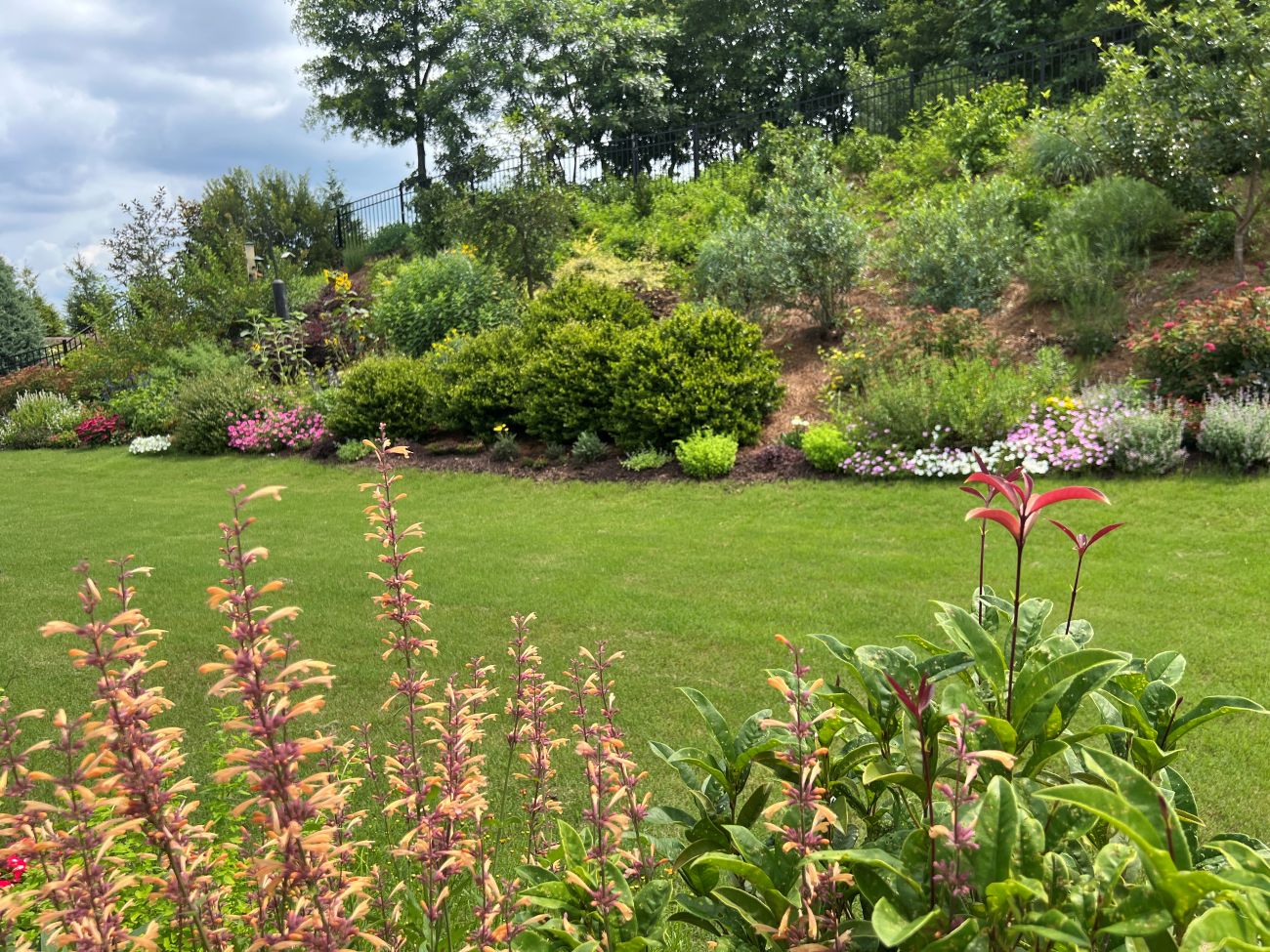
Meant to Bee ‘Queen Nectarine’ anise hyssop (Agastache hybrid ‘Queen Nectarine’, Zones 5–9) and ‘Apricot Echo’ tea olive (Osmanthus fragrans f. aurantiacus ‘Apricot Echo’, Zones 7–10) in the foreground, looking out over my hillside garden.
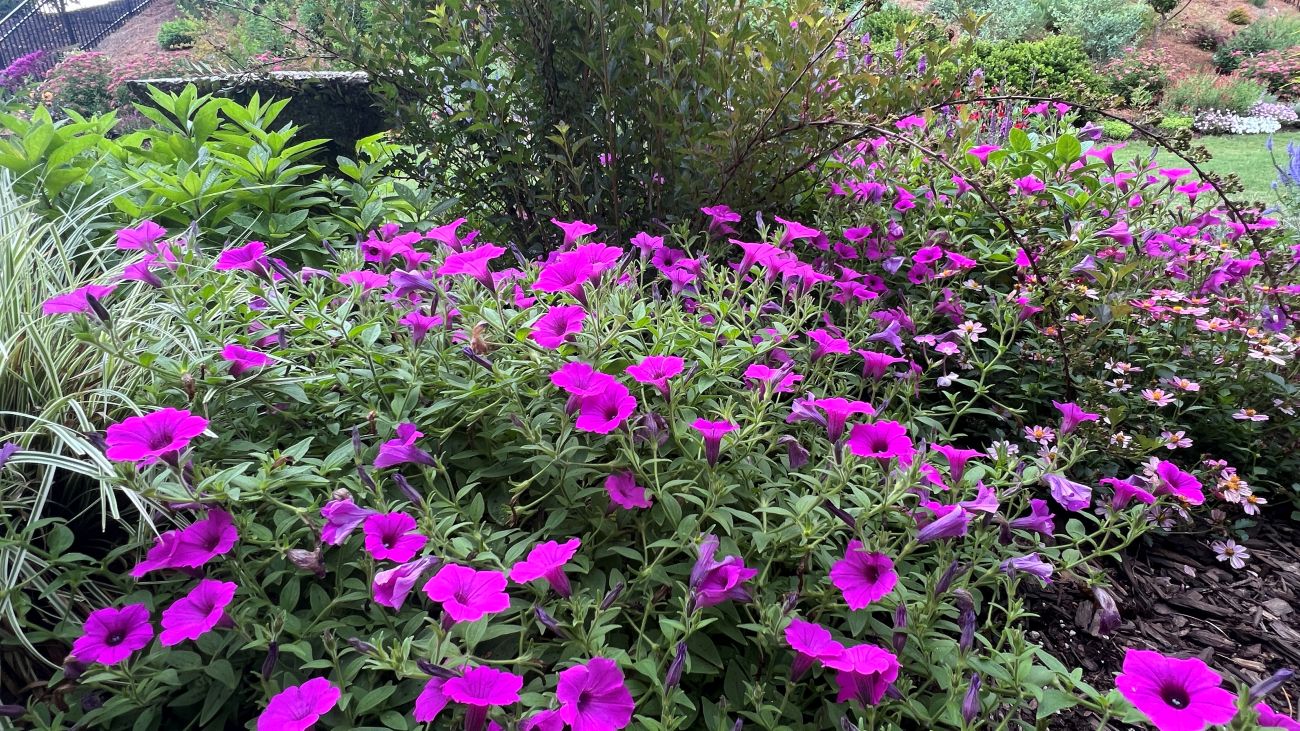
Beautiful Supertunia Vista Jazzberry petunia (Petunia ‘WNPESVJAZ’, annual) maintains a natural look through summer without any water-soluble fertilizer.
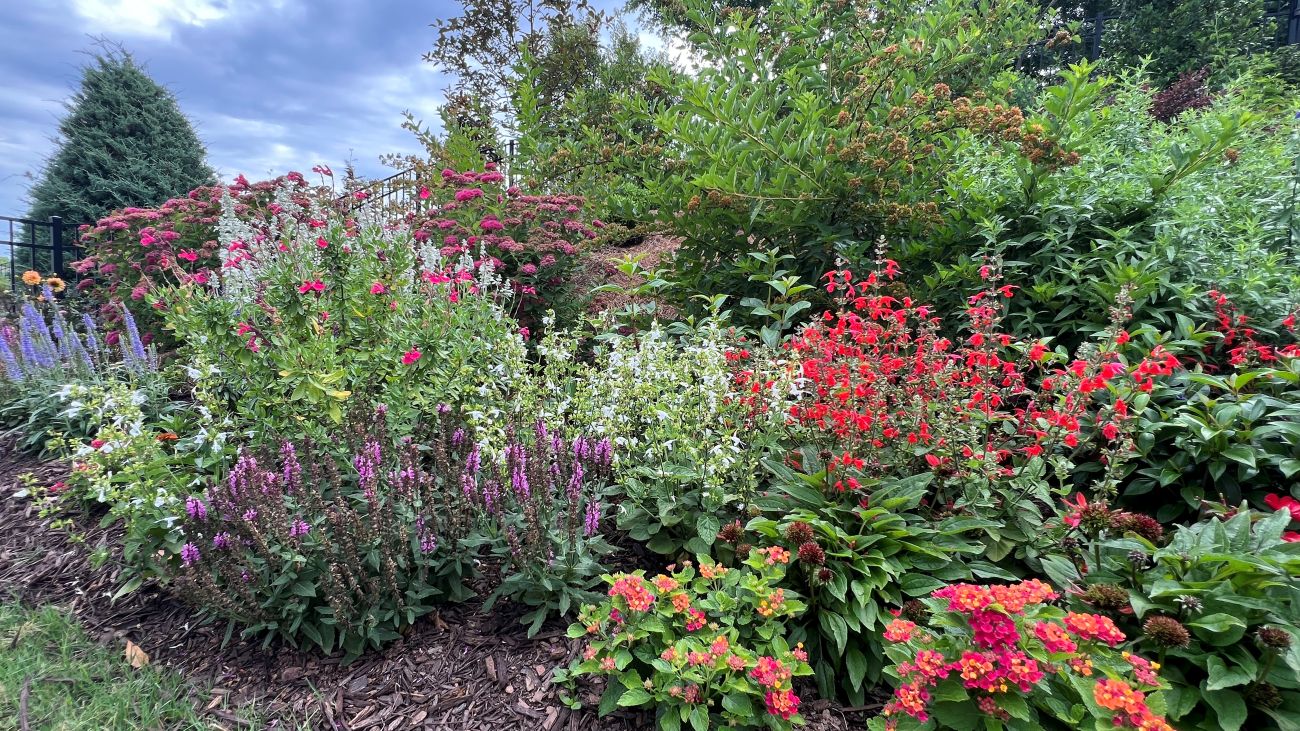
This annual border includes several varieties of salvia, including ‘Summer Jewel Red’ scarlet sage (Salvia coccinea ‘Summer Jewel Red’, annual), along with lantana and veronica.
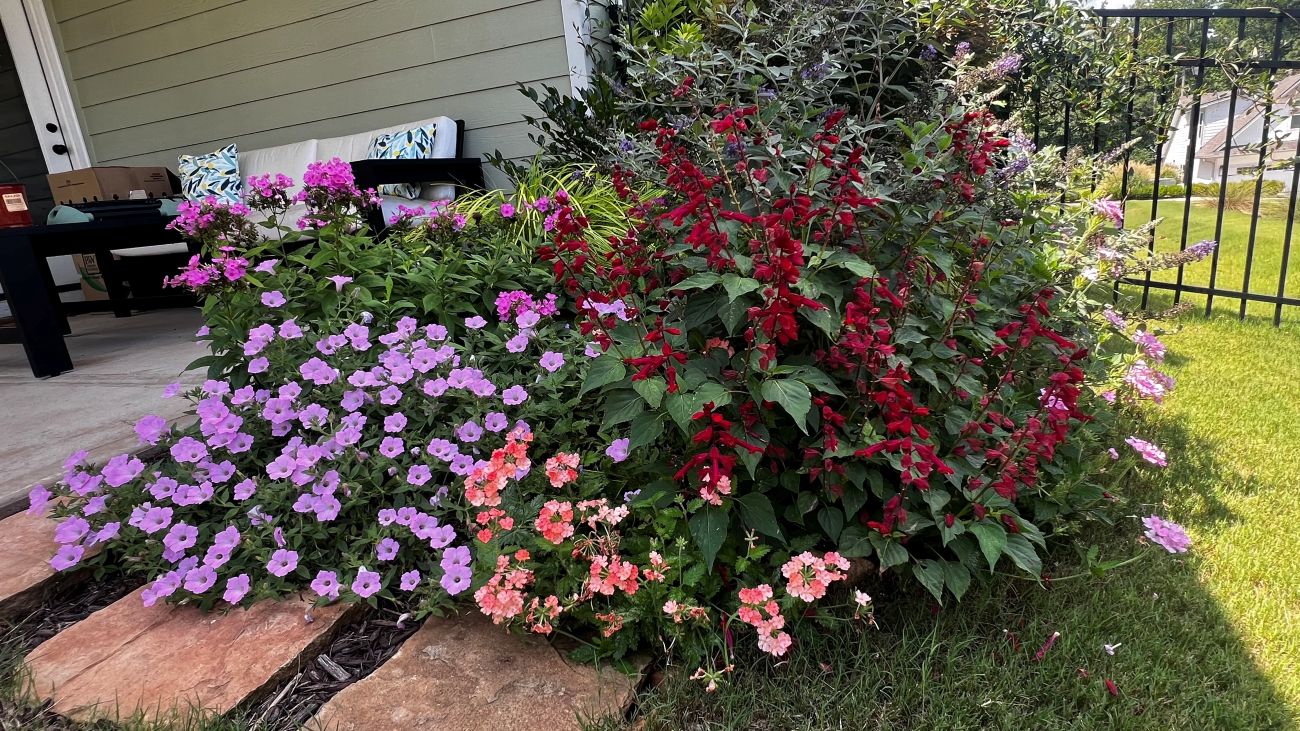
A fun combination of Supertunia Vista Cool Jazz petunia (Petunia ‘WNPCOOLJAZZ’, annual), Superbena Peachy Keen verbena (Verbena hybrid, annual), and Saucy Red scarlet sage (Salvia splendens ‘Saucy Red’, Zones 9b–10b).
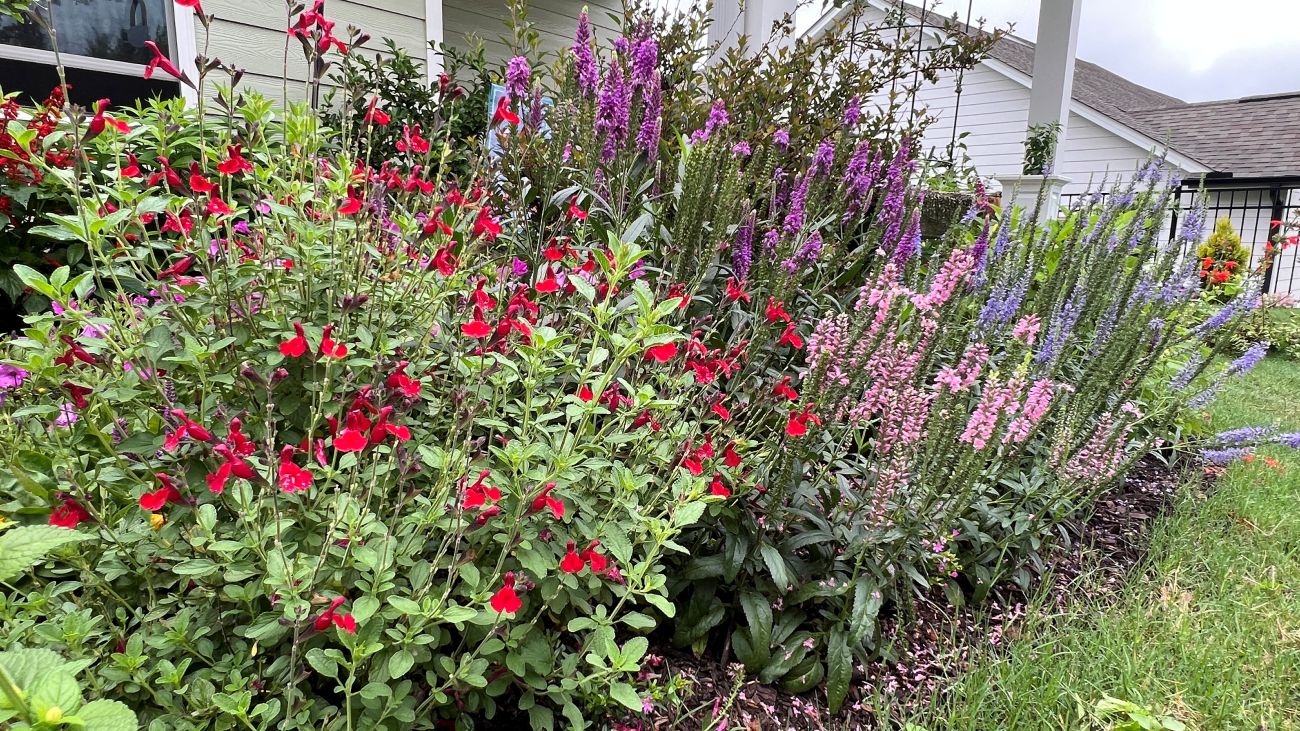
Autumn sage (Salvia greggii, Zones 8–10) and speedwell (Veronica cvs., Zones 3–9)
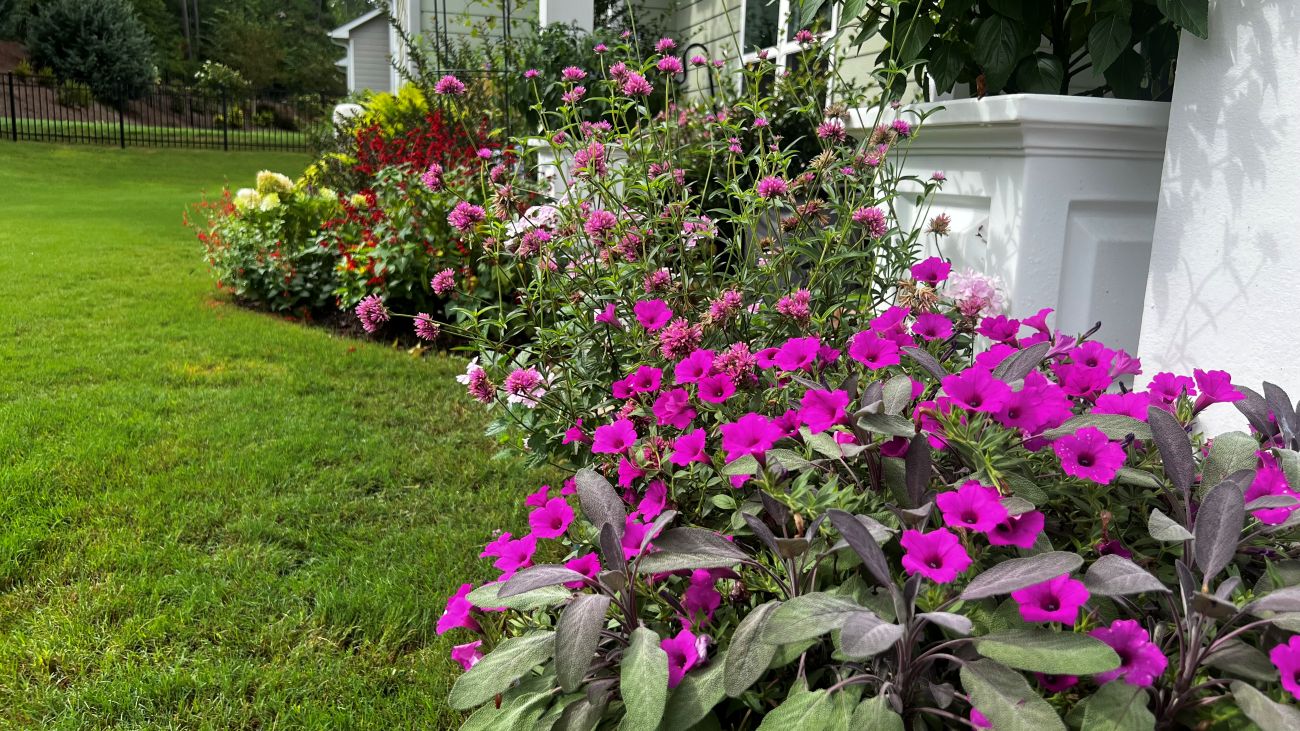
Annual flower borders adjacent to my back porch.
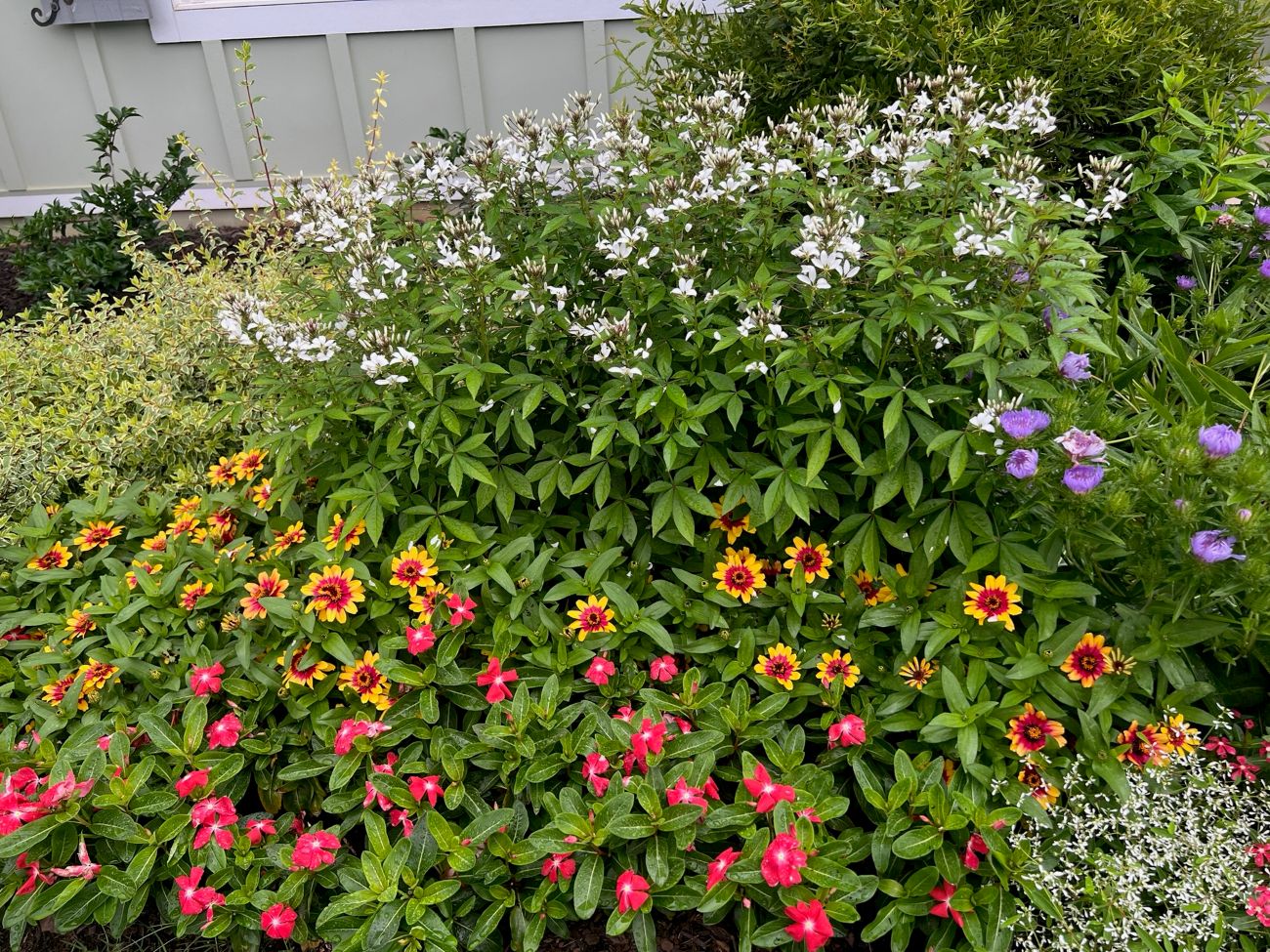
A favorite summer annual combination: vinca, zinnias, and spider flower (Cleome cvs., annual).
Thanks for sharing your hillside garden with us, Rachel! Gardening on a slope can be incredibly challenging, especially when you’re also dealing with compacted, heavy clay soil. That combination alone requires you to be very intentional about the plants you choose.
I especially loved what you said about using the change in elevation to create depth and layers, and how you can plant shorter plants higher on the slope without worrying so much about mature height. It seems so obvious once you hear it, but I had never really considered that before! To be fair, I don’t have a hillside teaching me those lessons the way you do.
Between the sweeping annual combinations and all the pollinator and wildlife activity, you’ve really created your own little ecosystem. I also love that supporting pollinators and using native plants were part of the plan from the beginning. A recent MPR News report on monarch butterflies noted that the population increased 64% this year, with experts pointing to favorable weather as well as collective efforts to create more habitat in home landscapes. Gardens like yours are exactly the kind of spaces conservation groups continue encouraging people to plant.
We want to see YOUR garden!
Have photos to share? We’d love to see your garden, a particular collection of plants you love, or a wonderful garden you had the chance to visit!
To submit, fill out the Garden Photo of the Day Submission Form.
You can also send 5–10 photos to [email protected] along with some information about the plants in the pictures and where you took the photos. We’d love to hear where you are located, how long you’ve been gardening, successes you are proud of, failures you learned from, hopes for the future, favorite plants, or funny stories from your garden.
Do you receive the GPOD by email yet? Sign up here
Fine Gardening Recommended Products
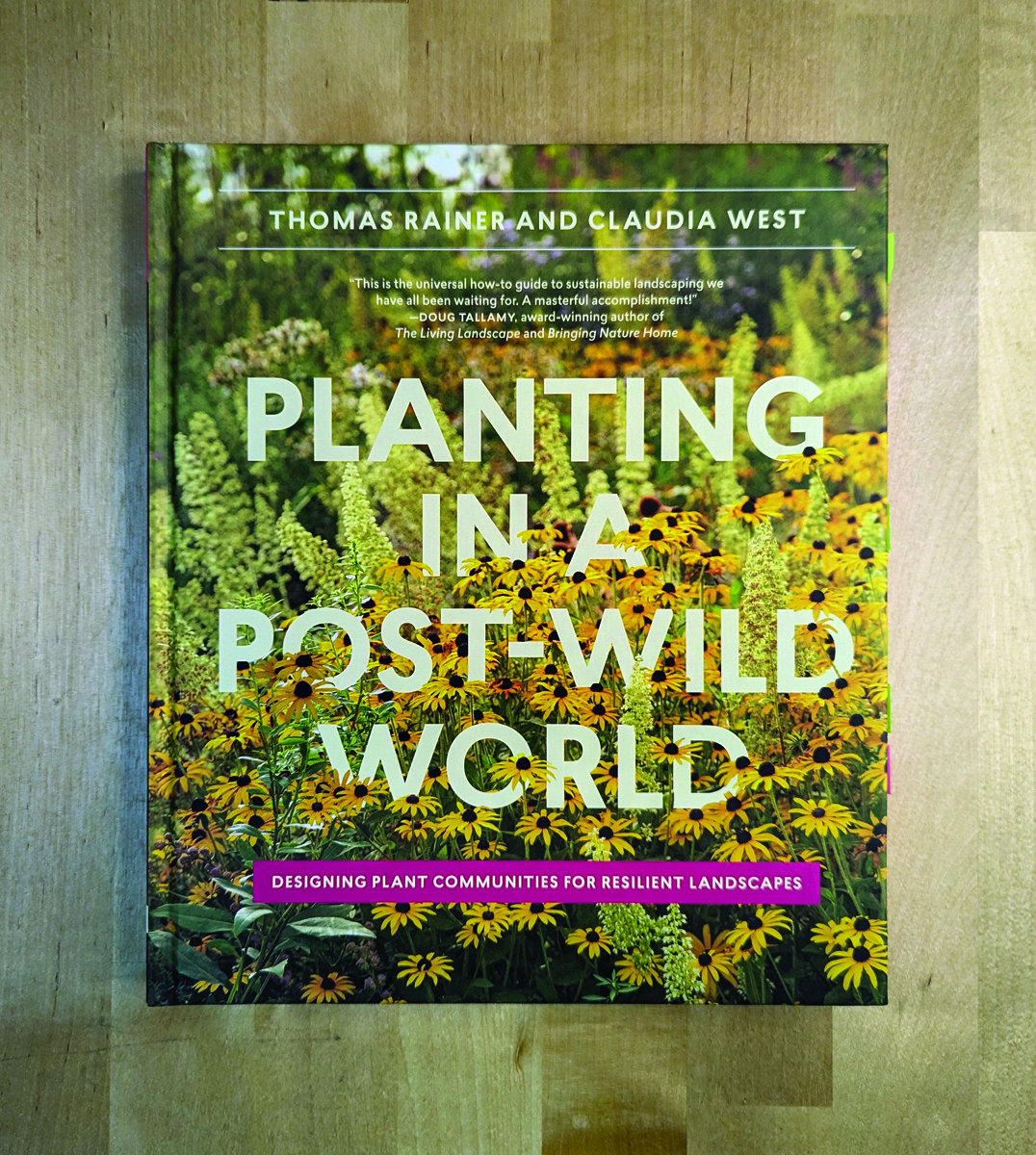
Planting in a Post-Wild World: Designing Plant Communities for Resilient Landscapes
Fine Gardening receives a commission for items purchased through links on this site, including Amazon Associates and other affiliate advertising programs.
Featuring gorgeous photography and advice for landscapers, Planting in a Post-Wild World by Thomas Rainer and Claudia West is dedicated to the idea of a new nature—a hybrid of both the wild and the cultivated—that can nourish in our cities and suburbs.
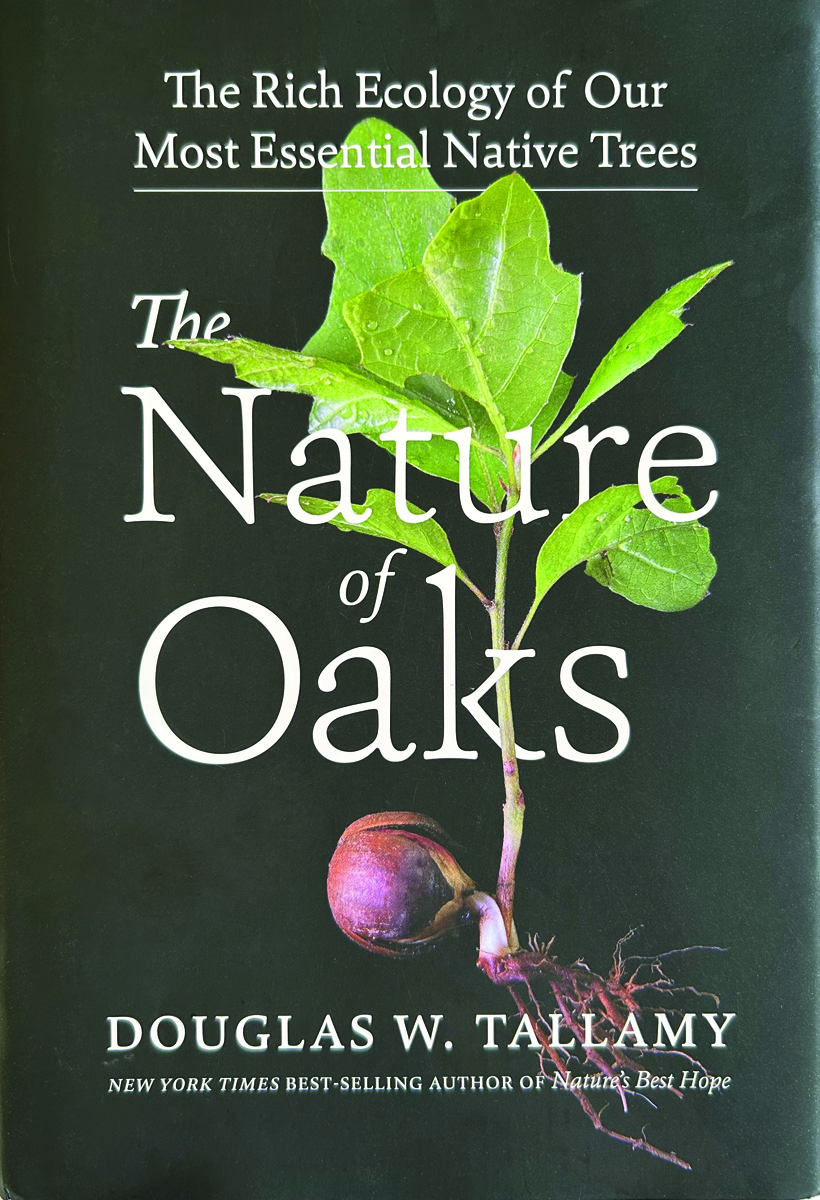
The Nature of Oaks: The Rich Ecology of Our Most Essential Native Trees
Fine Gardening receives a commission for items purchased through links on this site, including Amazon Associates and other affiliate advertising programs.
The Nature of Oaks reveals what is going on in oak trees month by month, highlighting the seasonal cycles of life, death, and renewal. From woodpeckers who collect and store hundreds of acorns for sustenance to the beauty of jewel caterpillars, Doug Tallamy illuminates and celebrates the wonders that occur right in our own backyards. He also shares practical advice about how to plant and care for an oak, along with information about the best oak species for your area.

Wagner’s 52003 Classic Blend Wild Bird Food, 6-Pound Bag
Fine Gardening receives a commission for items purchased through links on this site, including Amazon Associates and other affiliate advertising programs.
Classic wild bird food uses the highest quality grains to attract backyard wild Birds. A high-quality mix containing Millet, milo, cracked corn and Sunflower for a wide range of wild birds to enjoy. Perfect for tube, hopper, or platform feeders. Great to feed in all seasons! Perfect for the winter, when seeds are scarce; spring and summer for hatchlings; and autumn to give energy to migrating birds. This seed will help you fill your yard with birds such as Jays, cardinals, doves, Juncos, finches, goosebeaks, any many more.

 Estudio EA