



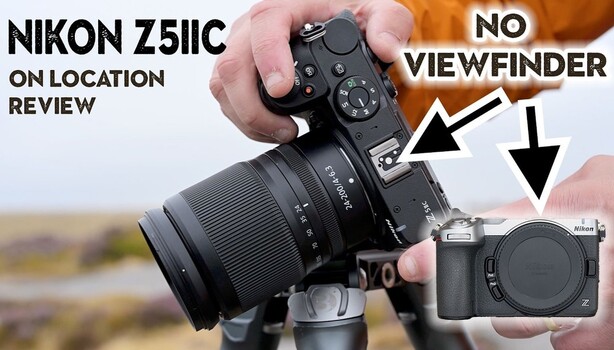

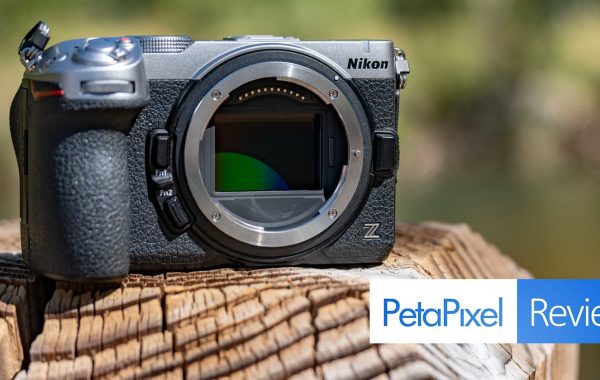
Nikon built a full frame camera without a viewfinder, added automatic scene modes for the first time on a full frame body, and aimed the whole thing squarely at people leaving their phones behind. The Nikon Z5IIC strips away features many shooters assume are essential, and the result raises a real question about how much camera you actually need.
Out in the Peak District, shooting heather and silver birch in flat, misty light, Nigel Danson puts the Nikon Z5IIC through a full landscape session and explains why he’d be genuinely happy if this were the only camera he owned. The body has no top hump and no electronic viewfinder, just a rear touchscreen. Danson leans on that screen the way he already works on his Nikon Z8, tapping to focus and shoot rather than reaching for a viewfinder or a focus-point selector. Because that’s how he shoots anyway, the missing viewfinder never becomes a problem during the whole trip.
The full frame sensor is the part worth sitting with. Danson shoots at 24mm, f/11, ISO 100, and 1/60 s, and he points out that the 7.5 stops of in-body stabilization would let you handhold even a waterfall at around a second. He addresses the 24-megapixel resolution head-on, since plenty of people worry it’s too low. His answer is direct: 24 megapixels prints large without trouble, and many of the images in his exhibition were shot at exactly that resolution. Jumping to 45 megapixels won’t change your photography. Getting outside, finding the composition, and reading the light will.
Scene modes are the headline addition, and this is the first time Nikon has put them on a full frame camera. You pick the closest scenario, landscape, pets, sports, a running dog, and the camera sets shutter speed, aperture, depth of field, and white balance to suit. Danson makes a smart point about this being a teaching tool. You shoot in a scene mode, review the settings the camera chose, then move to aperture priority or manual once you understand the logic. Anything that smooths the jump from a phone to a proper camera earns his approval, and this does.
If you’re weighing this against the rest of the Nikon line, the comparison comes down to what you actually shoot. Danson walks through where the Z6III pulls ahead, and it isn’t image quality. Both sit at 24 megapixels and both handle low light well. The Z6III’s advantage is sensor readout speed, which matters for sports, wildlife, and anything where rolling-shutter distortion creeps in while you pan or track a moving subject. For static landscape work, that speed buys you nothing you’ll notice. The Z5IIC still hits 14 frames per second on the mechanical shutter, climbs to 15 or 30 frames in JPEG high-speed capture, and includes pre-release capture, the feature Danson used in Antarctica to grab a full second of frames before a penguin jumped.
Nikon isn’t the only maker betting that a rear screen beats a viewfinder for a certain shooter. The trend runs through cameras like the Sigma fp and the growing crowd of vlog-first bodies, and it tracks a generation that learned to frame everything on a phone held at arm’s length. What Nikon has done is fold that habit into a full frame body without sacrificing the sensor. That’s the real story of retro-styled and simplified cameras right now: manufacturers are separating image quality from the traditional feature checklist, letting you buy the sensor you want in the form factor that fits how you already shoot.
Watch the video above to see Danson’s silver birch shot come together and hear exactly where he draws the line between the Z5IIC and its pricier siblings.



 Estudio EA