



Hi GPOD! Today I’m sharing a garden that really inspires me, and I hope it inspires you too. During a trip this summer, I had the chance to visit Lynn O’Shaughnessy’s Circle Garden in Howell, Michigan. I’ve had my eye on this garden for a while and always thought about how cool it would be to see it, so you can probably imagine how excited I was to finally be there in person.
Lynn’s planting style centers on native plants and creating habitat for pollinators. The idea for the Circle Garden took shape in 2019, after Lynn saw an aerial photo of the lavender labyrinth at Cherry Point Farm in Shelby, Michigan. Intrigued by its central 12-point geometric pattern, she adapted the design for her own 100-foot-wide garden. Here are some of the pictures I took and my observations from my time there.
A bird’s-eye view of Lynn’s garden makes it easy to see the central 12-point geometric pattern she created. Her garden is also registered on Homegrown National Park’s Biodiversity Map, which tracks native plantings and other efforts to create habitat and restore biodiversity across the country.
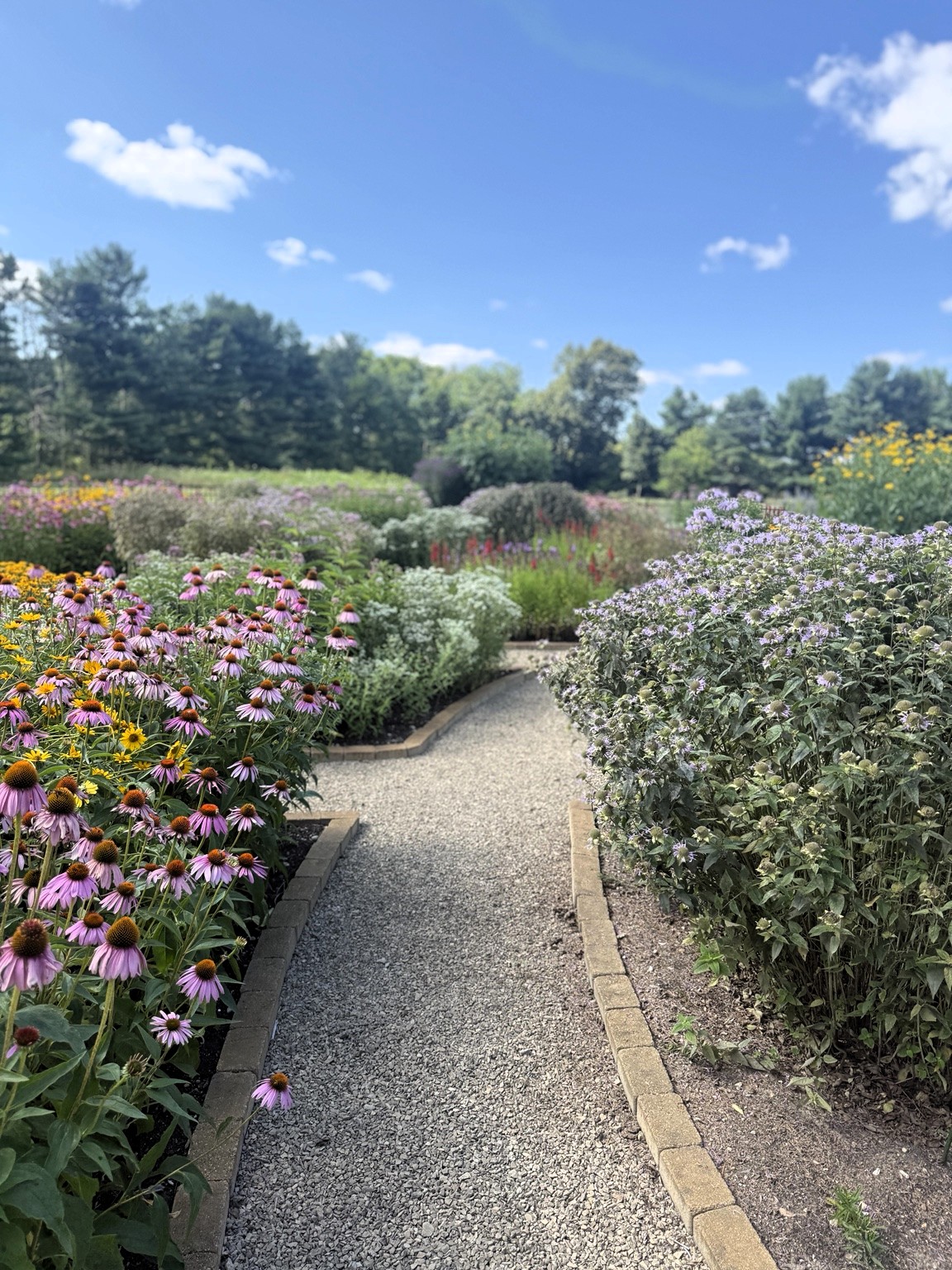
I really love the color of the brick edging and gravel. It feels natural and earthy but muted enough that it doesn’t compete with the foliage or blooms. The garden is filled almost entirely with Michigan native plants, many of which Lynn grew from seed.
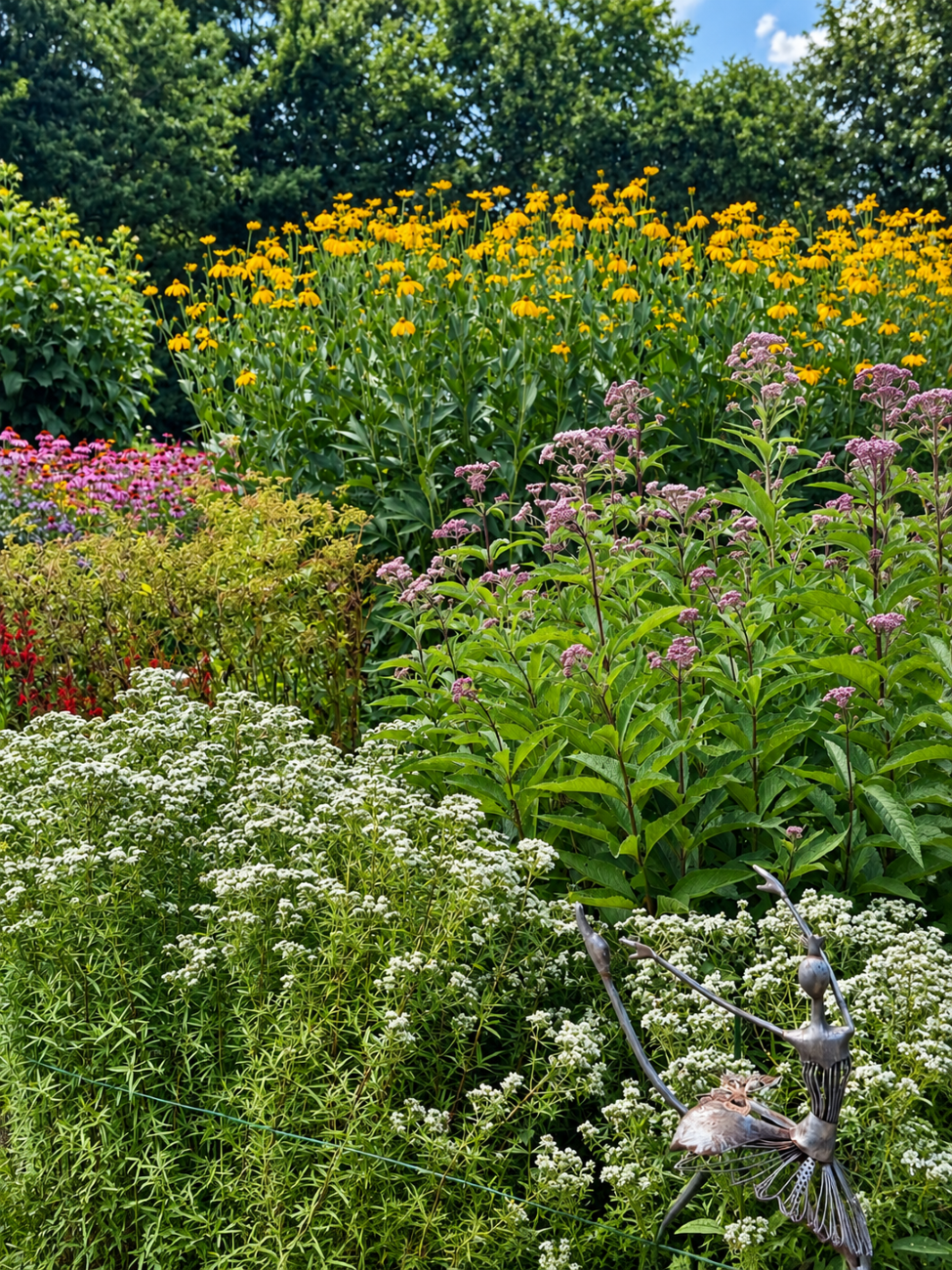
Lynn has photographed 26 different pollinators visiting clustered mountain mint (Pycnanthemum muticum, Zones 4–8) alone, including bees, flies, wasps, and other beneficial insects. And of course, what is a native garden without spotted Joe-Pye weed (Eutrochium maculatum, Zones 3–8) and giant coneflower (Rudbeckia maxima, Zones 4–9)?
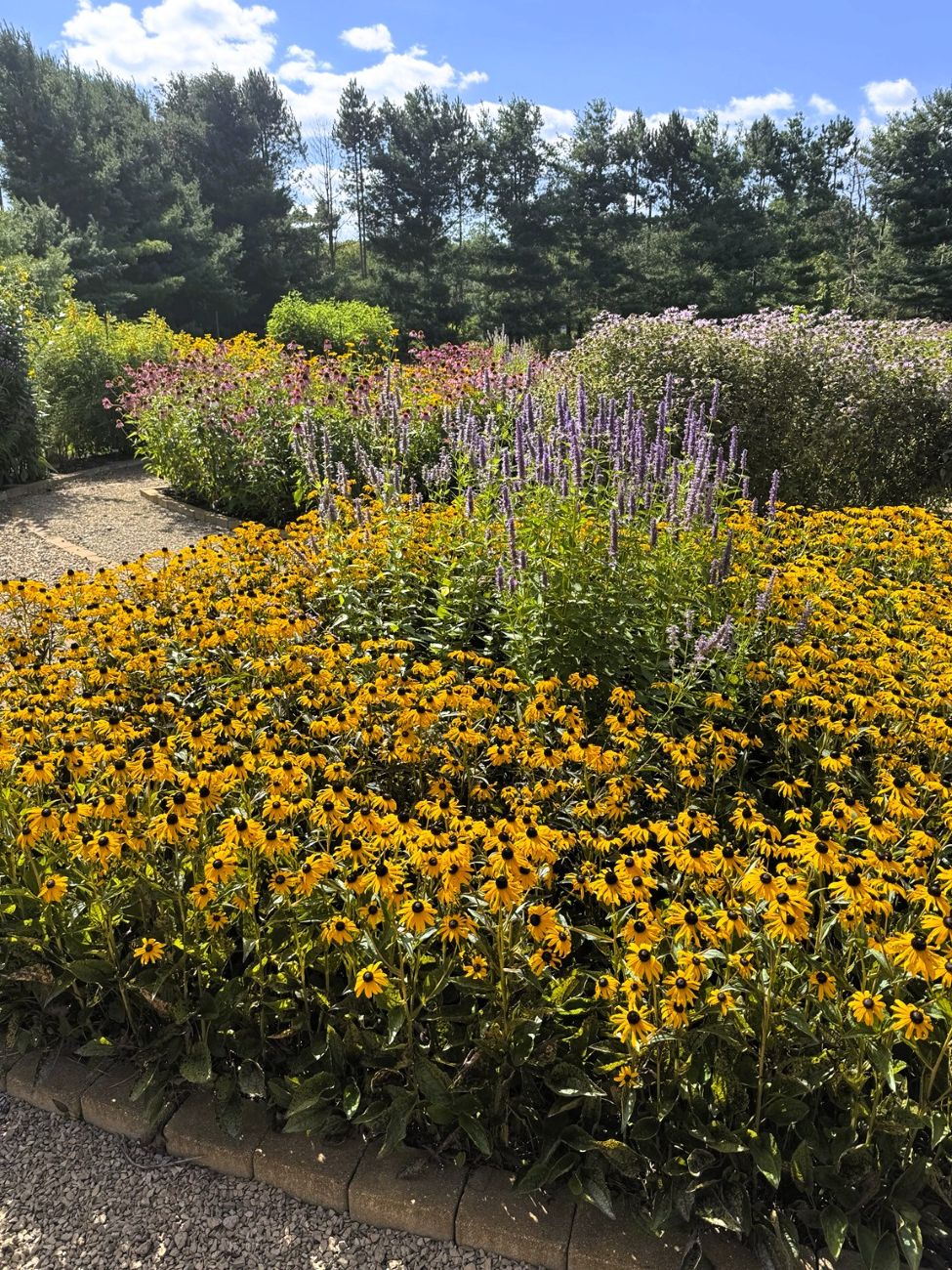
A sea of black-eyed Susans (Rudbeckia hirta, Zones 3–9) around the lavender-purple spikes of anise hyssop (Agastache foeniculum, Zones 4–8): This is honestly a perfect pollinator combination if you ever needed one.
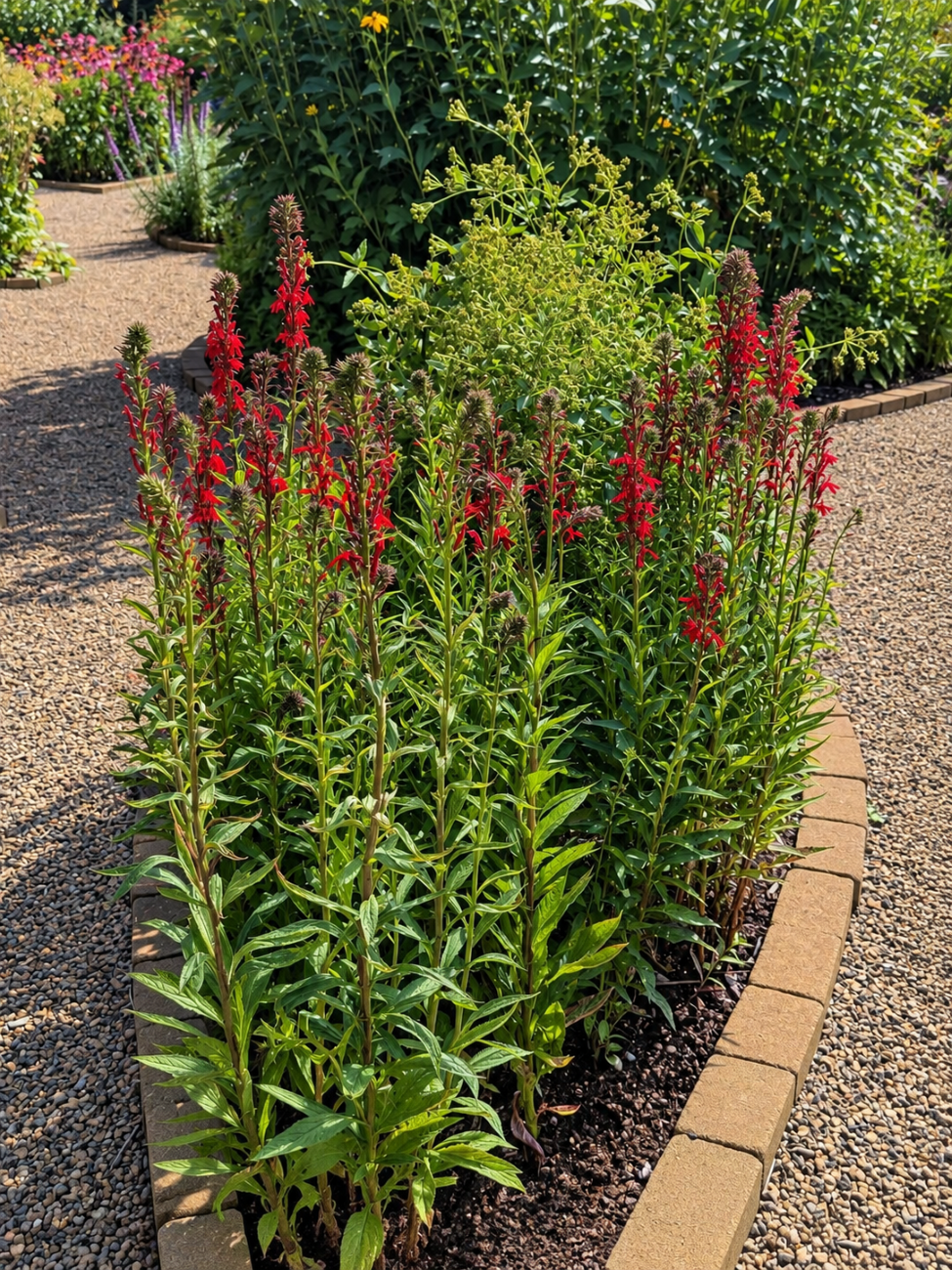
Cardinal flower (Lobelia cardinalis, Zones 3–9) is hard to miss. I also spotted plenty of hummingbird moths visiting the flowers.
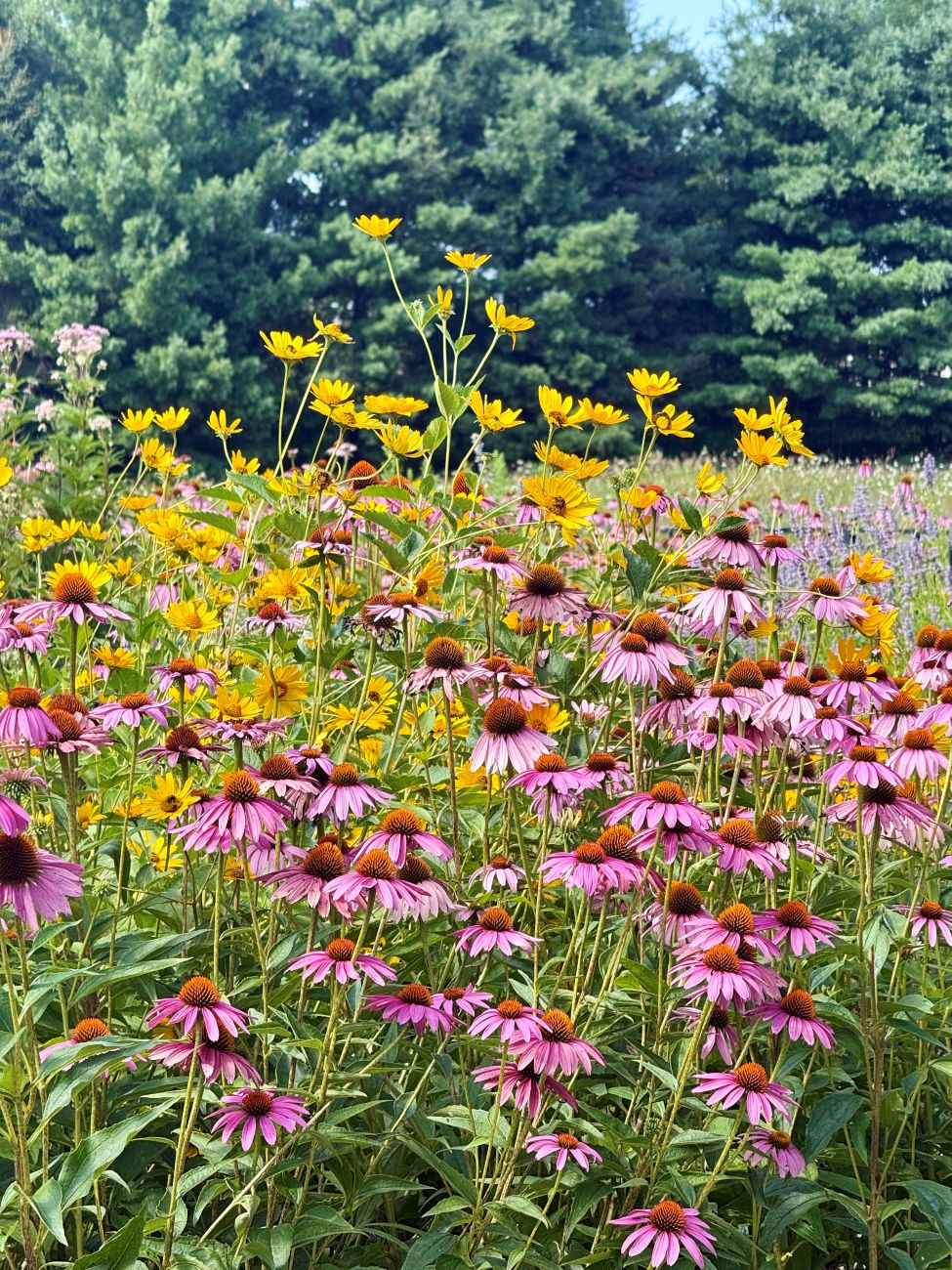
Purple coneflower (Echinacea purpurea, Zones 3–8) mingles with false sunflower (Heliopsis helianthoides, Zones 3–9) in this colorful midsummer pairing.
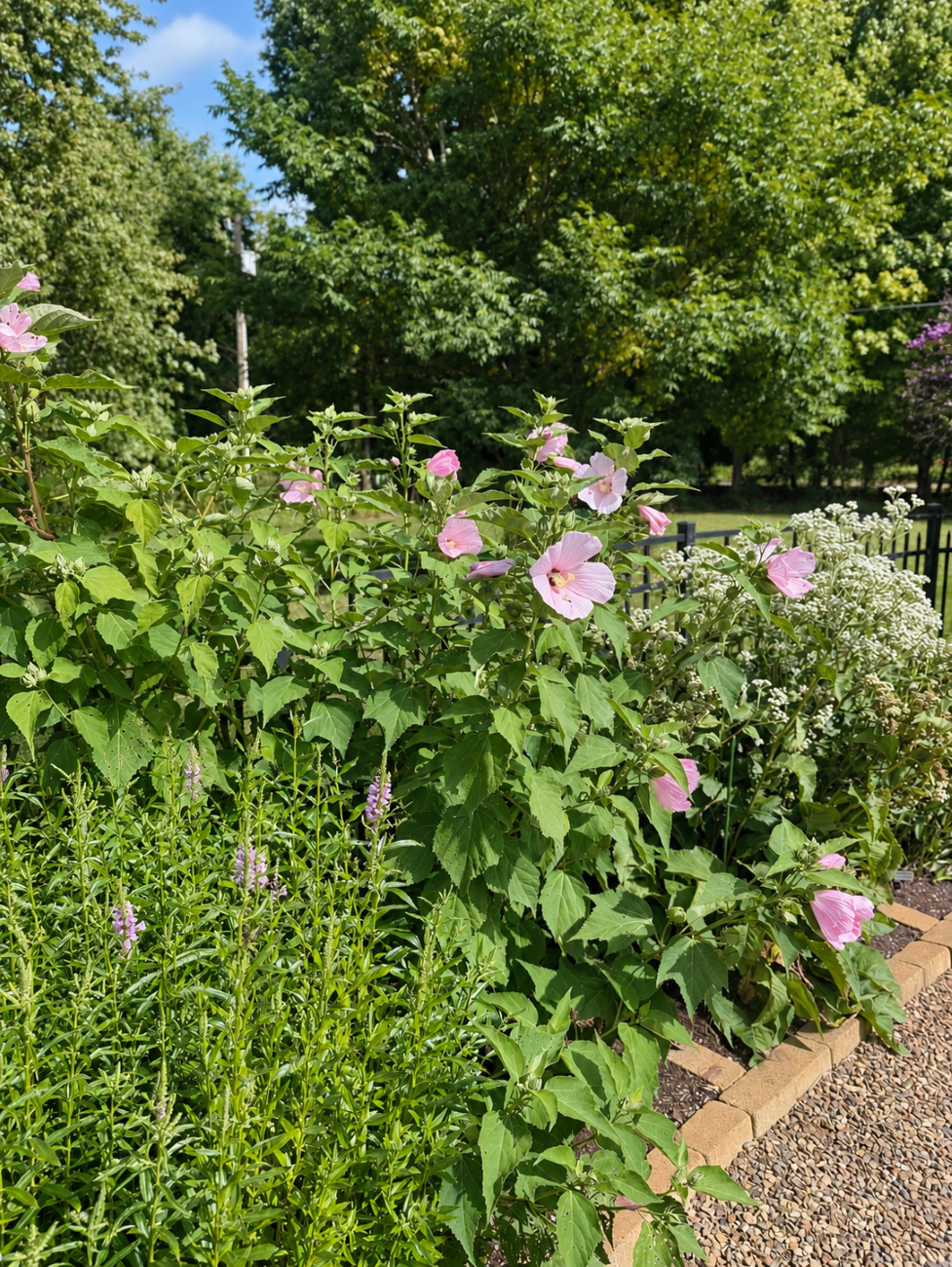
Swamp rose mallow (Hibiscus moscheutos, Zones 5–9) and obedient plant (Physostegia virginiana, Zones 3–9) are another great mix.
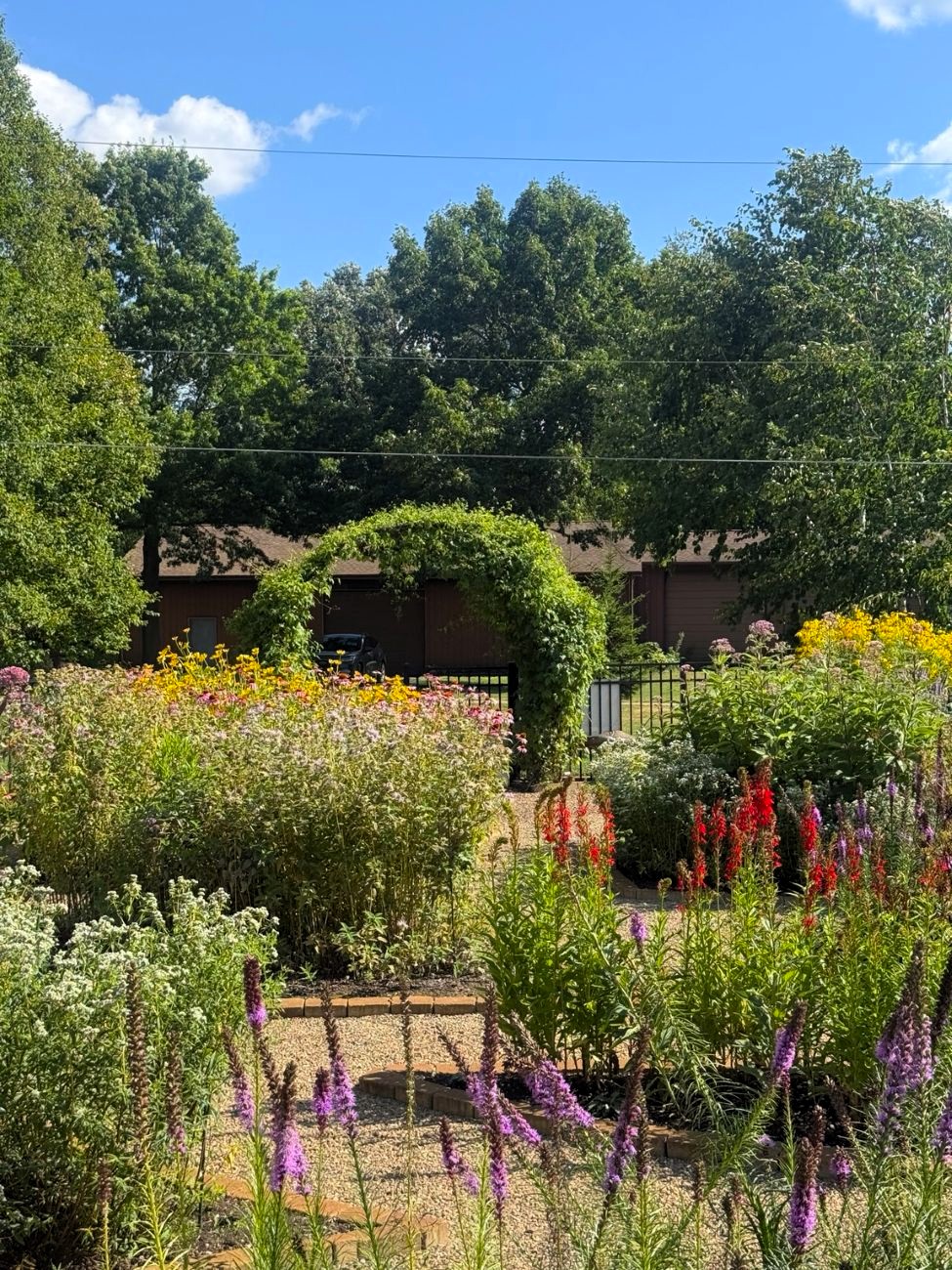
Northern blazing star (Liatris scariosa var. novae-angliae, Zones 3–8) is an absolute butterfly magnet! Lynn said she once photographed 11 monarchs feeding on it at the same time. There were plenty of tiger swallowtails fluttering among the flowers when I visited too. Native virgin’s bower (Clematis virginiana, Zones 3–8) climbs over the arch at the garden’s entrance.
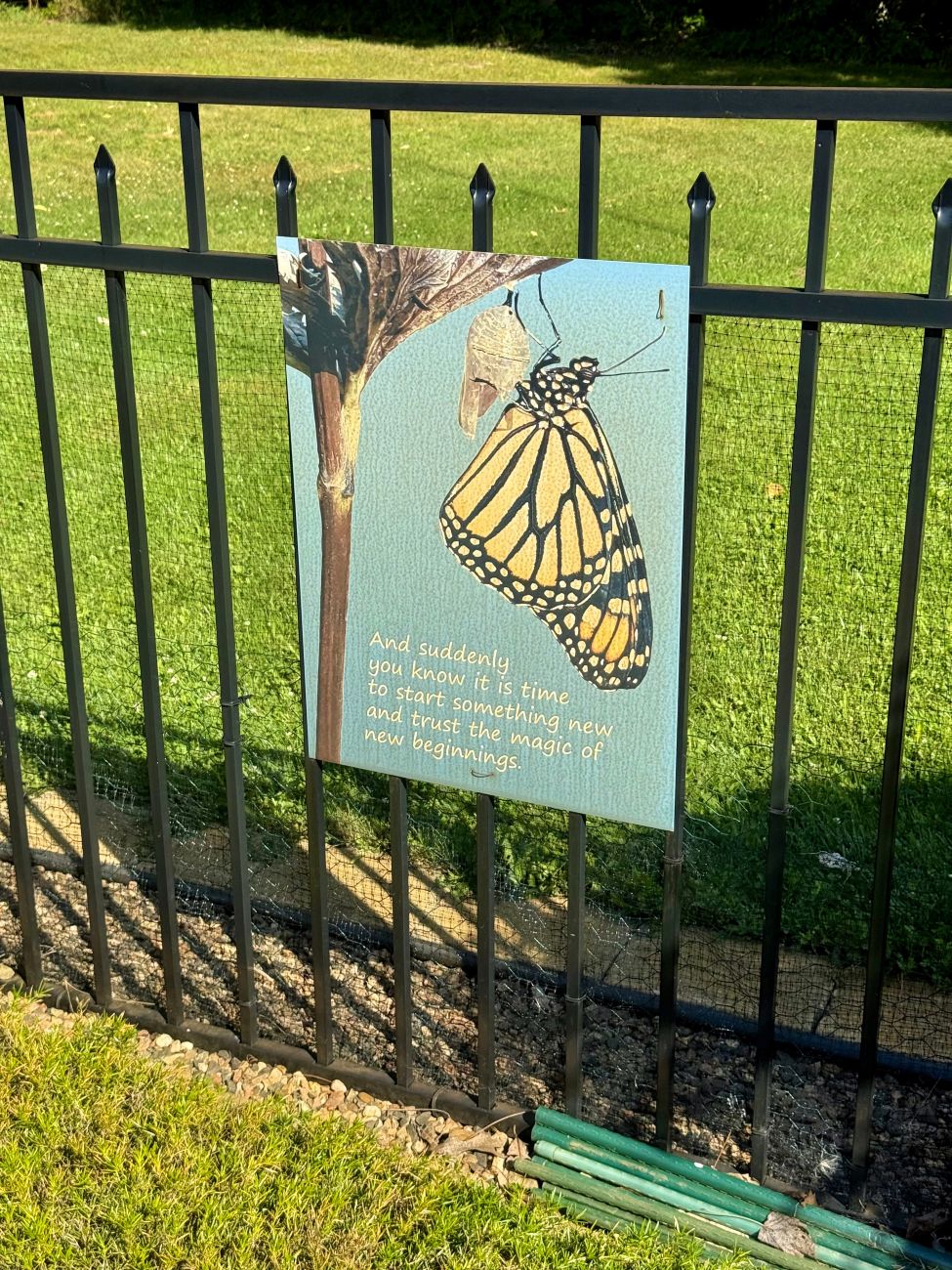
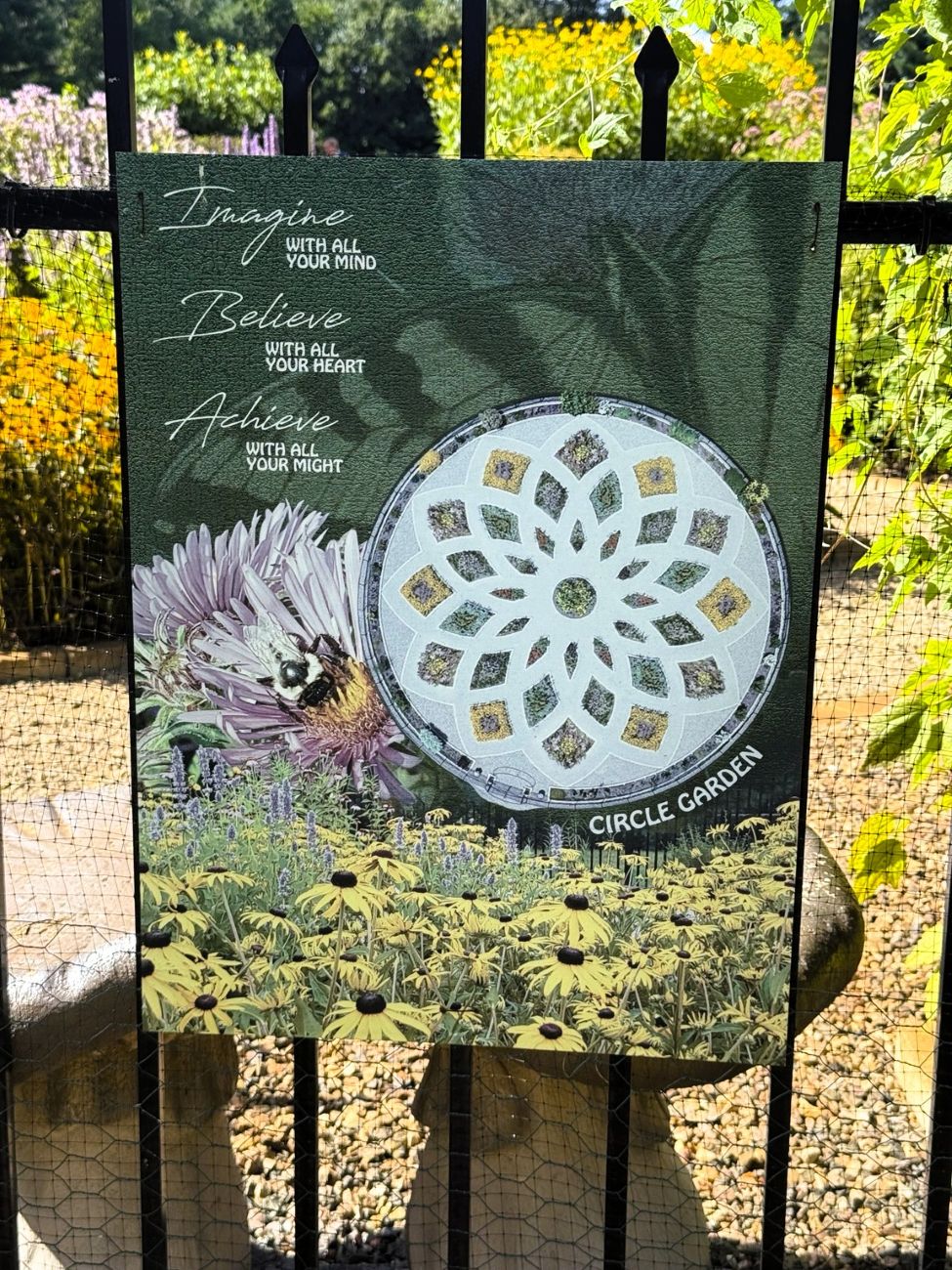
This little sign hangs on the fence surrounding the Circle Garden, and it felt like a fitting place to end our tour. I feel so lucky to have opportunities to peek inside private gardens like Lynn’s, and that’s part of what makes GPOD so much fun for me!
As the growing season begins to wind down in many parts of the country, we haven’t been getting quite as many GPOD submissions. Your garden doesn’t have to be at its peak to have a story worth sharing! I would love to see your highlights from this year, your garden fails or regrets, or a project you worked on, big or small. So please, don’t be shy!
We want to see YOUR garden!
Have photos to share? We’d love to see your garden, a particular collection of plants you love, or a wonderful garden you had the chance to visit!
To submit, fill out the Garden Photo of the Day Submission Form.
You can also send 5–10 photos to [email protected] along with some information about the plants in the pictures and where you took the photos. We’d love to hear where you are located, how long you’ve been gardening, successes you are proud of, failures you learned from, hopes for the future, favorite plants, or funny stories from your garden.
Do you receive the GPOD by email yet? Sign up here
Fine Gardening Recommended Products
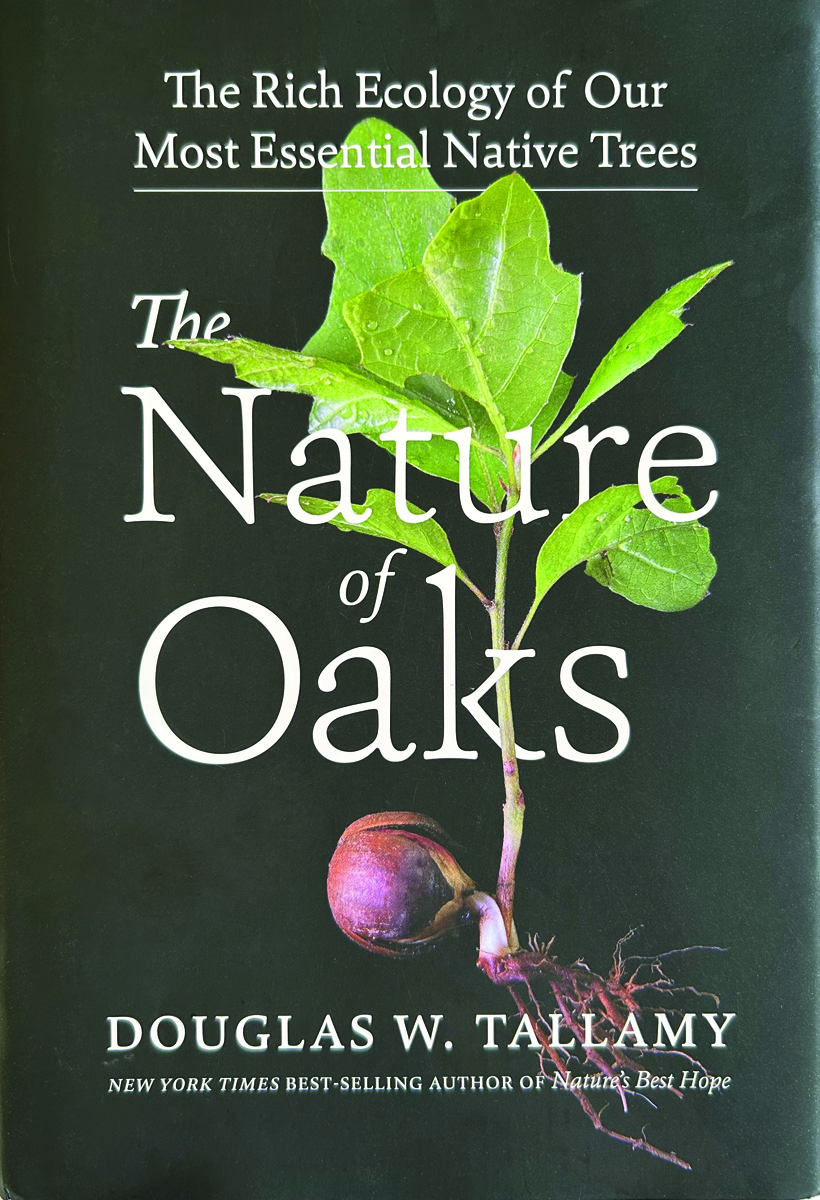
The Nature of Oaks: The Rich Ecology of Our Most Essential Native Trees
Fine Gardening receives a commission for items purchased through links on this site, including Amazon Associates and other affiliate advertising programs.
The Nature of Oaks reveals what is going on in oak trees month by month, highlighting the seasonal cycles of life, death, and renewal. From woodpeckers who collect and store hundreds of acorns for sustenance to the beauty of jewel caterpillars, Doug Tallamy illuminates and celebrates the wonders that occur right in our own backyards. He also shares practical advice about how to plant and care for an oak, along with information about the best oak species for your area.
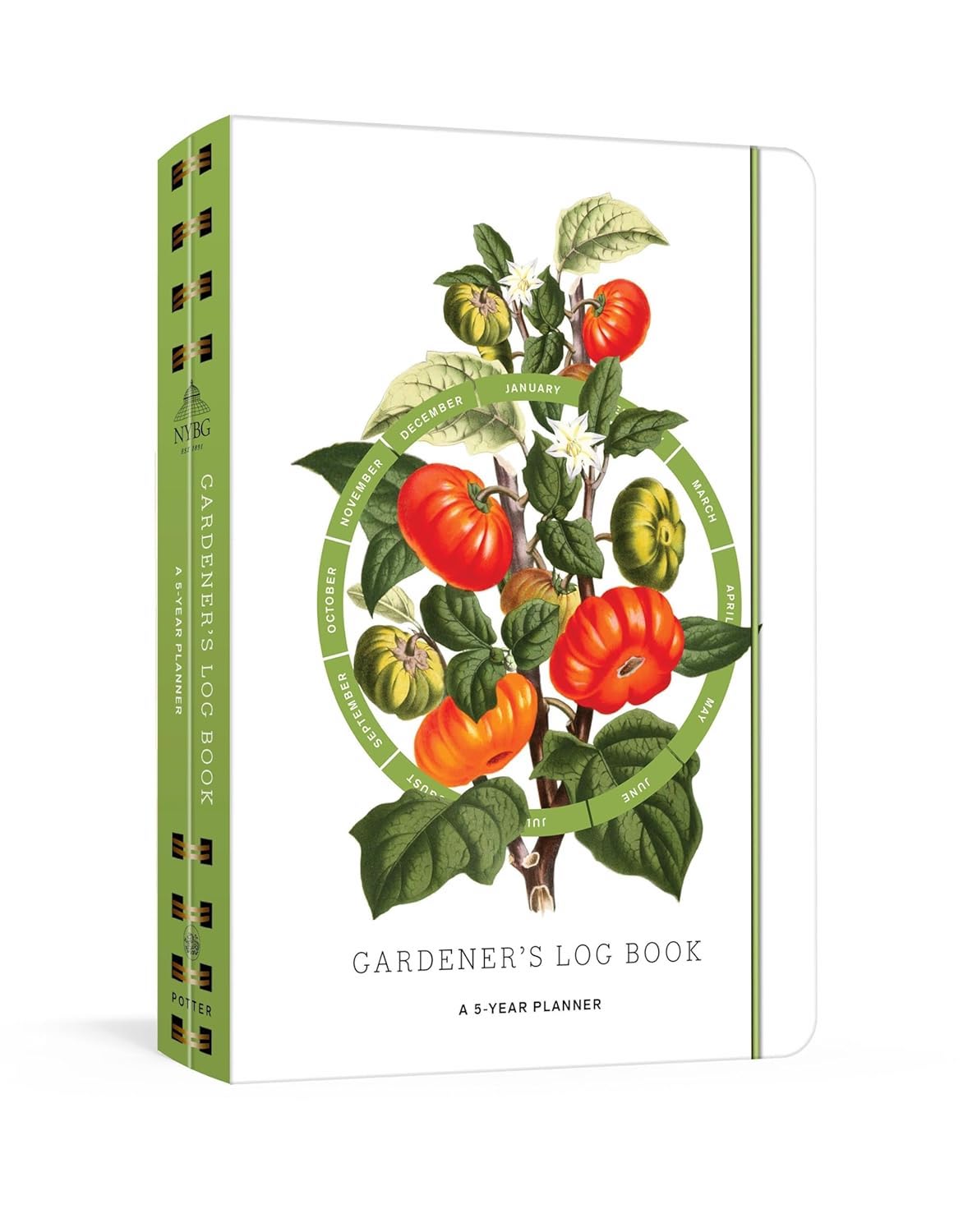
Gardener’s Log Book from NYBG
Fine Gardening receives a commission for items purchased through links on this site, including Amazon Associates and other affiliate advertising programs.
This weatherproof five-year log book includes the following features:
· Sturdy waterproof cover to protect pages from rain and muddy soil
· Lined pages and gridded paper for plotting beds
· Five years of 12-month bloom and harvest grids for recording what you planted and when
· Authoritative appendices on composting, pruning, pest and disease control, and container gardening
· Useful reminders by season on fertilizing, mulching, and transplanting
· Space for listing your favorite sources and suppliers.
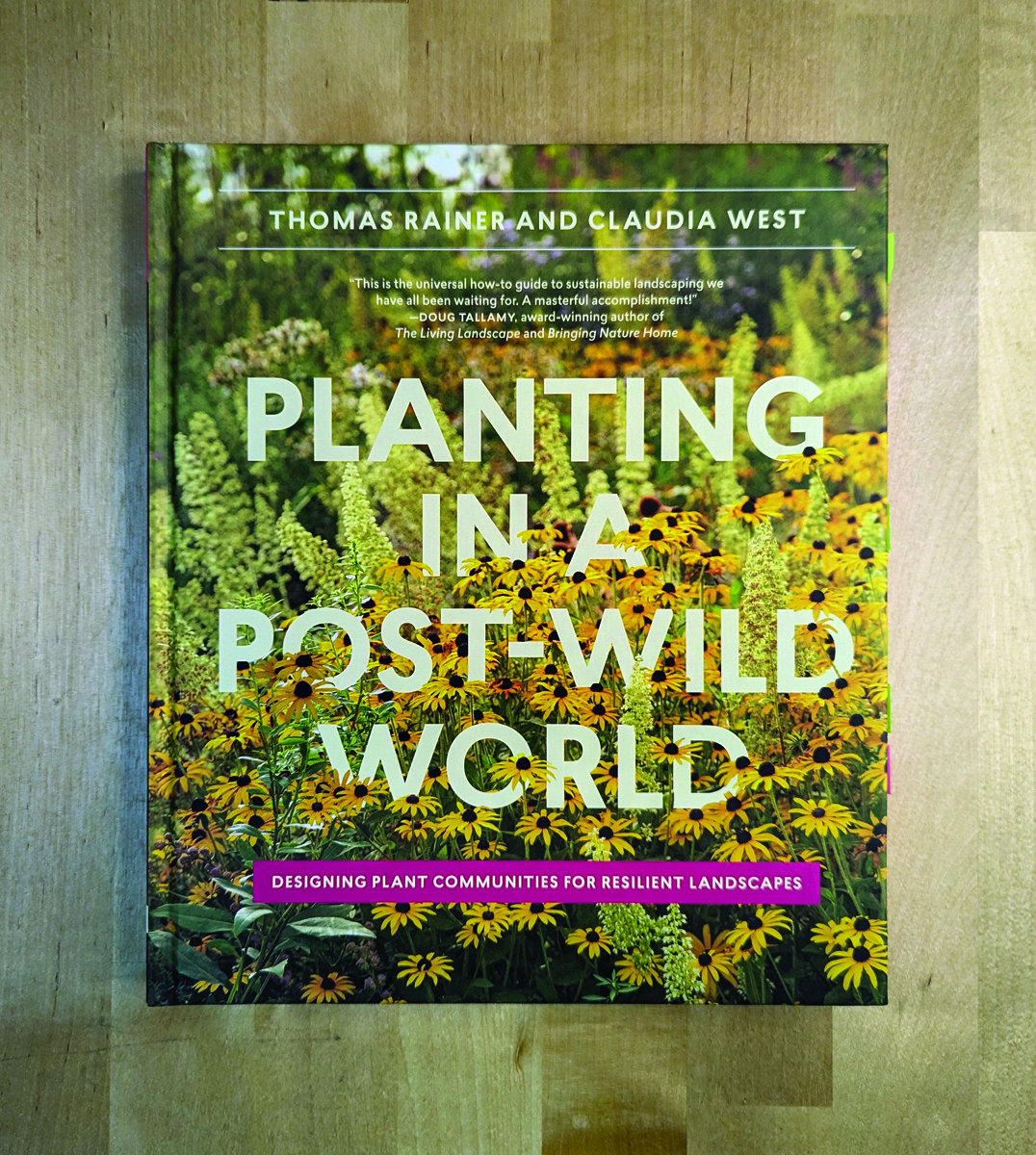
Planting in a Post-Wild World: Designing Plant Communities for Resilient Landscapes
Fine Gardening receives a commission for items purchased through links on this site, including Amazon Associates and other affiliate advertising programs.
Featuring gorgeous photography and advice for landscapers, Planting in a Post-Wild World by Thomas Rainer and Claudia West is dedicated to the idea of a new nature—a hybrid of both the wild and the cultivated—that can nourish in our cities and suburbs.


 Estudio EA