




Pollinators are a Keystone Species
- A large number of other species rely on pollinators for survival: animals, birds, and ultimately US!
- Pollinators are an indicator species:
- The health of the pollinator population gives a glimpse into the health of the entire ecosystem.

Planting for Pollinators
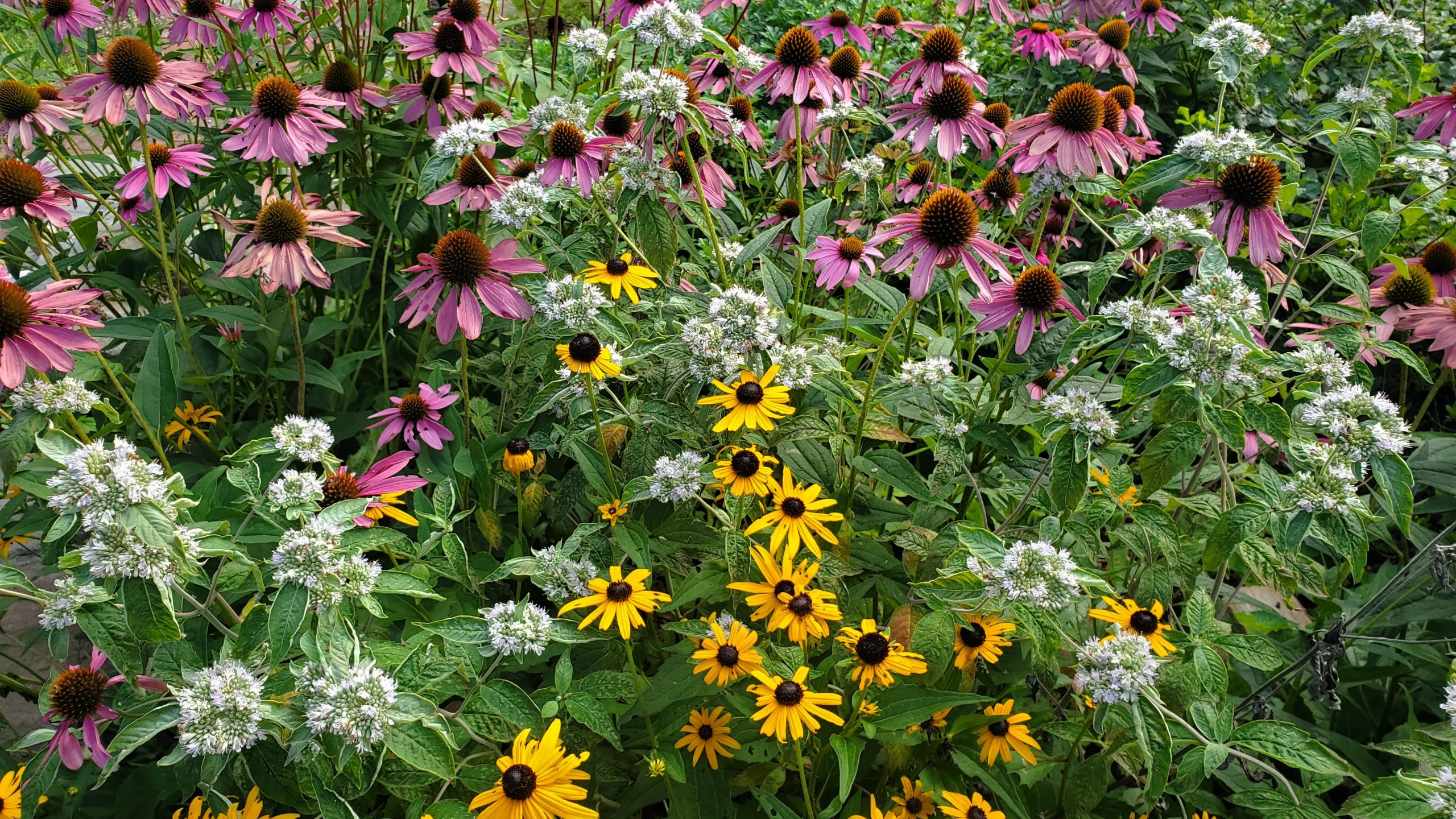
- Give pollinators a good ‘target’ by placing like species in groups of at least 3.
- Pollinators can spot it quickly, and move from one flower to the other and collect a full load of pollen to bring back to their nest
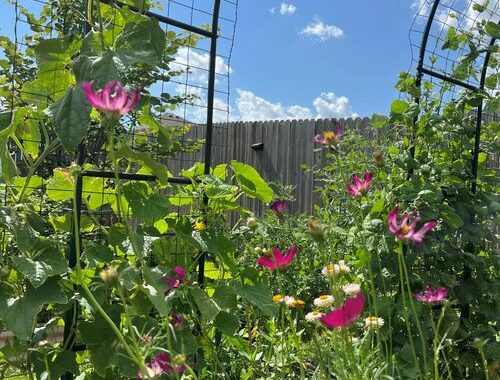
- Let your plants fill the bed – no need to separate plants with mulch. Pollinators can hop from one plant to the next so much easier!
- Plan for a succession of overlapping blooms from spring to fall.
- There are native plants for pollinators that bloom before the first, and after the last, frost!
- Our native bees are important pollinators. They have specific flight ranges so the needed plants must be within that range.
- Bumblebees can fly a mile or so.
- Leafcutter bees can fly 400-500 yards
- Small sweat bees: 200 yards
- The tiniest bee of all: only a couple hundred feet!

Managing a Pollinator Landscape
- Limit the use of pesticides
- Minimized mowed lawn area
- Offer nesting and egg laying sites such as un-mulched bare ground, snags, rock piles, and brush piles.
- Don’t forget trees and shrubs – pollinators need them too!
- Be sure to included native warm season grasses
- They provide nesting materials and nesting sites
- Some butterflies rely on them for larval food

TL/DR
- Plant a diversity of native species.
- The easiest way to provide pollinator habitat is to leave your native garden alone. Dead trees, overgrown areas, rock piles, and brush piles are all good.
- Don’t spray pesticides.