



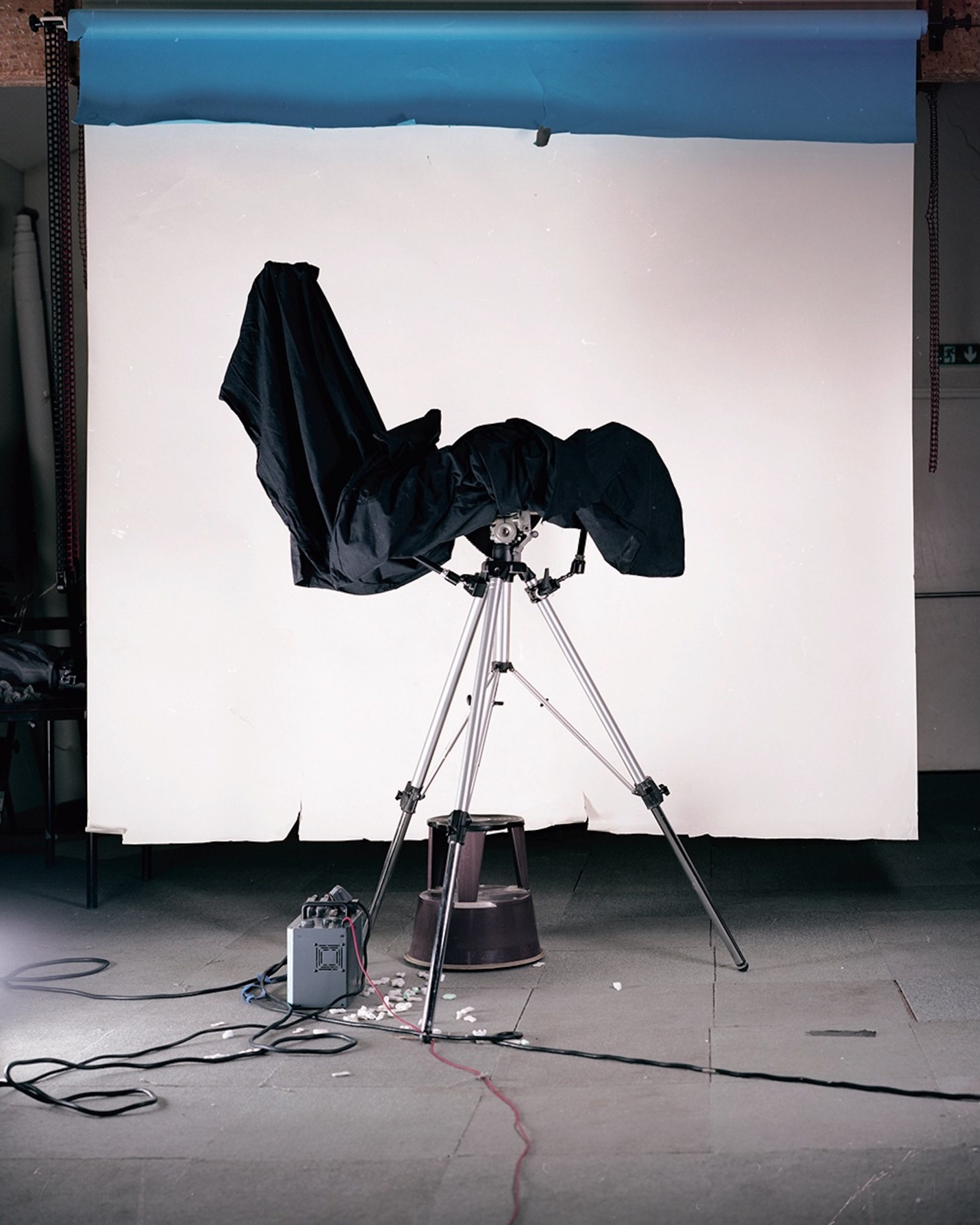
Sergio Valenzuela-Escobedo deconstructs the genealogy of the camera in Mänk’áčen

These theories allow Valenzuela-Escobedo to dismantle the longstanding assumption in anthropology and visual culture that Indigenous communities resist being photographed; it also enables him to argue that the projection of European anxieties onto these groups was instrumental in producing the symbolic and monetary value of the photographs. He says: “The explorers would return to Europe with their photographs as trophies, saying: ‘Look, these people refuse to be photographed because they believe that the camera can steal their souls. And yet, look at what I have brought back. Despite their resistance, I managed to capture their image.” The figure of the ‘savage’ Indigenous subject became a staple in Western anthropology, constructed in opposition to the figure of the audacious and heroic European explorer.
The use of the diagram as a conceptual framework and visual form is central to Valenzuela-Escobedo’s research. Its plasticity allows him to construct non-linear narratives which foreground the relational interconnectedness of the different elements constituting his work Mänk’áčen. He explains: “It is important to remember that, although many people perceive diagrams as static, they are constantly in motion because it seeks to explain a system and how it functions.” Mänk’áčen’s diagram is organic; it moves, changes, and takes new shape as the project evolves and different actors become involved. This emphasis on collaboration constitutes another central pillar of Valenzuela-Escobedo’s practice.
From the outset of his research, the artist collaborated closely with the Lafkenche Mapuche community in Puerto Saavedra, Chile in 2017. He deliberately chose not to bring a camera, despite its centrality to his investigation, instead spending time with the community, actively listening and learning about their technologies of visuality. He also participated in spiritual ceremonies through which he witnessed these technologies in practice, such as the nguillatún, a four-day celebration in which the machi (shaman) enters a trance to receive visions indicating what the community must do to secure a stable and harmonious future.
As Mänk’áčen evolves and finds new avenues for dissemination, Valenzuela-Escobedo establishes new collaborations that further develop the project by interweaving local histories of encounters between the camera and ancestral technologies of visuality. He explains: “Through invitations, I collaborate with other researchers who share their findings and significant anecdotes about what has been happening in each place. This gives rise to new tensions within the project.”
In its current iteration at Mumbai’s Dilip Piramal Art Gallery, National Centre for the Performing Arts, the project is concerned with how photographic archives are saved, produced, and maintained, particularly on networked digital platforms, while also addressing how the state’s selective preservation, suppression, or rewriting of historical narratives can contribute to the erasure of history. For the occasion, a new free newsprint publication, Images in Spite of Ourselves by Justo Pastor Mellado, was published by doubledummy, the platform Valenzuela-Escobedo co-founded.
“No one knows what is going to happen to our stories on Instagram or to each post uploaded to these platforms,” he says. “I study pre-photography, what could be considered cameras or proto-cameras in ancestral cultures. But it is also important to think about where we are headed.”






 Estudio EA