Saltar enlaces

Photoworks Festival 2026 regenerates in Brighton & Hove

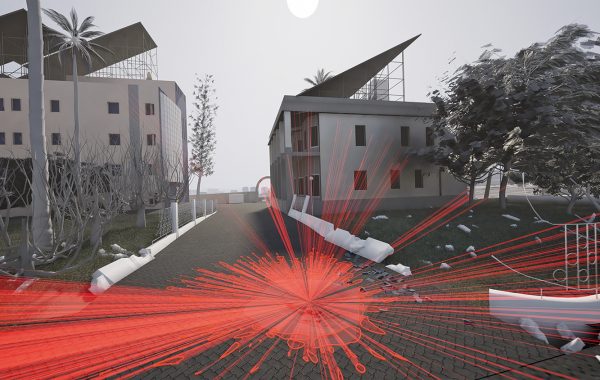
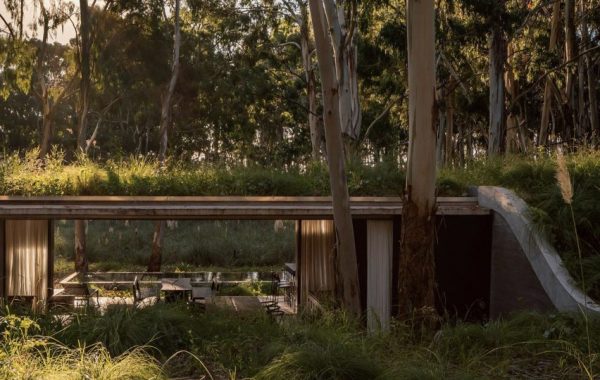
Uncertainty is fertile terrain for both artists and scientists, and Fedotov-Clements sees parallels between the disciplines “in terms of world-building and creating realities that others might enter”. Bones of Our Land is a collaboration between the two fields, made by artist Tsz Wai Pun and ecologist Coşkun Güçlü. Presented at Gallery Lock, it is a multimedia installation in which sound, soil analysis, photography, archival materials and scientific fieldwork converge to chart the restoration of an environmentally degraded Hong Kong hillside. Visitors are invited to ‘read’ the history of the ever-changing landscapes.

Throughout there is an emphasis on process, both on the way in which works have been made, and the sociopolitical contexts which helped form them and our responses. “We’re not interested in just presenting the images that have been produced, but in the artists’ experiences as well as the narratives within the works,” explains Fedotov-Clements. “What we’re trying to do is to unravel and share information about the creative process.”

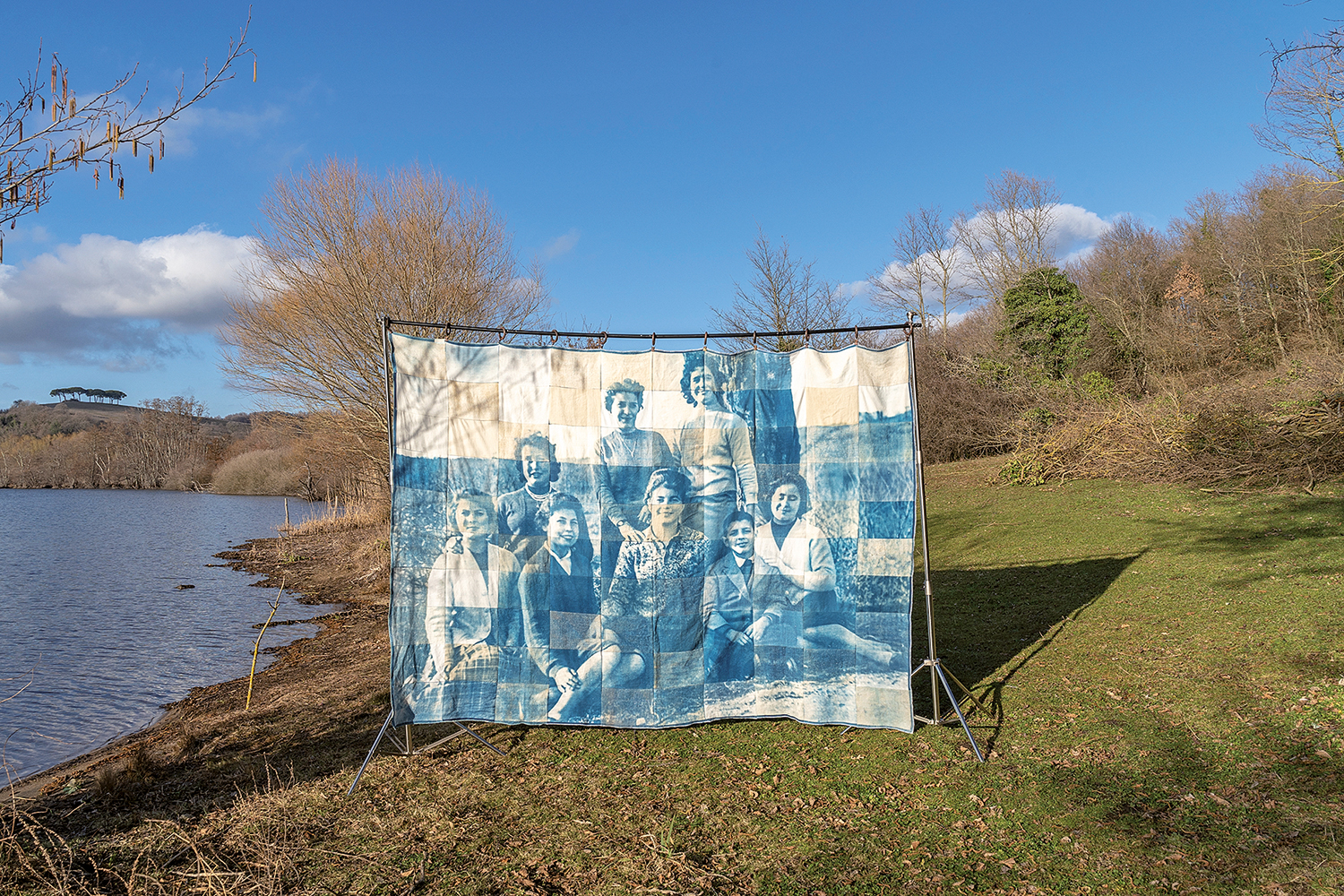
Putting ourselves in the picture 1&2 by Fast Forward: Women in Photography is a case in point, based on two publications featuring work by 52 women who challenge gender discrimination and female representation; Two photographs, a forgotten history at Dorset Place Gallery presents research by artist Jermaine Francis with Deborah Ireland at the Royal Geographical Society Archive, investigating images made in the 1860s. The two images offer divergent accounts, prompting us to consider the role interpretation plays in our consumption of photographs.

Alma Haser: Playing with Your Eyes at Hove Museum of Creativity liberates photography from beyond the frame, via playful, crafted works that resculpt our experience of 3D reality. Haser’s show expands on her chapter in Thames & Hudson’s forthcoming Mini Photographers book, on which Photoworks was a consultant. Meanwhile Where We Meet at Jubilee Library draws on the artists Eva Louisa Jonas, Kairo Urovi and Queer Grounds participants’ engagement with a queer DIY building community in West Sussex.

At Phoenix Art Space, Brighton Photo Fringe also leans into collaboration, demonstrating less individualistic, more mutually supportive ways of working via projects by eight collectives. Brighton Photo Fringe is now led by recently appointed curator Ricardo Reverón Blanco, who was previously part of the Photoworks team. Brighton & Hove also recently saw the opening of POST, a new lens-based art space founded by Nina Emett and Simon Roberts. “It was long overdue for Brighton, but also the country because hopefully it inspires others that it is possible to get on and do things, though funding is tight and times are challenging,” says Fedotov-Clements.

She hopes that the festival will encourage people to collaborate and exchange, supporting those facing challenging territories politically, and enabling intercultural dialogue. “I want this to be a safe space to have challenging conversations, encountering a variety of ideas and ways of being in a positive light,” she says.
Photoworks Festival 2026 regenerates in Brighton & Hove

Uncertainty is fertile terrain for both artists and scientists, and Fedotov-Clements sees parallels between the disciplines “in terms of world-building and creating realities that others might enter”. Bones of Our Land is a collaboration between the two fields, made by artist Tsz Wai Pun and ecologist Coşkun Güçlü. Presented at Gallery Lock, it is a multimedia installation in which sound, soil analysis, photography, archival materials and scientific fieldwork converge to chart the restoration of an environmentally degraded Hong Kong hillside. Visitors are invited to ‘read’ the history of the ever-changing landscapes.

Throughout there is an emphasis on process, both on the way in which works have been made, and the sociopolitical contexts which helped form them and our responses. “We’re not interested in just presenting the images that have been produced, but in the artists’ experiences as well as the narratives within the works,” explains Fedotov-Clements. “What we’re trying to do is to unravel and share information about the creative process.”

Putting ourselves in the picture 1&2 by Fast Forward: Women in Photography is a case in point, based on two publications featuring work by 52 women who challenge gender discrimination and female representation; Two photographs, a forgotten history at Dorset Place Gallery presents research by artist Jermaine Francis with Deborah Ireland at the Royal Geographical Society Archive, investigating images made in the 1860s. The two images offer divergent accounts, prompting us to consider the role interpretation plays in our consumption of photographs.

Alma Haser: Playing with Your Eyes at Hove Museum of Creativity liberates photography from beyond the frame, via playful, crafted works that resculpt our experience of 3D reality. Haser’s show expands on her chapter in Thames & Hudson’s forthcoming Mini Photographers book, on which Photoworks was a consultant. Meanwhile Where We Meet at Jubilee Library draws on the artists Eva Louisa Jonas, Kairo Urovi and Queer Grounds participants’ engagement with a queer DIY building community in West Sussex.

At Phoenix Art Space, Brighton Photo Fringe also leans into collaboration, demonstrating less individualistic, more mutually supportive ways of working via projects by eight collectives. Brighton Photo Fringe is now led by recently appointed curator Ricardo Reverón Blanco, who was previously part of the Photoworks team. Brighton & Hove also recently saw the opening of POST, a new lens-based art space founded by Nina Emett and Simon Roberts. “It was long overdue for Brighton, but also the country because hopefully it inspires others that it is possible to get on and do things, though funding is tight and times are challenging,” says Fedotov-Clements.

She hopes that the festival will encourage people to collaborate and exchange, supporting those facing challenging territories politically, and enabling intercultural dialogue. “I want this to be a safe space to have challenging conversations, encountering a variety of ideas and ways of being in a positive light,” she says.
Photoworks Festival 2026 regenerates in Brighton & Hove

Uncertainty is fertile terrain for both artists and scientists, and Fedotov-Clements sees parallels between the disciplines “in terms of world-building and creating realities that others might enter”. Bones of Our Land is a collaboration between the two fields, made by artist Tsz Wai Pun and ecologist Coşkun Güçlü. Presented at Gallery Lock, it is a multimedia installation in which sound, soil analysis, photography, archival materials and scientific fieldwork converge to chart the restoration of an environmentally degraded Hong Kong hillside. Visitors are invited to ‘read’ the history of the ever-changing landscapes.

Throughout there is an emphasis on process, both on the way in which works have been made, and the sociopolitical contexts which helped form them and our responses. “We’re not interested in just presenting the images that have been produced, but in the artists’ experiences as well as the narratives within the works,” explains Fedotov-Clements. “What we’re trying to do is to unravel and share information about the creative process.”

Putting ourselves in the picture 1&2 by Fast Forward: Women in Photography is a case in point, based on two publications featuring work by 52 women who challenge gender discrimination and female representation; Two photographs, a forgotten history at Dorset Place Gallery presents research by artist Jermaine Francis with Deborah Ireland at the Royal Geographical Society Archive, investigating images made in the 1860s. The two images offer divergent accounts, prompting us to consider the role interpretation plays in our consumption of photographs.

Alma Haser: Playing with Your Eyes at Hove Museum of Creativity liberates photography from beyond the frame, via playful, crafted works that resculpt our experience of 3D reality. Haser’s show expands on her chapter in Thames & Hudson’s forthcoming Mini Photographers book, on which Photoworks was a consultant. Meanwhile Where We Meet at Jubilee Library draws on the artists Eva Louisa Jonas, Kairo Urovi and Queer Grounds participants’ engagement with a queer DIY building community in West Sussex.

At Phoenix Art Space, Brighton Photo Fringe also leans into collaboration, demonstrating less individualistic, more mutually supportive ways of working via projects by eight collectives. Brighton Photo Fringe is now led by recently appointed curator Ricardo Reverón Blanco, who was previously part of the Photoworks team. Brighton & Hove also recently saw the opening of POST, a new lens-based art space founded by Nina Emett and Simon Roberts. “It was long overdue for Brighton, but also the country because hopefully it inspires others that it is possible to get on and do things, though funding is tight and times are challenging,” says Fedotov-Clements.

She hopes that the festival will encourage people to collaborate and exchange, supporting those facing challenging territories politically, and enabling intercultural dialogue. “I want this to be a safe space to have challenging conversations, encountering a variety of ideas and ways of being in a positive light,” she says.
Home
Account
Cart
Search
Explore
Drag