


When Jenny Holzer put Truisms on a Times Square billboard
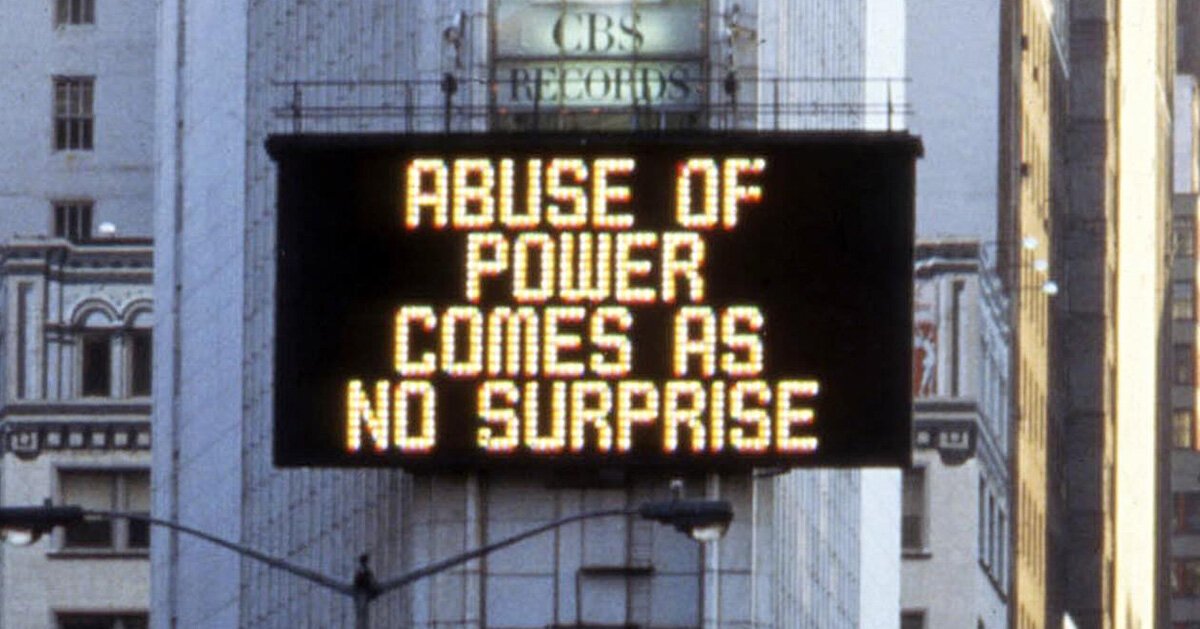
In 1982, sentences appeared between advertisements on a giant electronic billboard in Times Square. PRIVATE PROPERTY CREATED CRIME. TORTURE IS BARBARIC. ABUSE OF POWER COMES AS NO SUPRISE. They were not selling anything, offering directions, or announcing a new product. Jenny Holzer had placed her Truisms inside the Spectacolor board, turning one of New York’s most conspicuous commercial surfaces into a vehicle for ambiguous, confrontational statements.
The gesture was sharp because Holzer used the visual language used for advertising — the scale, movement and glow of the billboard remaining the same, but instead of selling a product, it delivered short, unsettling statements. For a few seconds, a space designed for advertising became a place to encounter language.
More than forty years later, Holzer’s Wrong Answers at the Serralves Museum of Contemporary Art in Porto revisits some of the same ideas in a very different media landscape. Screens are no longer unusual or concentrated in a few places. They are part of buildings, streets, public transport, and the phones we carry every day. In 1982, Holzer was finding a way to put critical language on the commercial screen. Today, the challenge is making people stop and read it. Holzer has spent her career testing what happens when words are taken out of books and put into the world around us. They appear on walls, buildings, stone, lightboxes, and screens, changing the way we encounter and read them.
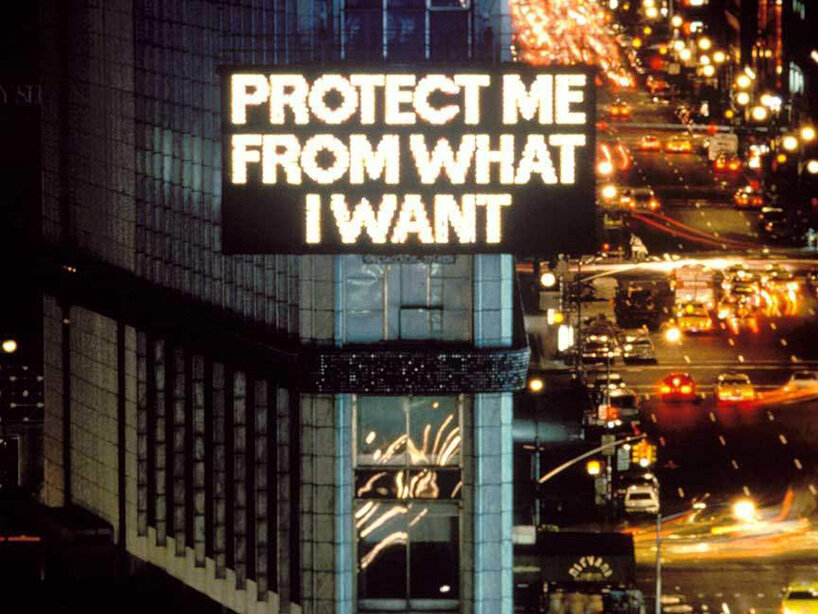
Survival (1983–85), 1985 © 1985 Jenny Holzer, member Artists Rights Society (ARS), NY | image by John Marchael
The billboard as public space
Holzer’s move toward the electronic screen was preceded by years of experimentation with how language could inhabit the city. Beginning in 1977, she pasted Truisms across New York on sheets of paper. The statements were anonymous, direct and deliberately difficult to classify. Some sounded like political slogans, others like conventional wisdom, threats, advertisements or fragments of philosophical argument. On a city wall, the words did not arrive with the institutional framing of a museum. They were encountered while walking, waiting, shopping or just passing through.
Holzer soon began testing what happened when the material changed. Her Living series transferred language onto bronze plaques, giving subjective observations the visual authority of civic markers. The text remained, but its status shifted. Paper suggested the temporary and unofficial; bronze suggested permanence, history and institutional weight.
The Spectacolor board took that experiment into the architecture of mass communication. The system Holzer used consisted of thousands of incandescent bulbs arranged as a large matrix, capable of displaying simple animated images and text. Through the public art project Messages to the Public (1982-1990), artists were given access to a surface otherwise dedicated to advertising. Holzer’s intervention lasted only seconds within a much longer commercial sequence. The work appeared where an advertisement was expected to appear. Passersby looking up at Times Square encountered something that initially behaved like an advertisement but refused to resolve into one. The billboard became a space for reading.
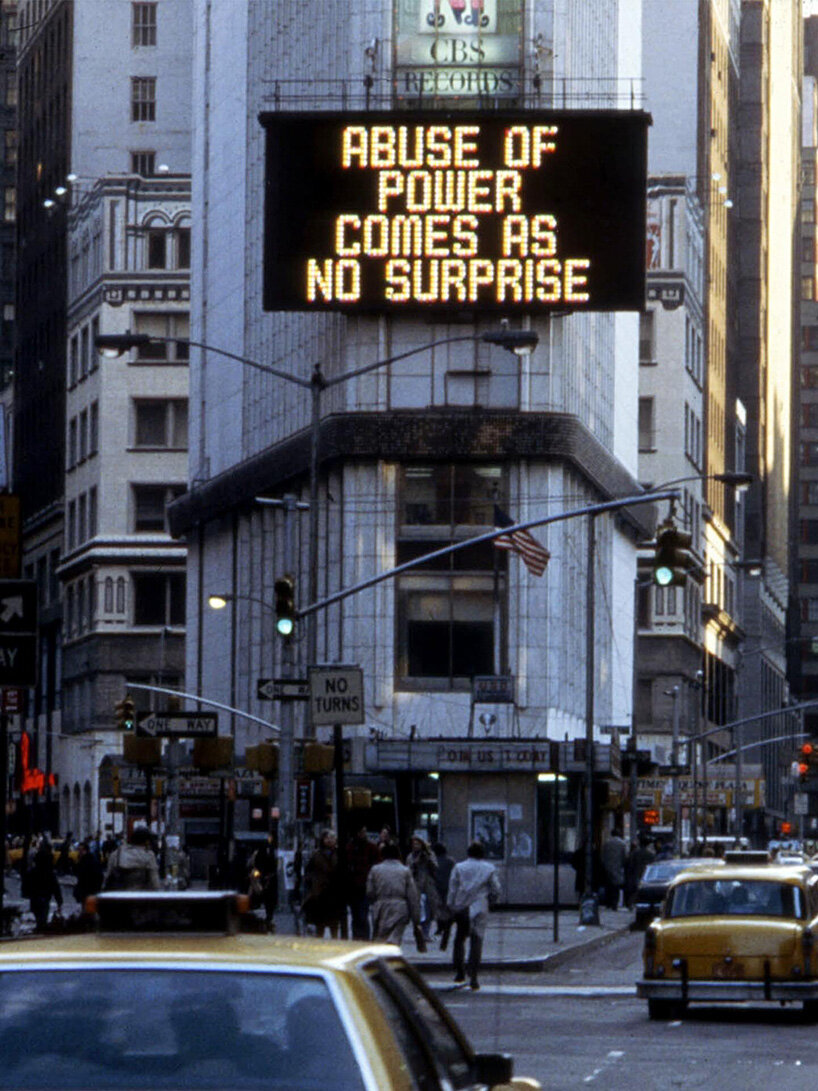
Jenny Holzer, Abuse of Power Spectacolor billboard, Times Square, 1982 © 2026 Jenny Holzer, Member Artist Rights Society (ARS), New York. image © 2026 Lisa Kahane
What happens when every surface is a screen?
The conditions that made the Spectacolor intervention so effective have changed. In 1982, a giant electronic billboard was unusual enough to command attention. Today, Times Square is surrounded by screens, while the individual viewer carries another one in their pocket. Advertising has moved from broadcast messages addressed to everyone toward systems that target individuals through data, algorithms and personalized feeds. The commercial screen is part of the atmosphere. That changes the possibilities for artistic intervention.
Holzer’s Wrong Answers in Porto, installed across Serralves, brings together paper works, stone inscriptions, LED installations and newer pieces responding to contemporary political communication. The works create different conditions for reading, moving between the permanence of stone and the instability of electronic text.
In READY FOR YOU (2023–25), contemporary political language becomes particularly difficult to separate from the media systems that circulate it. The work incorporates material connected to Donald Trump alongside AI-generated transformations, reflecting an information environment in which political statements are endlessly reproduced, altered and accelerated. Here, the problem is no longer that critical language cannot access the screen, but that the screen is already full.
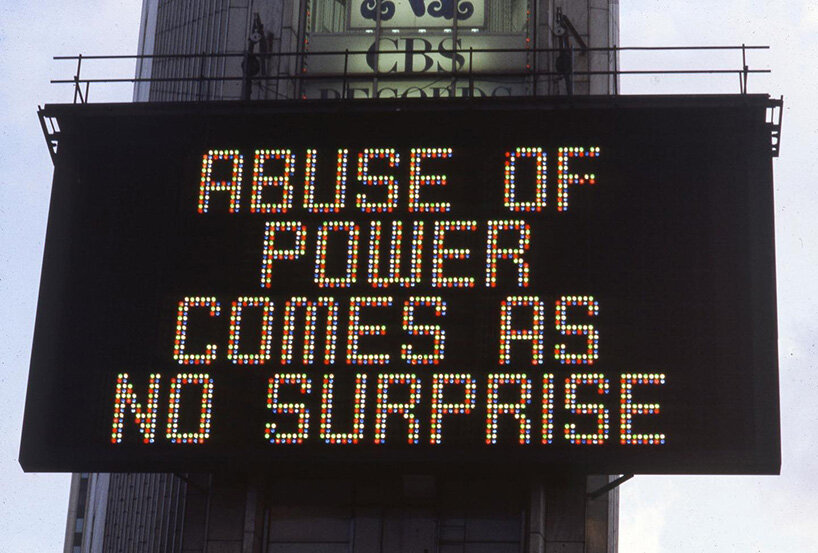
image © 1983 Lisa Kahane NYC
FROM INTERRUPTION TO SATURATION
The Truisms appeared on the Spectacolor billboard for only a few seconds before the next commercial message took over. That brevity was part of their character. You could catch a sentence, think about it, and then it was gone. The situation is very different now. Screens no longer need to fight for attention because they are already woven into almost every part of daily life. There is always another image, headline, notification or message waiting behind the one in front of us. This is also why Holzer’s use of different materials remains important.
At Serralves, the words move between paper, stone, paint and LED. A text printed on a sheet of paper has a different presence from one carved into stone; an LED message can appear and disappear before you have had time to take it in. The exhibition makes these differences tangible. You walk closer to some works and pass others at a distance. Some stay with you; others are gone almost as soon as you have read them.
Holzer has been doing this for decades, changing not only the words but the places and materials through which they reach us. The setting is never quite neutral. A poster on a city wall, a sentence on a bronze plaque, or a message glowing across a screen each carries a different kind of weight. In 1982, the unexpected thing was finding Holzer’s words on a billboard. Today, the unexpected thing may be finding enough quiet to read them.
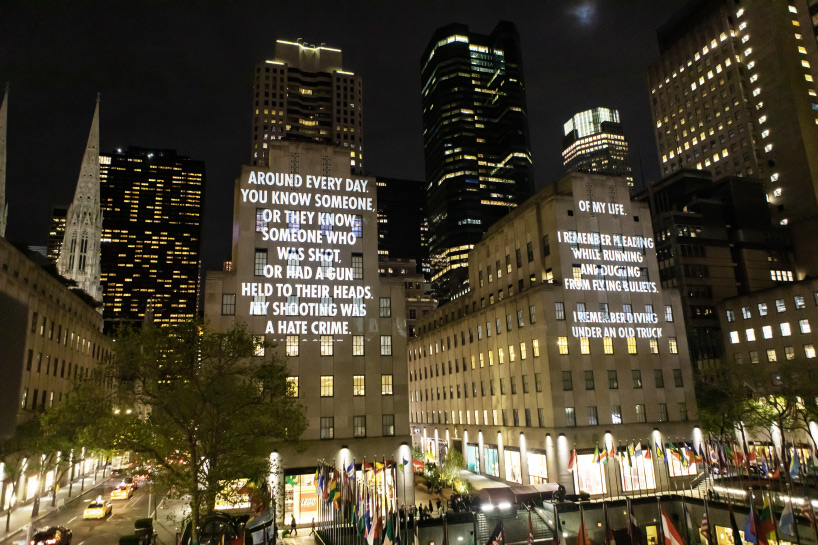
presented by Creative Time © 2019 Jenny Holzer, member Artists Rights Society (ARS), NY | image by Lauren Camarata
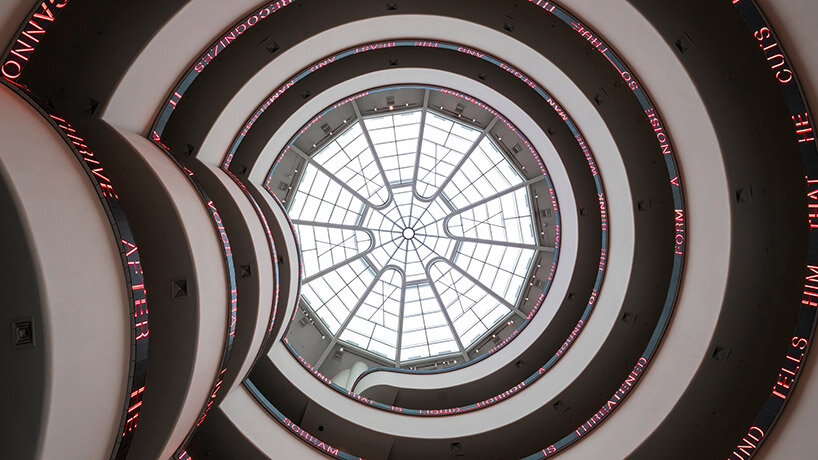
installation view, ‘Installation’ | image © Ariel Ione Williams, courtesy Solomon R. Guggenheim Museum

Installation Views of Jenny Holzer: Wrong Answers | image © Serralves Foundation

Installation Views of Jenny Holzer: Wrong Answers
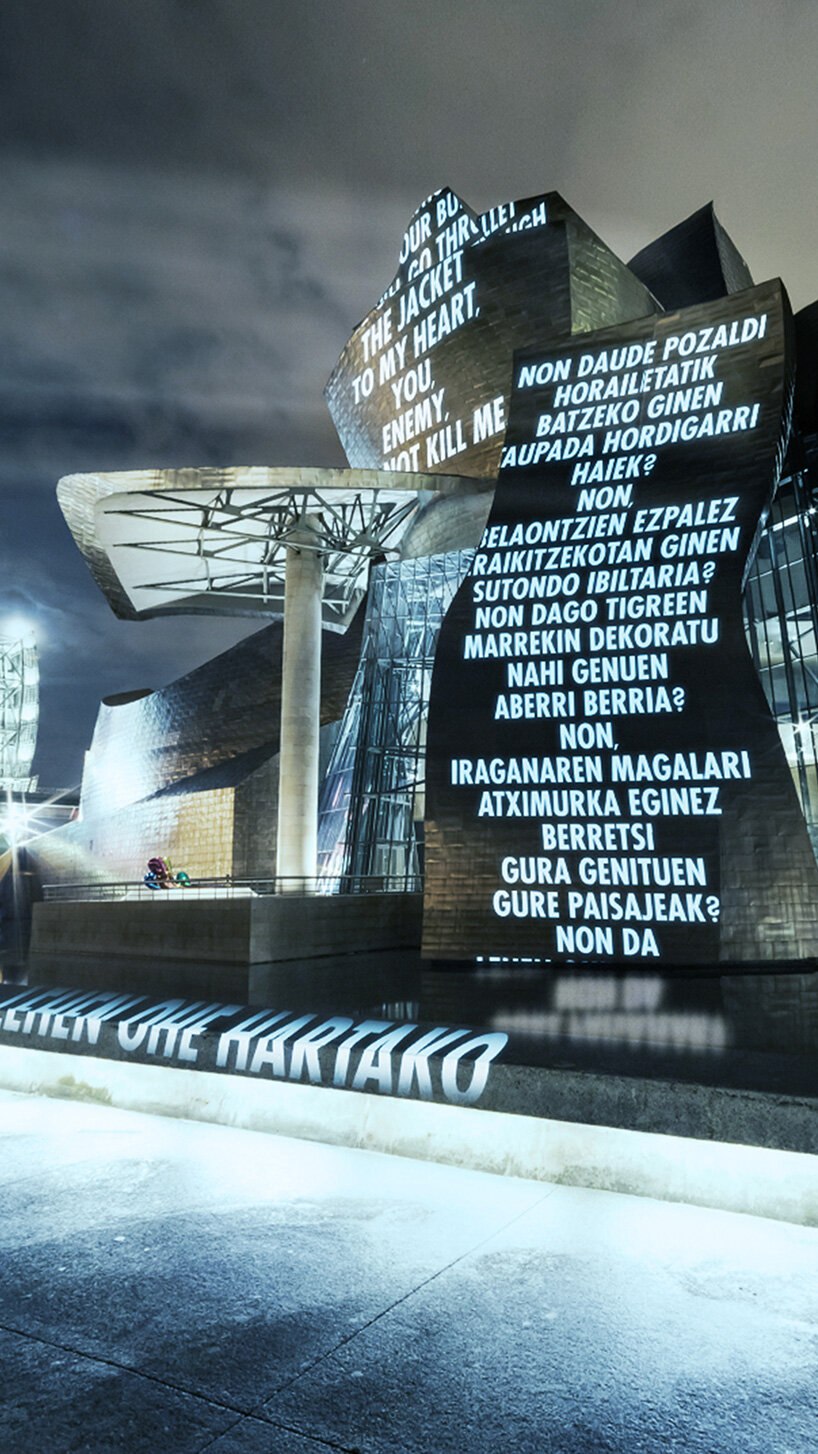
images © 2021 Jenny Holzer, Member Artists Rights Society (ARS), NY / VEGAP by Erika Ede
This article is part of designboom’s SPECTATOR AND SPECTACLE chapter, asking how wonder gets built, presented in partnership with SolidNature, and how it might return some mystery to a world that has measured most of it away. Discover more stories that turn onlookers into participants, alter perception and disrupt the everyday here.


 Estudio EA