



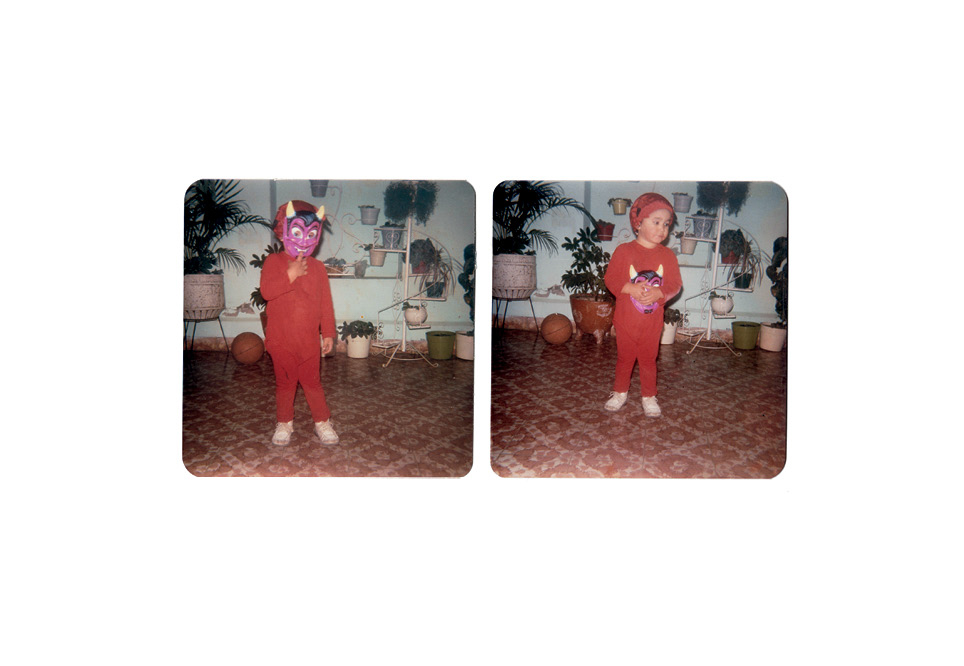

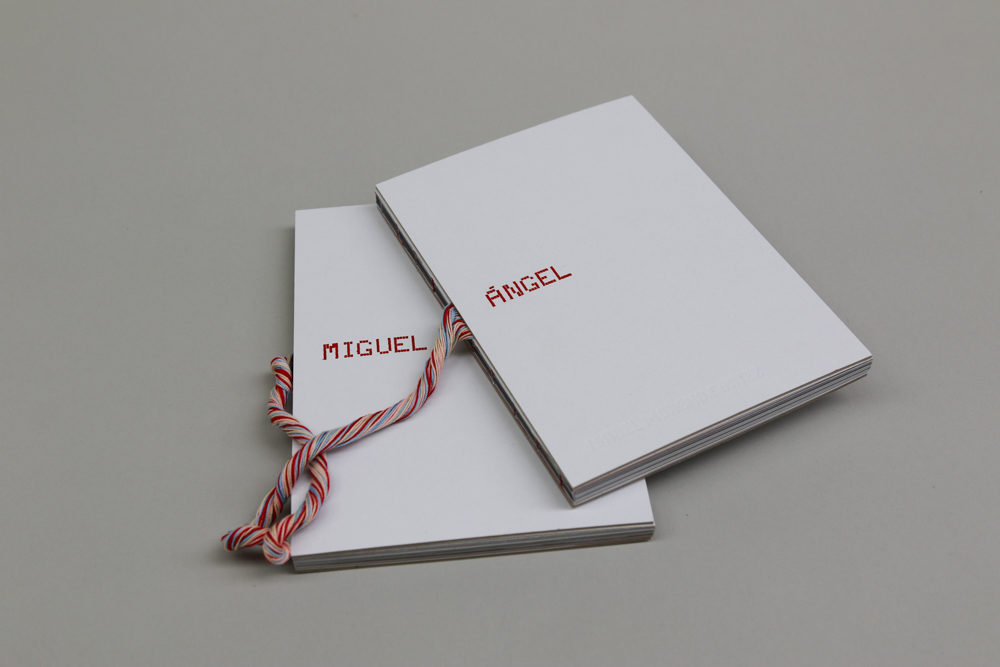
© Isabel Moreno Cortez, artist book “Angel Miguel”
I remember the day I first spent time with Ángel Miguel by Isabel Moreno Cortez. There was something about this book that made me pause—to slow down, to look again. I found myself almost suspended within the book—quietly witnessing the traces of three generations, and the tender ways memory can move through a family, even when words fail to contain it. Ángel Miguel is more than a photobook. It is a meditation on memory, inheritance, and the ways we create language for experiences that resist being named. Through photographs, writing, and an intensely tactile handmade object, Isabel creates a space where two lives—her son Ángel and her brother Miguel—can exist alongside one another, beyond the boundaries of time and absence.
I feel honored to have the opportunity to speak with Isabel about Ángel Miguel—about its origins, its silences, its memories, and the process of making a space for love, loss, and inheritance within a book.
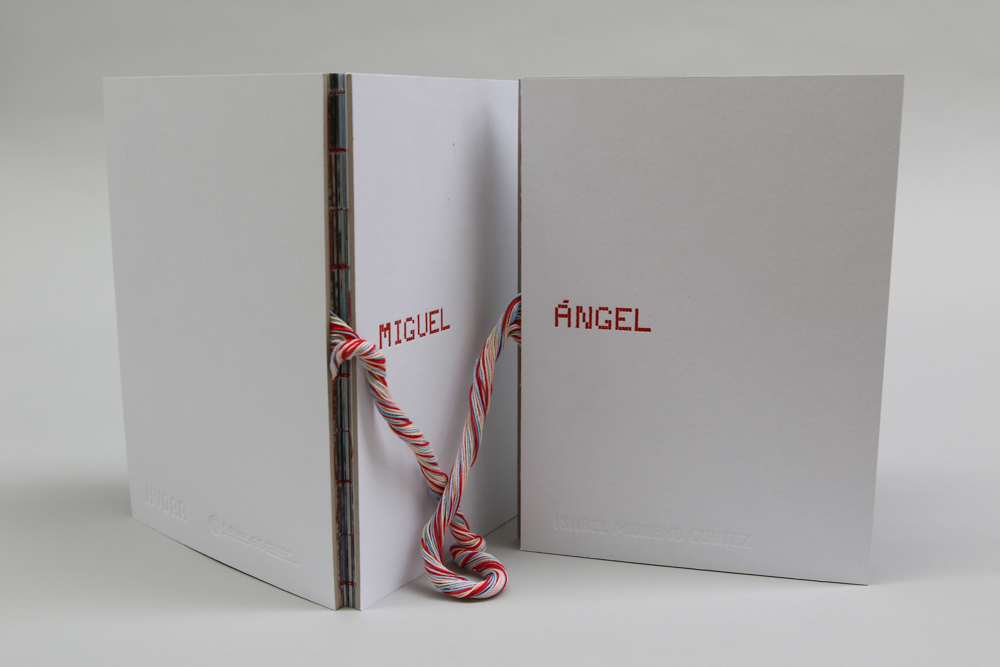
© Isabel Moreno Cortez, artist book “Angel Miguel”
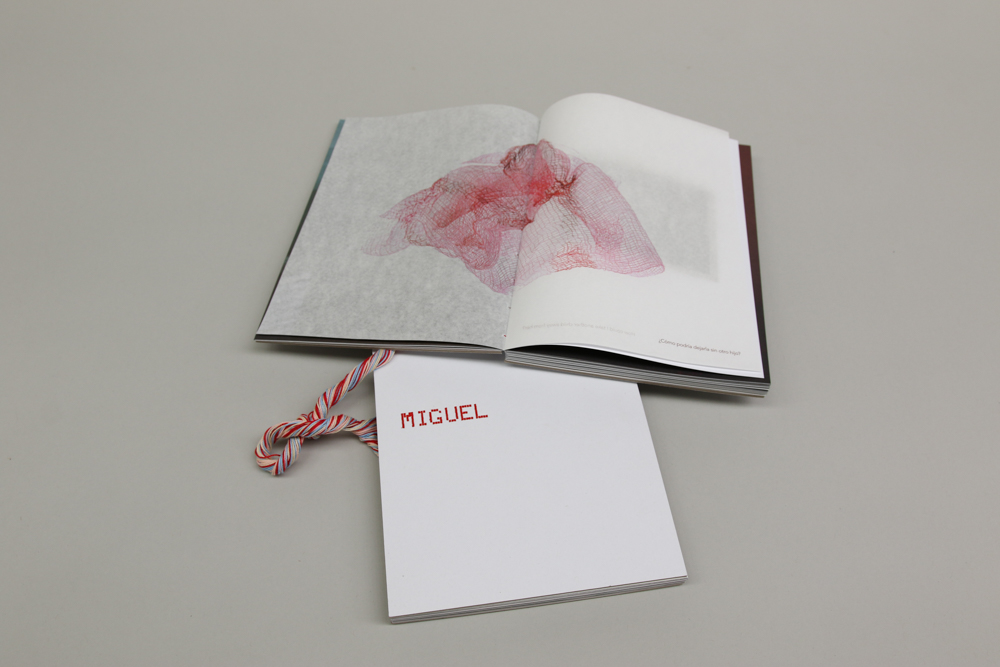
© Isabel Moreno Cortez, spread from artist book “Angel Miguel”
Ángel Miguel project was developed over the course of five years, in the frame of three main programs: SINAPSIS: LABORATORIO DE PRODUCCIÓN FOTOGRÁFICA (Mexico, 2019) by Hydra, PHOTOBOOK AS OBJECT (Japan, 2022) by RPS Reminders Photography Stronghold and INCUBADORA DE FOTOLIBROS (Mexico, 2023), by Hydra.
Hydra’s editorial project is born from the INCUBADORA DE FOTOLIBROS program, led by Ana Casas Broda (photographer) and Beatriz Novaro (writer, poet), which seeks to give authors the support they need to deepen and strengthen their project both conceptually and formally, in a process in which the work with the narrative is inextricably linked to the experimentation of the narrative, in accompaniment with the experimentation with design, materials and forms of production.
Ángel Miguel is composed of two intertwined books. The book Angel – which tells the story of the death in the womb of the author’s son- is joined with a beautiful weaving of threads that refer to the umbilical cord, to the book, Miguel, where Isabel gives voice for the first time to the suicide of her brother at the age of thirteen. The book is built with a delicate balance in the use of contrasting and varied materials that show the singular strength and fragility of the experience being narrated. Combining local papers, like mantequilla paper with its transparency and delicacy, the roughness and crudeness of estraza (reddish paper usually used to wrap tortillas or meat) along with cardboard whose texture and imperfections, reveal small glitters, Angel Miguel lets us feel the complexity and the deep contradictions of its subject matter.
“There are days that come in ambush and tear the rest of life.
Two months after the birth of my son Angel, five years ago, I began to build this story that has saved my life. I immersed myself in a process of deep introspection to give the project the time and form it needed, that it deserved. Little by little the words emerged and throughout these years, they have been molded to my process, to that kind of immersion that allows me to get deeper, closer to the knot of pain, to the need to give it shape, to tell it to myself and to tell it to others. Writing has been a space for reflection, a trigger for reflection, a detonator of the pain, of the need to give it form, to tell it to myself and to tell it to others. Writing has been a space for reflection, a trigger for new images, a guiding thread and counterpoint to the visual narrative. There are images that can only exist as text.
Angel died on January 23, 2019, due to a complication during the 27th week of pregnancy. Living his death allows me to connect with my mother, with my linage, gives me a new voice and the right to tell the death of my brother Miguel, due to a suicide 23 years earlier, on June 23, 1996.
Angel Miguel is a photobook project that deals with the death of children and the traces that such a loss leaves on those who survive them. An unnatural loss, which faces a lexical gap, since there is no word to name the parents of the dead children. Between images and texts, a complex weave is unveiled in order to share the intense experience of the encounter with two deaths that marked my life, the indissoluble stories of Angel and Miguel, my son and my brother.
How many heartbeats are there no heartbeats in each family? How many silenced deaths? How many invisible duels?
Angel Miguel is the universe in which they both exist. It is the border between forever and never, the border between remembering them forever, even if we never have them again. ¨
– Isabel Moreno
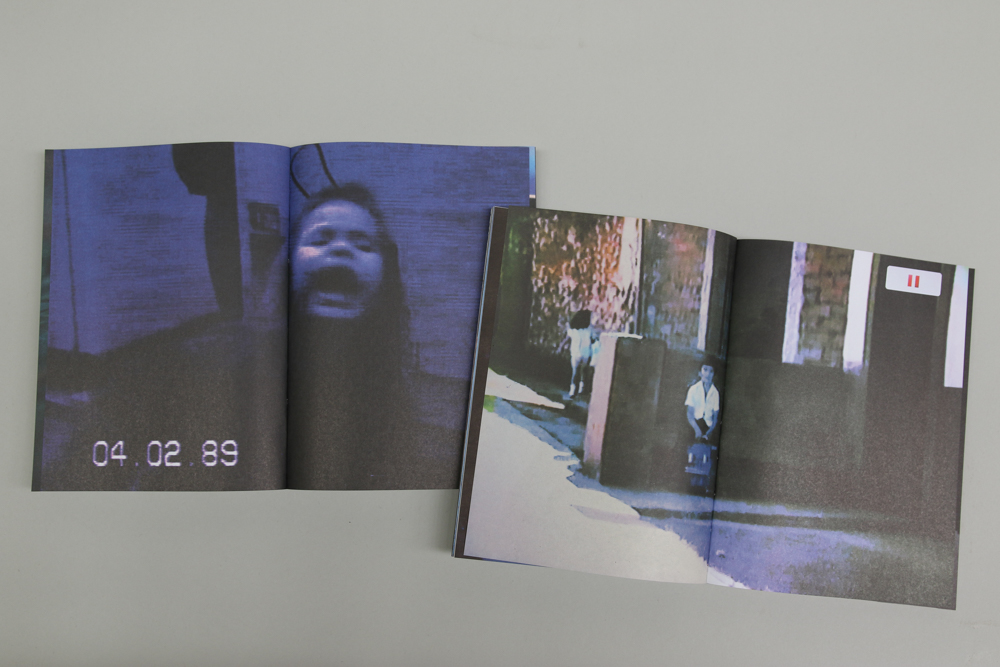
© Isabel Moreno Cortez, spreads from artist book “Angel Miguel”
Tell us about your growing up and early influences. How has it shaped the way you approach storytelling today?
Growing up in a very small town, access to art was very limited. But I had full access to other things. I grew up surrounded by nature, I got to explore a little ravine with my brother and cousins on any ordinary family Sunday, make mud cakes and sand houses, climb trees and jump rivers born from rain water.
My first formal approach to art was during high school, when I moved to Guadalajara. I had an extra-curricular drawing class. Later when I finished high school, I took one semester off; I had enrolled myself in Architecture but wasn’t sure about that decision. That summer, I took part in a painting class that changed my faith; I found out that was the path I wanted to walk. So, I sat the exams for the Visual Arts Bachelor in the University of Guadalajara, and chose painting as a main subject. I know I am privileged my family supported me on this decision to study arts; knowing just one generation before mine, women wouldn’t even be allowed or encouraged to study.
My encounter with photography came after I graduated. On a visit to Mexico City to renew my US Visa; I got to visit the Academia de San Carlos, venue of the master degree in Arts of the Universidad Nacional Autónoma de México. I took a six-month seminar on Contemporary Photography and that opened a new world for me. Again, I was privileged to meet many Mexican photographers and witness their paths, it was inspiring to see where they started and what they had achieved by then, after 20, 30 or 40 years of career. I met, and saw the work of, Lourdes Almeida, Javier Hinojosa, Nicola Lorusso, Patricia Lagarde, Gabriel Figueroa, Ana Casas, just to mention a few. I decided then I wanted to study Photography, and I went for a master’s degree. In the following years I was fascinated by the possibilities that photobook and artist book could offer to present visual projects.
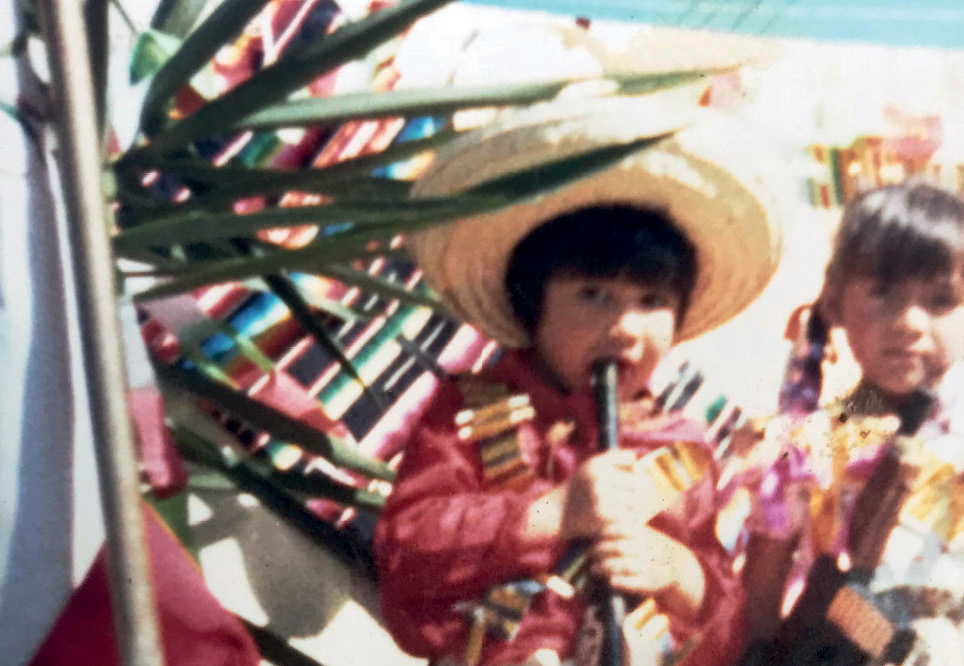
© Isabel Moreno Cortez, photo from artist book “Angel Miguel”
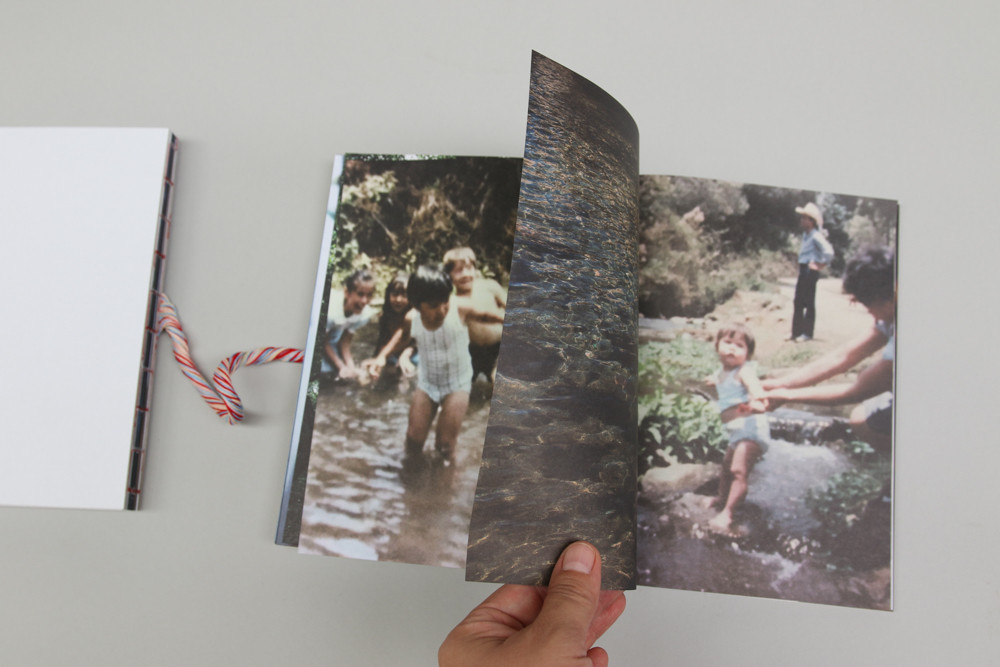
© Isabel Moreno Cortez, spread from artist book “Angel Miguel”
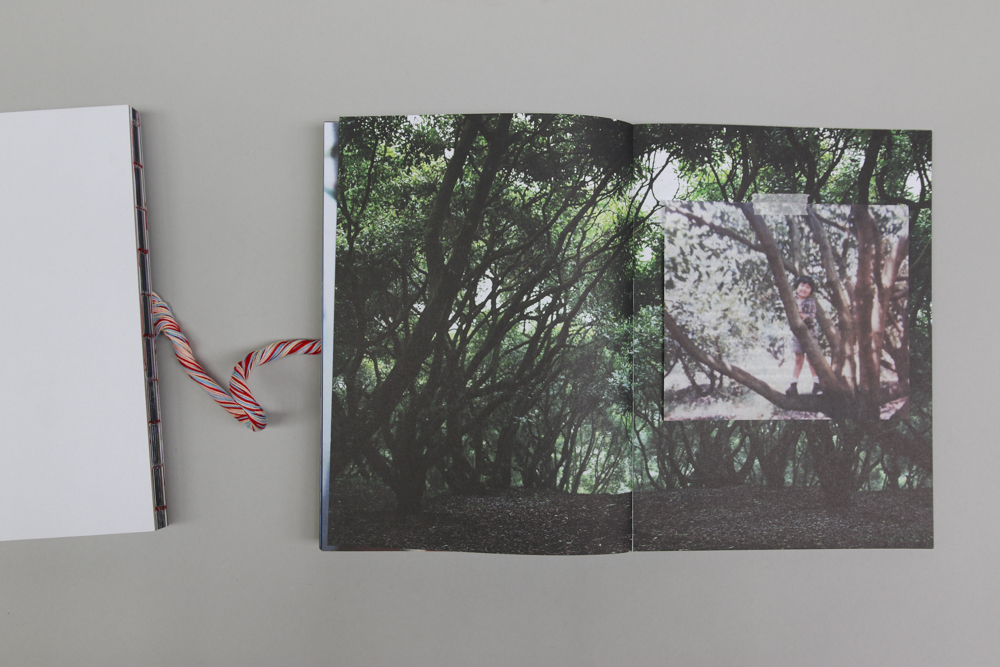
© Isabel Moreno Cortez, spread from artist book “Angel Miguel”
You have transformed an unnamable experience into a visual, textual, and physical book form. I would like to go to the origin of Ángel Miguel. You mentioned “There are days that come in ambush and tear the rest of life”. Can you talk about the moment when you realized this experience needed to become a handmade artist book? What draws you to the photobook as a medium?
In my experience, during pregnancy, one prepares for everything, except for the possibility of your baby dying. No one ever said my baby could die. I had never thought about the fact that babies could die before they were born. But they do. Far more often than one would think, than one would want. It is a silent, lonely grief. Society doesn’t recognize that type of loss for what it is. It’s better that it happened now, that you didn’t love him yet. God knows why. You are still young; you will have another child. None of those kind (or cruel) words represented what I felt.
I couldn’t even name it. I survived through the first few weeks numbed, it felt like I was watching things happening to somebody else. When I came back to reality, this reality where my son had died but I was alive, I knew I needed to talk about this in a language other people could relate to. When conditions are given, there is an enormous opportunity to converse, to empathize, to meet with others in a common ground, a place where words might not be enough, but feelings can be shared.
I remember an artist book workshop I attended in 2015, with photographer Pedro Tzontémoc. He said: the most natural and intimate place for photography is the book; it forces you to come close and start a dialogue with the images. It is also the easiest way for images to be shared, to travel and find new homes. This story demanded to be seen from up close, in silence. Perhaps it was also my relationship with materials from my background as a painter. I wanted a book you could touch and feel, experience through the skin; thereby the selection of different papers, with outstanding textures; imperfect, raw, fragile.
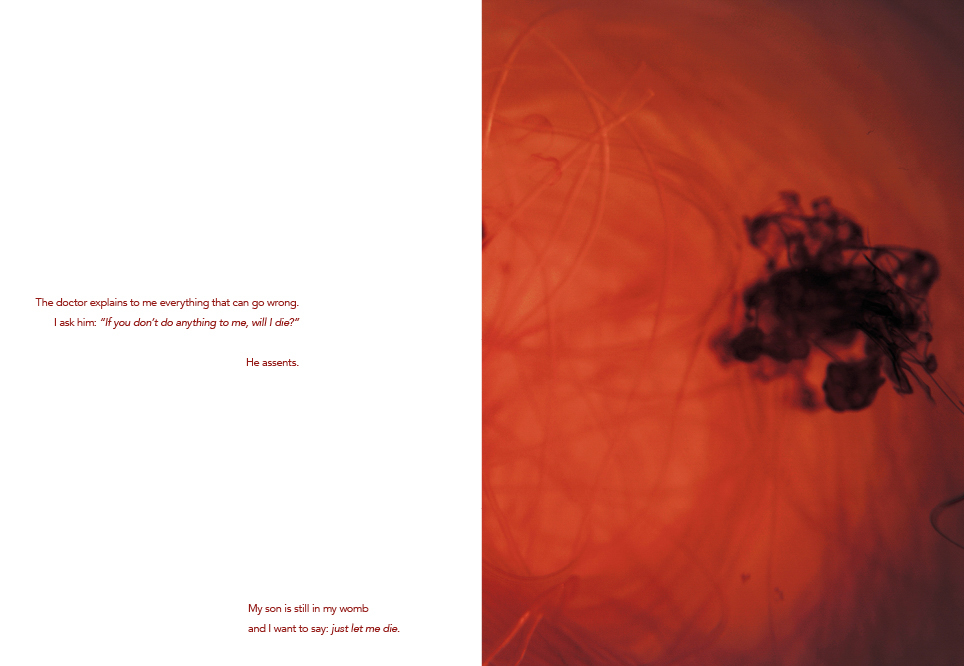
© Isabel Moreno Cortez, Angel spread from artist book “Angel Miguel”
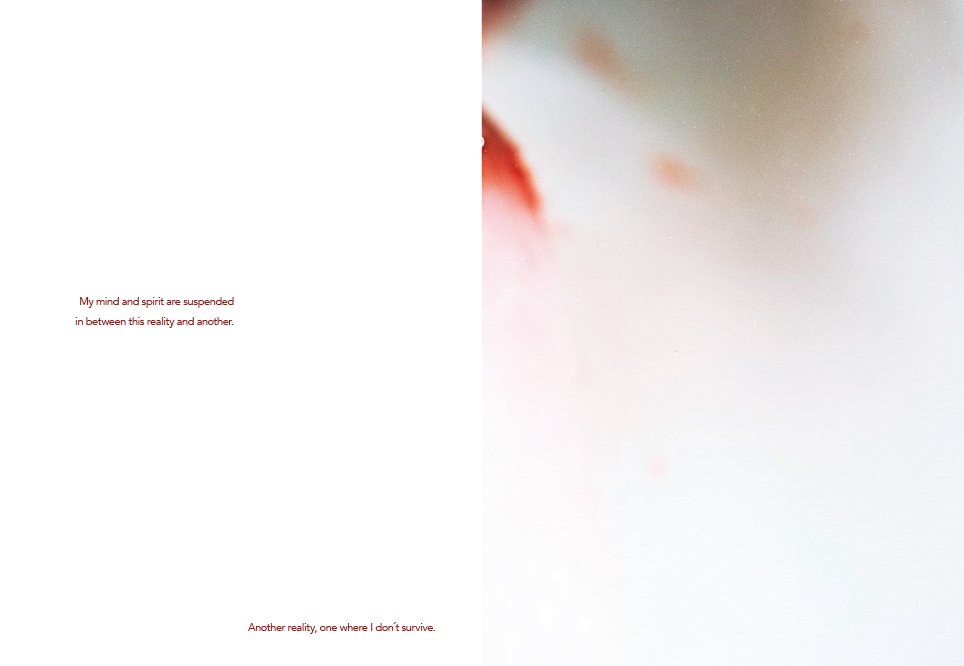
© Isabel Moreno Cortez, Angel spread from artist book “Angel Miguel”
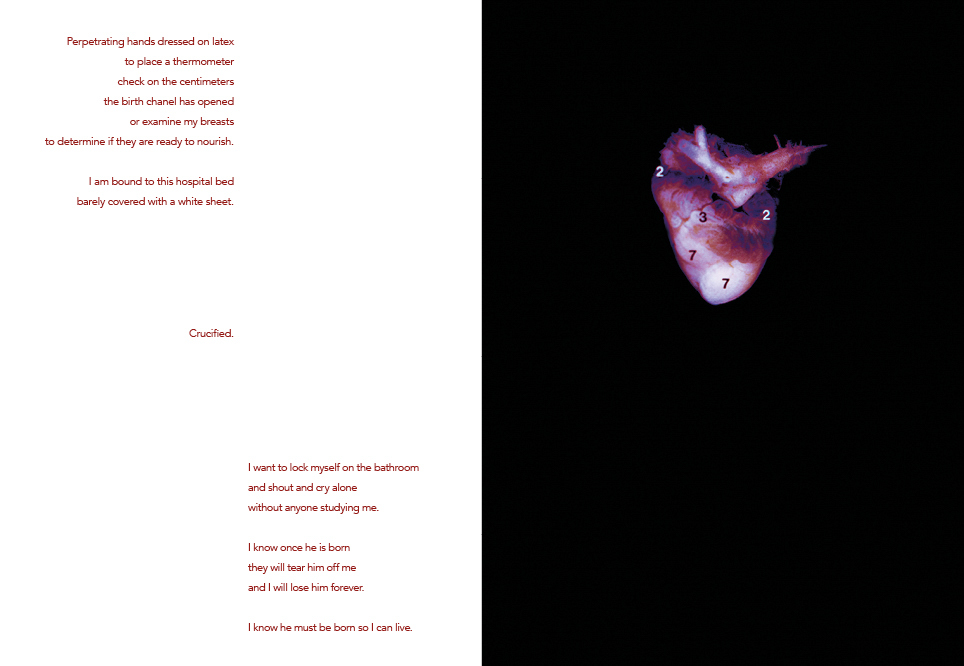
© Isabel Moreno Cortez, Angel spread from artist book “Angel Miguel”
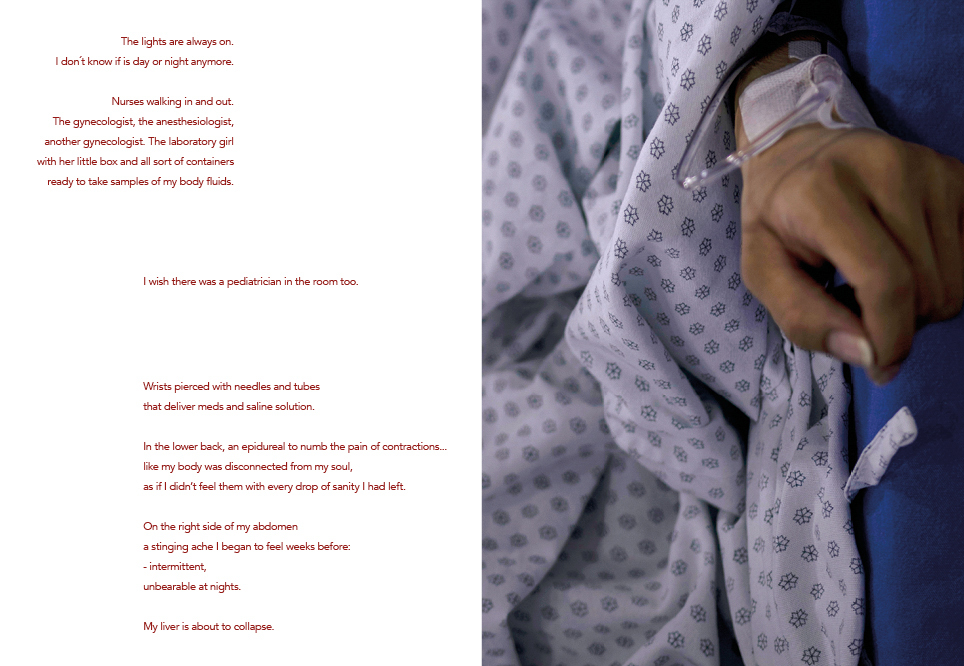
© Isabel Moreno Cortez, Angel spread from artist book “Angel Miguel”
The ‘lexical gap’ – that there is no word to name parents who have lost children. How has the absence of language shaped the way you approached writing and image-making? Do you think photography can speak where language fails, or, how writing opened a space that photography alone could not reach?
I had the opportunity of participating in the Incubadora for Fotolibros in 2023, an educational program guided by photographer Ana Casas and writer / poet Beatriz Novaro. The challenge was both to write about impossible subjects and to create impossible images with words. I believe this book needed this territory where image and words meet, where one can reach the dark corners the other can’t, and navigate the waters to close the gap. Some stories find their voice beyond language, or despite language. Putting things into words made it possible to embody and embrace what happened, reading it out loud made it real, sharing it during the group revisions made it important, cared for… and all those things allowed me to start grieving and putting the little parts together in this story that jumped back and forth in time.
Another big challenge was to name the project. I was trying to fill that gap, but there is a reason it exists in the first place, in every language. I got close enough to social constructions in several cultures that try to define it, to give those parents a sense of belonging. Hore Shakul (from Hebrew, bereaved mother or father), villoma (from Sanskrit, against the natural order of things), charokammenos (from modern Greek, burned by death), gyaku en (from Japanese, reverse fate). Every attempt failed to name the unnamable. Beatriz told me many times, I know the right title is already there, hiding among those pages, behind the texts and images, underneath the story of Ángel and Miguel.
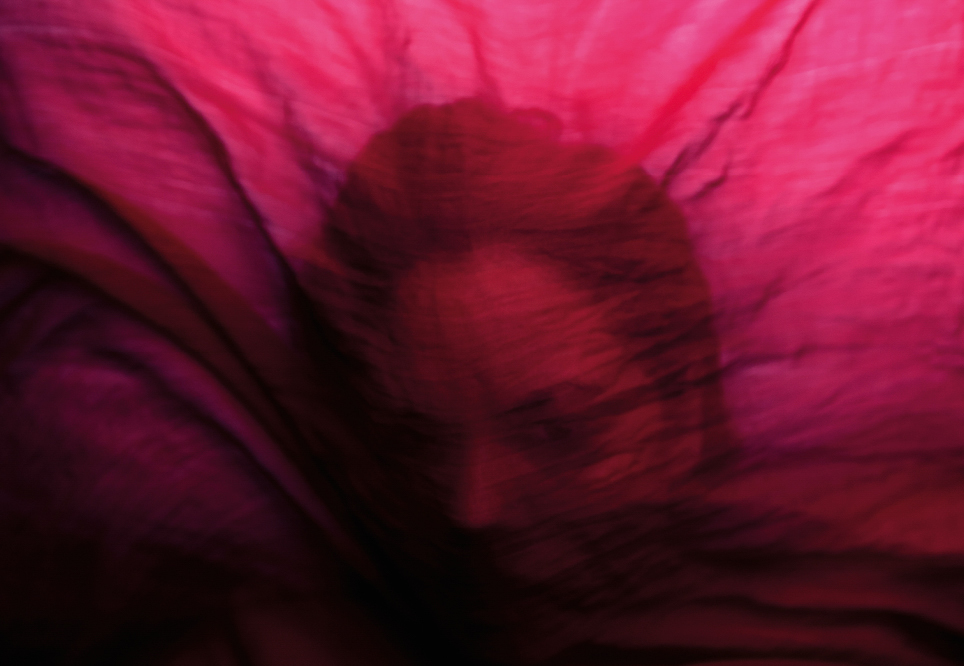
© Isabel Moreno Cortez, Angel spread from artist book “Angel Miguel”
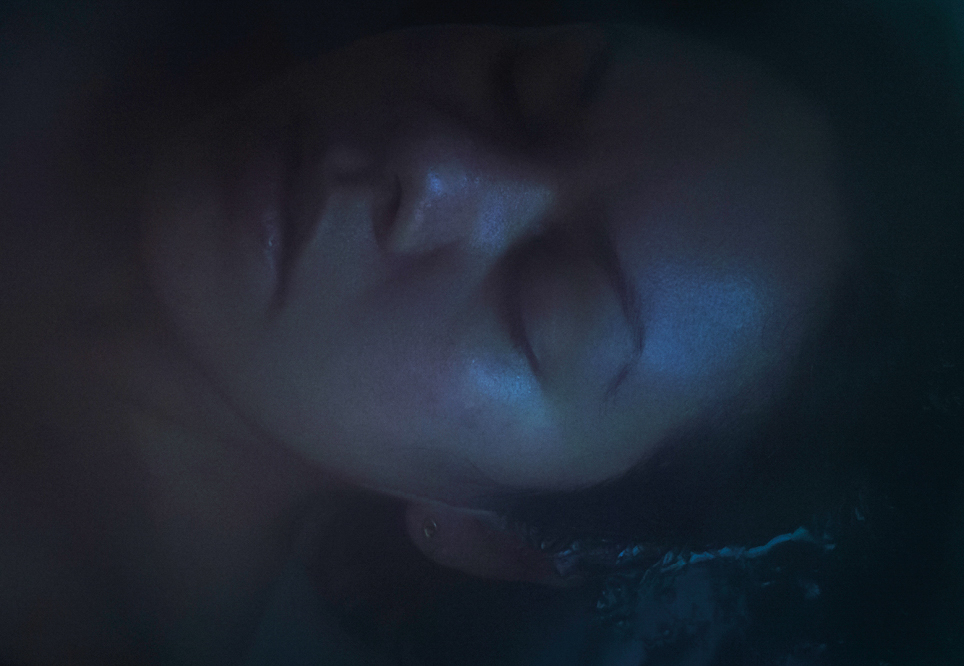
© Isabel Moreno Cortez, Angel spread from artist book “Angel Miguel”
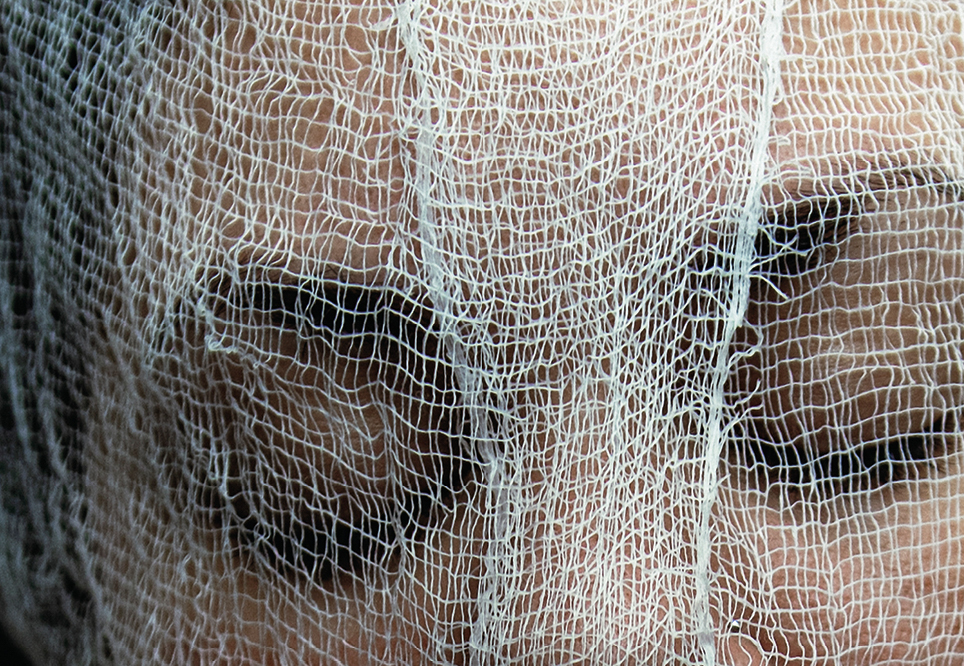
© Isabel Moreno Cortez, Angel spread from artist book “Angel Miguel”
Ángel Miguel is a space where two losses meet. I see every element in the book taking a part in creating this space and reinforcing the depth of the narrative along with images and texts. It feels like you were creating a new place for those memories to exist – the choice of different textured papers, materials, the embroidered cover and the hand-binding cord holding two sections of the book with three color threads. Can you talk about all these elements? How did you think about materiality as a way of communicating something that cannot be represented visually?
Ángel Miguel evolved from so many previous versions, different sequences, different ways to relate or integrate the images, the texts, the archive materials; print trials with an infinity of papers, I wanted them to communicate both the fragility, the complexity and the deep contradictions of an experience such as losing a child. I wanted the author to feel the story with more than just their sight. Texts and images, melted together in a translucent delicate paper, or scarred by the textured red color and imperfections of a paper that is used to wrap tortillas and meat in food markets. Using threads to create an exposed binding that weaves two books together, and emulates the umbilical cord as a metaphor for conjoined stories.
We used an inverse – cyclic chronology when sequencing the images. Book 1 Ángel starts with me at the hospital, giving birth to a baby that had no heartbeat. It goes further into a funeral we invented, and then it slowly starts going back digging into the past of our family and my brother’s death. Book 2 Miguel starts with my brother’s last picture, and it goes back in time with him and all of us getting younger; it ends with my mom being pregnant with him. The story begins and ends with two women being pregnant, those two children lost in time and yet, joined by a chord made of blood and threads.
I would say these were all bold and risky decisions that reinforce the narrative; a bet to resonate with the beholder’s interpretation, appeal to their own experience and humanity.
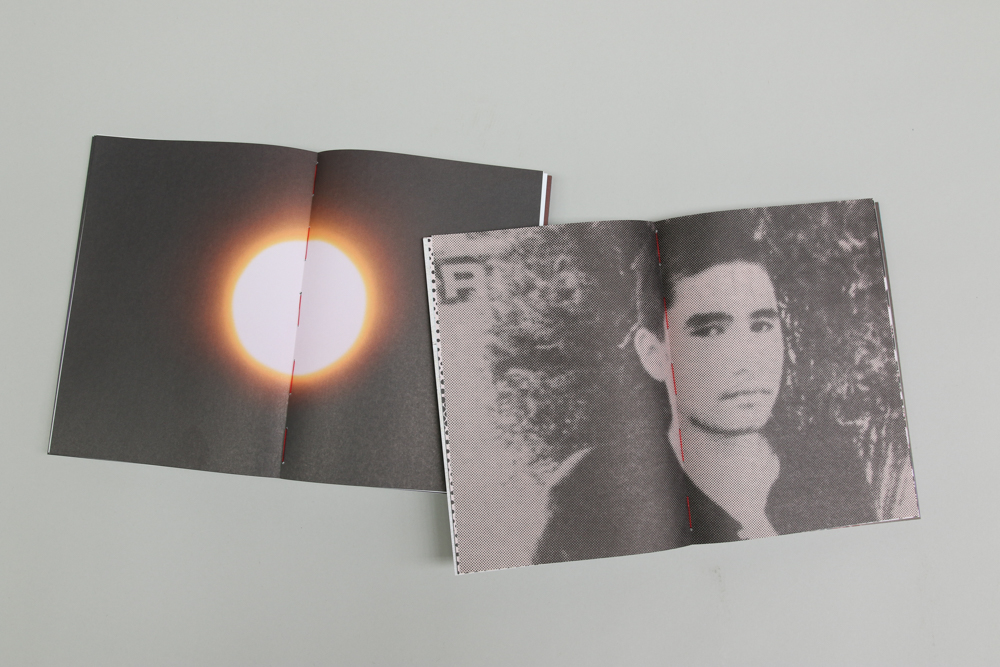
© Isabel Moreno Cortez, spreads from artist book “Angel Miguel”
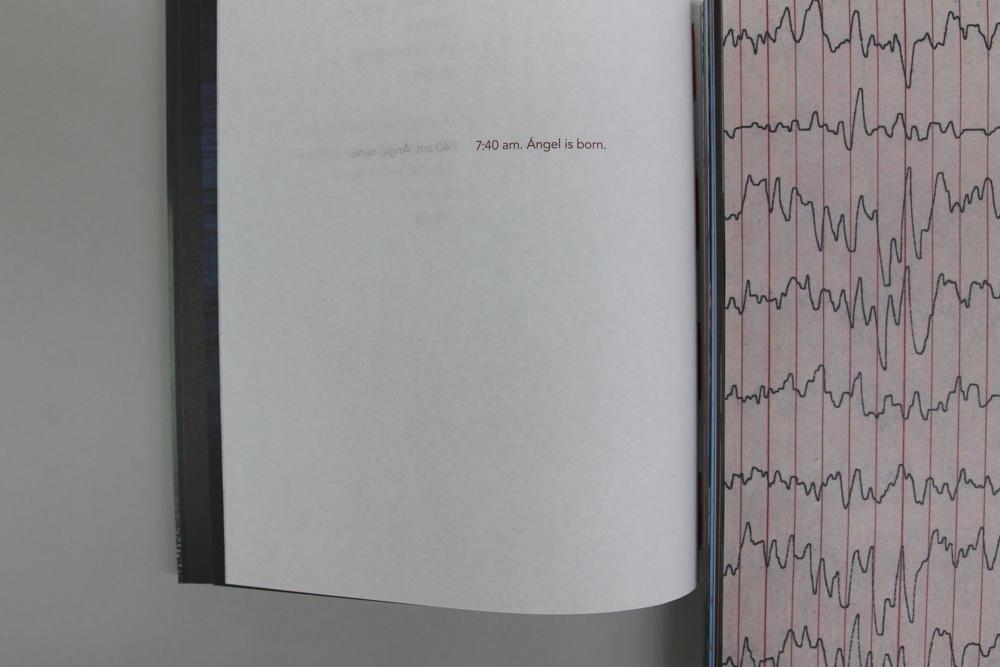
© Isabel Moreno Cortez, Angel spread from artist book “Angel Miguel”
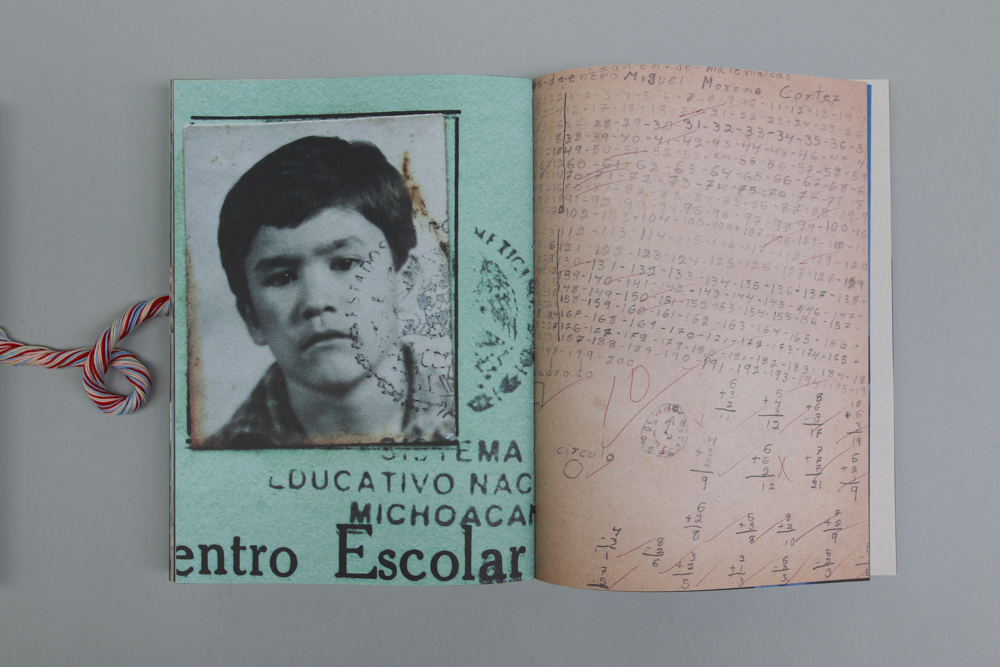
© Isabel Moreno Cortez, Miguel spread from artist book “Angel Miguel”
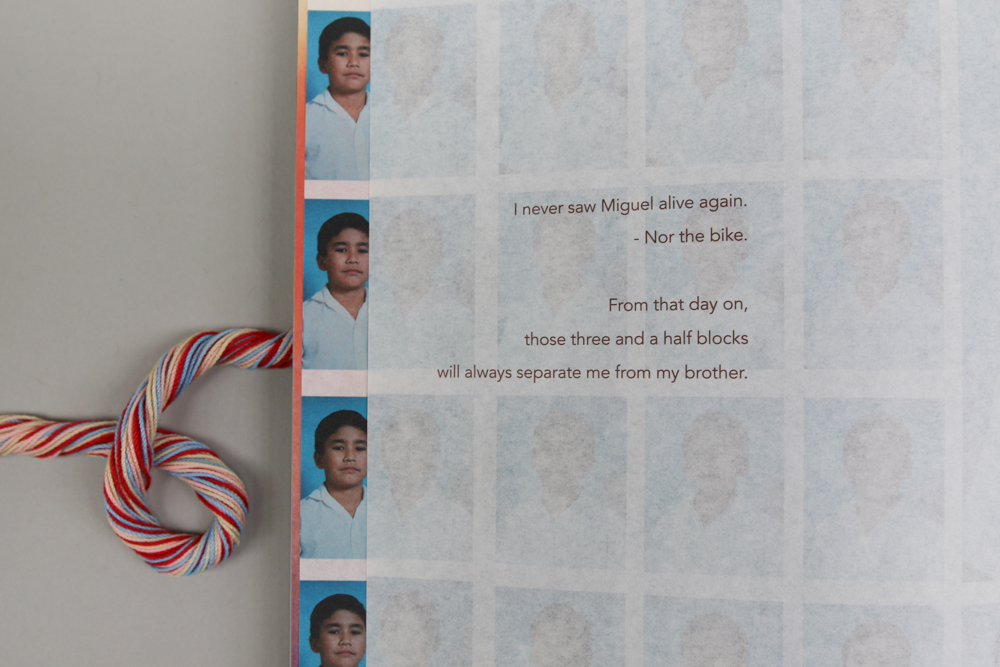
© Isabel Moreno Cortez, Miguel spread from artist book “Angel Miguel”
There is a strong sense of lineage in the work — a connection between your experience, your mother, your brother, and your son. The common experience of three Isabels. Can you talk about this idea of inherited grief and how loss moves through generations? Did it emerge gradually through making the work? Was there a point when you felt the project had found its final form?
I remember the first class I attended with Beatriz Novaro, back in 2019, just weeks after Ángel died. I wanted to make a book to honor my son… but I needed to walk another path, a longer one. Beatriz gave us three subjects to choose from: the first memory, the first love or the first death. I felt it in my skin. This was the day I had been waiting for so many years, to finally talk about my brother Miguel’s death, his suicide at home, when he was 13 and I was 11. I became obsessed with the number 23. Ángel died on January 23rd, Miguel died on June 23rd, 23 years before him. What did it mean? What was I supposed to do with it? Did it mean anything at all?
How can one connect the stories of two boys whose lives didn’t cross with one another and yet, echoed beyond time? One loss that opened an old wound, two stories woven together through embodied memories, and nights and years of yearning, of dreaming with impossible absurdity -what ifs-…
The day we brought Ángel’s ashes to the family grave on the cemetery, we all gathered at my parent´s house. It was the first time we openly talked about Miguel’s death in 23 years. It felt like we were talking about the same person, the same child, the same son: Ángel Miguel.
Losing Miguel broke us in ways I could never describe or forget, when we lost Ángel, we all felt we had been there already. Except this time, we were granted the grace to talk about it, to heal together. Me and my mother were about the same age when we lost our sons. When I was already working on the project, my uncle Jesús died. This completed the circle of three Isabels burying their first-born son. It is believed the person who realizes a painful pattern in their lineage has the task to heal that wound… I want to think this project is the ground where this pattern ends; that no other women in our genealogy will have to lose their children to belong to the clan.
I remember questioning myself repeatedly if I would know when the book was finally finished. If I would feel different. If my grief would end there. If I would finally feel ready to have another child – I didn’t want to get pregnant again while I still felt all that sadness and pain, I thought another baby deserved to be welcome in love, and not carry what didn’t belong to them-. Ángel Miguel came to close cycles on so many levels. What I know for sure is this: the day we presented the special edition of the book, I decided I was ready. That day, someone landed in Mexico City from literally the other side of the world, Tanzania. We met 10 days after and we fell in love. Today we have a beautiful son together, Iris. The rest of this story is in the epilogue of the book.
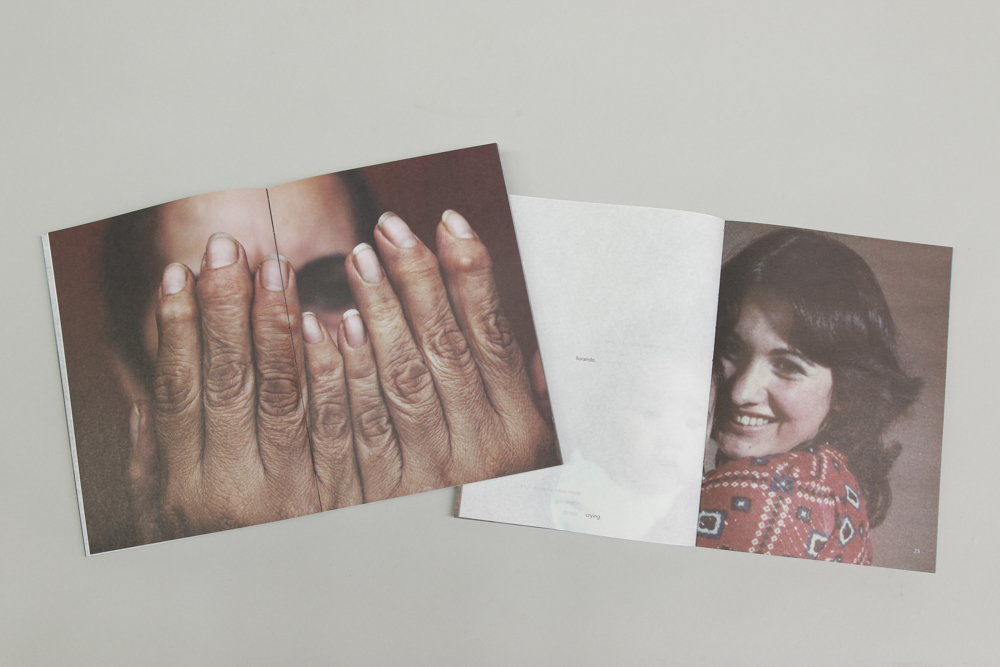
© Isabel Moreno Cortez, spreads from artist book “Angel Miguel”
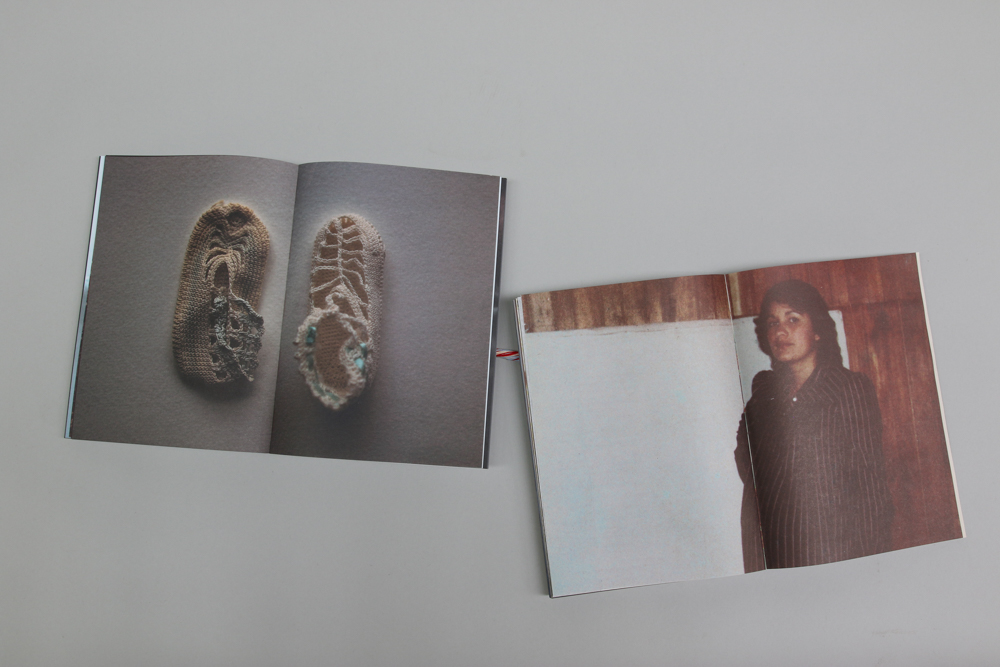
© Isabel Moreno Cortez, spreads from artist book “Angel Miguel”
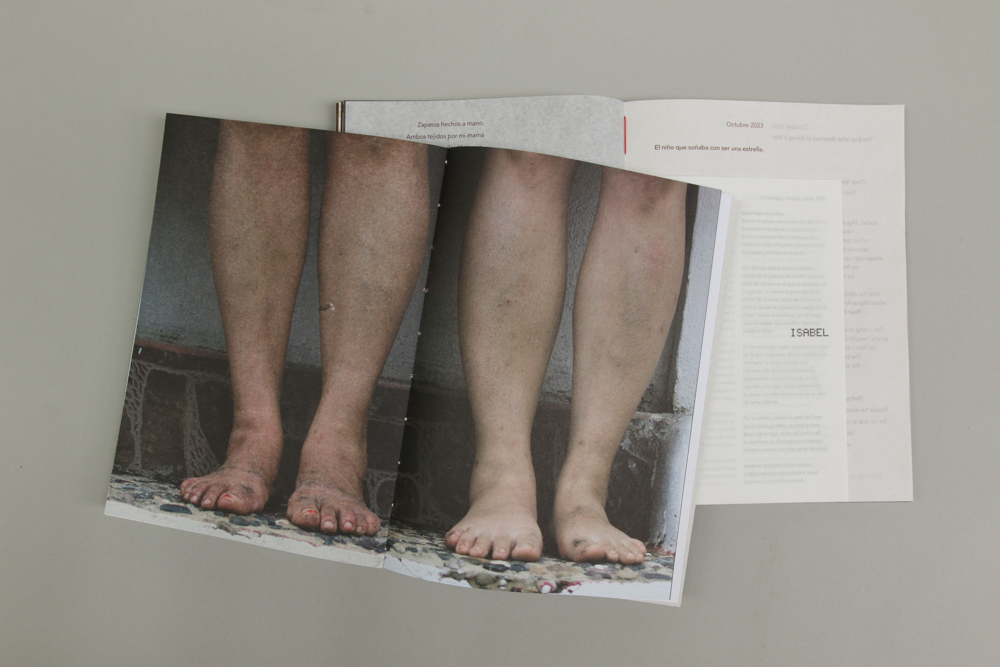
© Isabel Moreno Cortez, spreads from artist book “Angel Miguel”
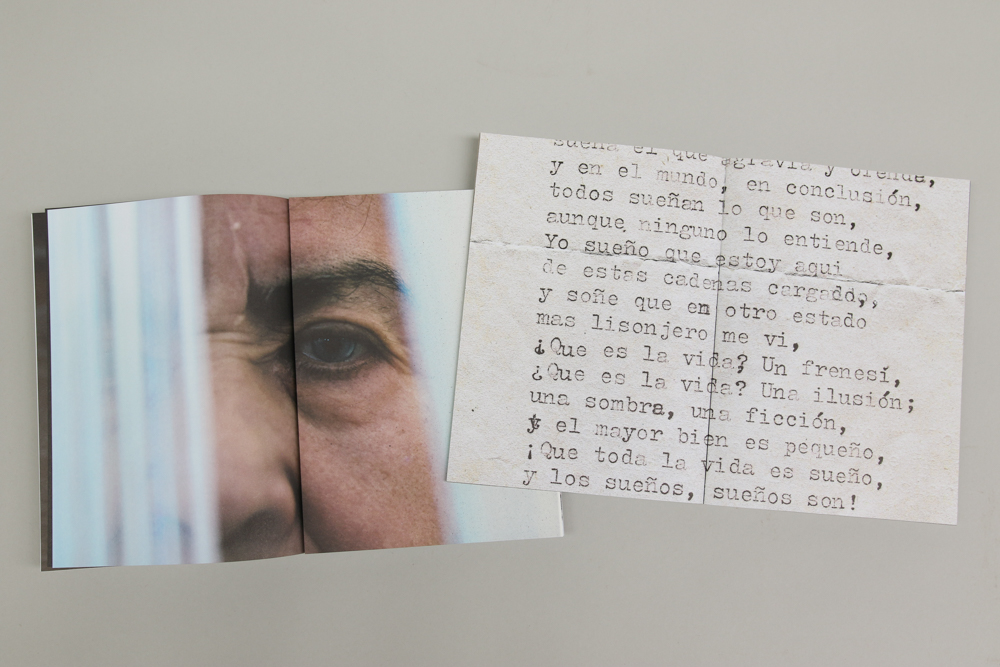
© Isabel Moreno Cortez, spread from artist book “Angel Miguel”
How did the Photobook as Object workshop help forming the dummy? Can you talk about your collaboration with Hydra + Fotografía and how the Photobook Incubator helped shape the final work?
I first met Yumi Goto in México City in 2019, in a short workshop in Hydra, soon after Ángel died. The first dummy was completed during these days and she also told us about the Photobook as Object program in Japan. I was accepted in it at the beginning of 2021 but because of the pandemic, it actually happened in late 2022. It was a life changing experience. The pandemic put a pause on my life, on this project; as frustrating as it was, this delay on things gave me the time to grieve that I needed, and it gave the project the space it deserved to find its voice.
Sharing those couple of weeks so far away from home, in such intense working days with other artists from all around the globe, guided by Yumi Goto and Jan Rosseel, created a very fertile ground for the project to find a path closer to what it became in its final form, after many different dummies. The idea of two books and a handmade cord joining them was born there, shaping and reinforcing a narrative that would be consistent with the story. I also remember Yumi suggested from the very beginning, the book should include their names. After a long but necessary journey of exploring other possibilities, it found its place in the origin, the first reason why I wanted to make this project, to honor Ángel and Miguel, to transform our loss into something that could be shared with others.
Yumi and Jan make a very interesting Ying and Yang, each one with their own style to edit images, to find a specific rhythm in which images can dialogue with other visual elements to tell stories and honor memory. The year after, I had the opportunity to come back to Japan, and present the book for the first time before an audience, during Kyotographie, an international photography festival. I participated with some of my colleagues from the Photobook as Object workshop, in an exhibition at Reminders Photography Stronghold Paperoles, in Kyoto. We presented dummies, pictures and other visual materials from our projects to a diverse audience. For as long as I had been working on the book (4 years by then), I always thought it would only be of interest to people who knew me and my brother, family and colleagues. But that evening, I witnessed people being moved, shook and shocked, people I didn’t know, people from different countries and cultures. That evening, I had some sort of revelation: everybody has lost someone. Death and the need to grieve are universal.
On this side of the world, I can say Hydra and I have walked together the path to make this project exist. Having participated on two long term programs, Synapsis in 2019 and the Photobook Incubator in 2023 was decisive in the creative process of Ángel Miguel. Ana Casas and Beatriz Novaro were at the head of the programs; and together with an incredible group of editors, photographers and designers, made of this challenging working sessions, the right environment for the authors to deepen and strengthen their projects both conceptually and formally. Erik Kessels, Yumi Goto, Theun van der Heijden, Sandra van der Doelen, Duncan Wooldrige, Juan Valbuena, Vera Yijun Zhou, Lukas Birk, are some of the collaborators of these program.
Hydra and Ángel Miguel’s continued their journey together to publish the handmade special edition in 2023-2024 and present the exhibition in their gallery; and in 2025 the offset edition was published with the support of the Ministry of Culture of México, as a recipient of a co-investment grant. It has been a very nourishing experience to be involved in every stage, from printing the special edition by hand, binding the cords that join both books, plan and set the exhibition and everything that came after: guided visits, presentations, book fairs.
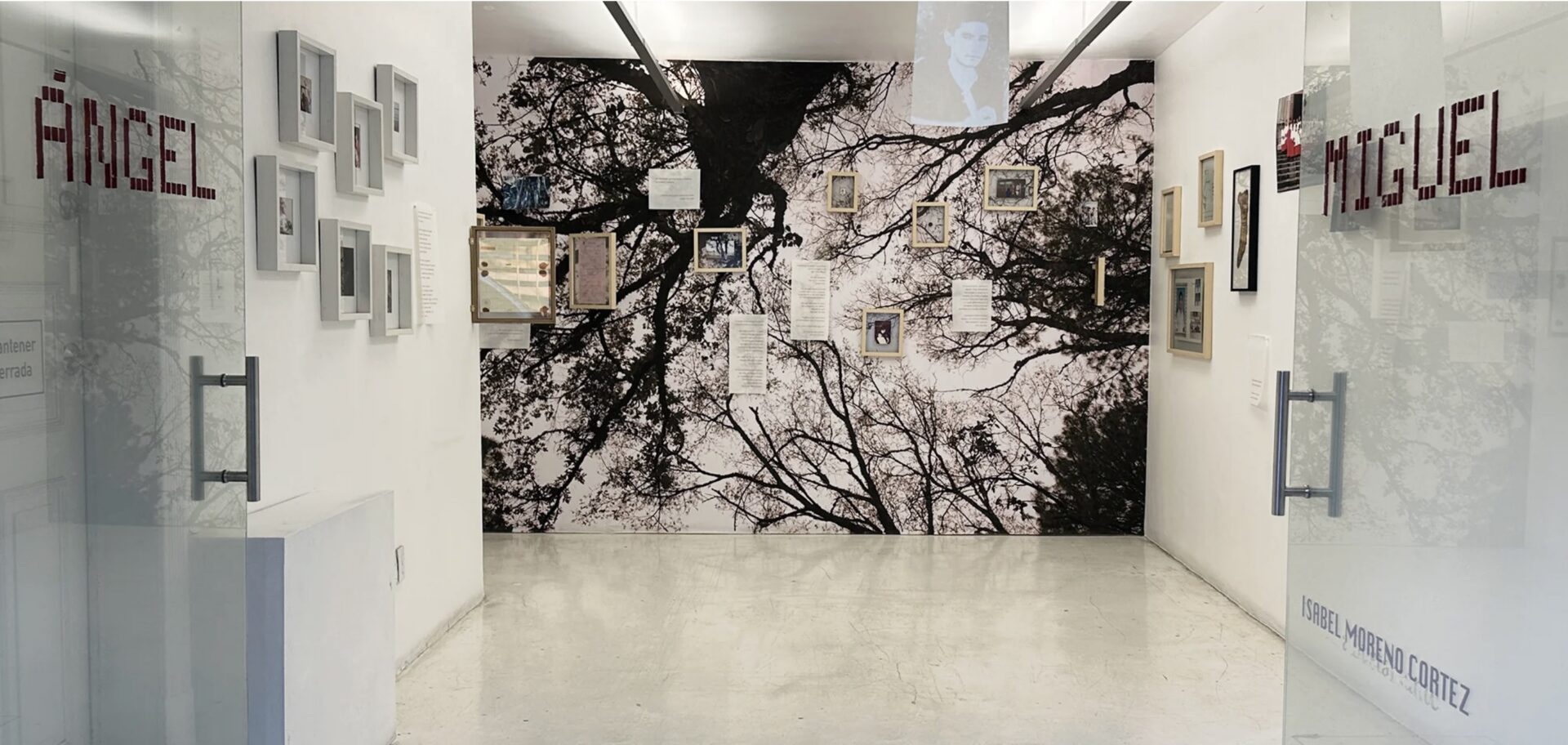
© Isabel Moreno Cortez, “Angel Miguel” installation
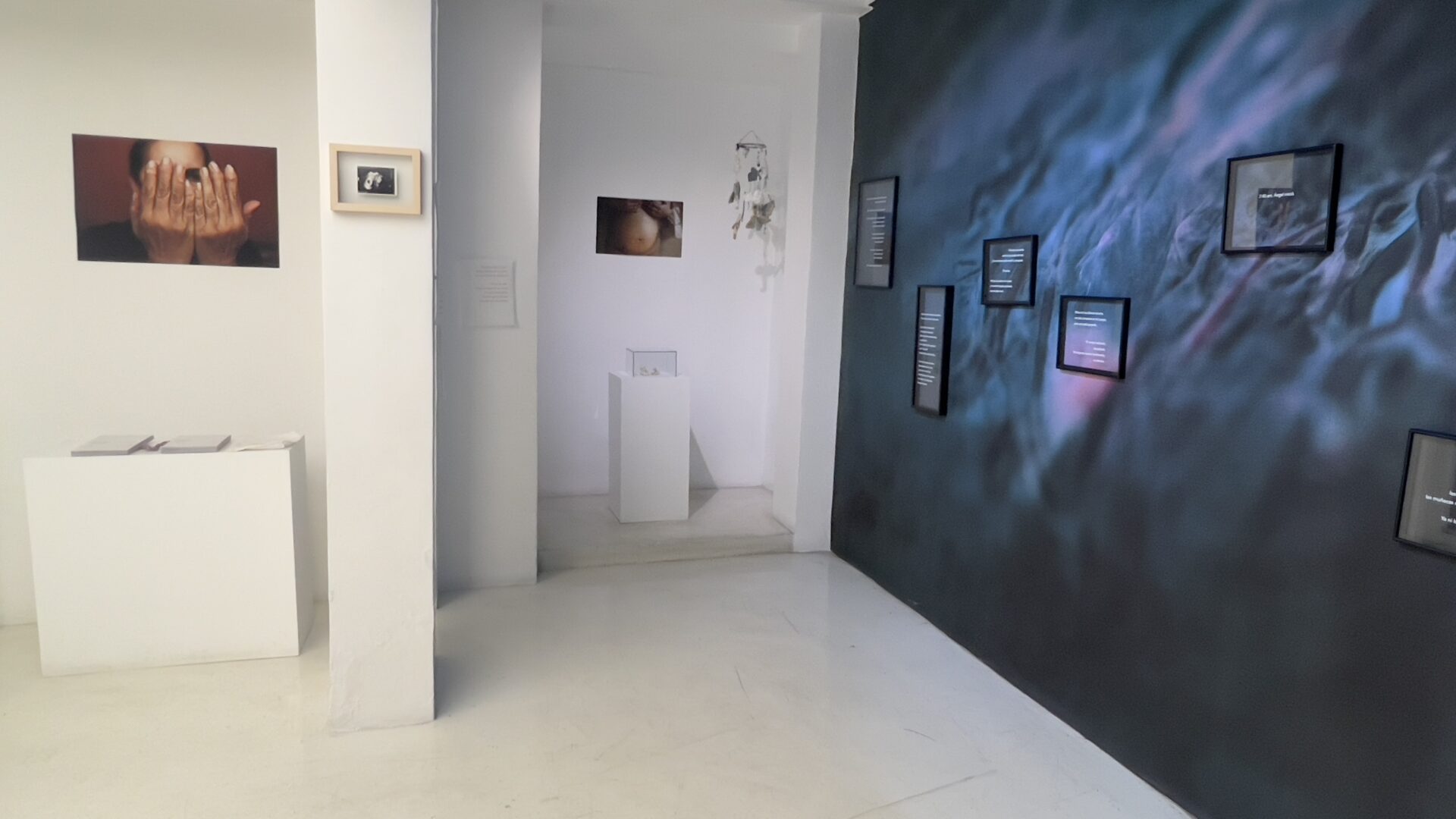
© Isabel Moreno Cortez, “Angel Miguel” installation
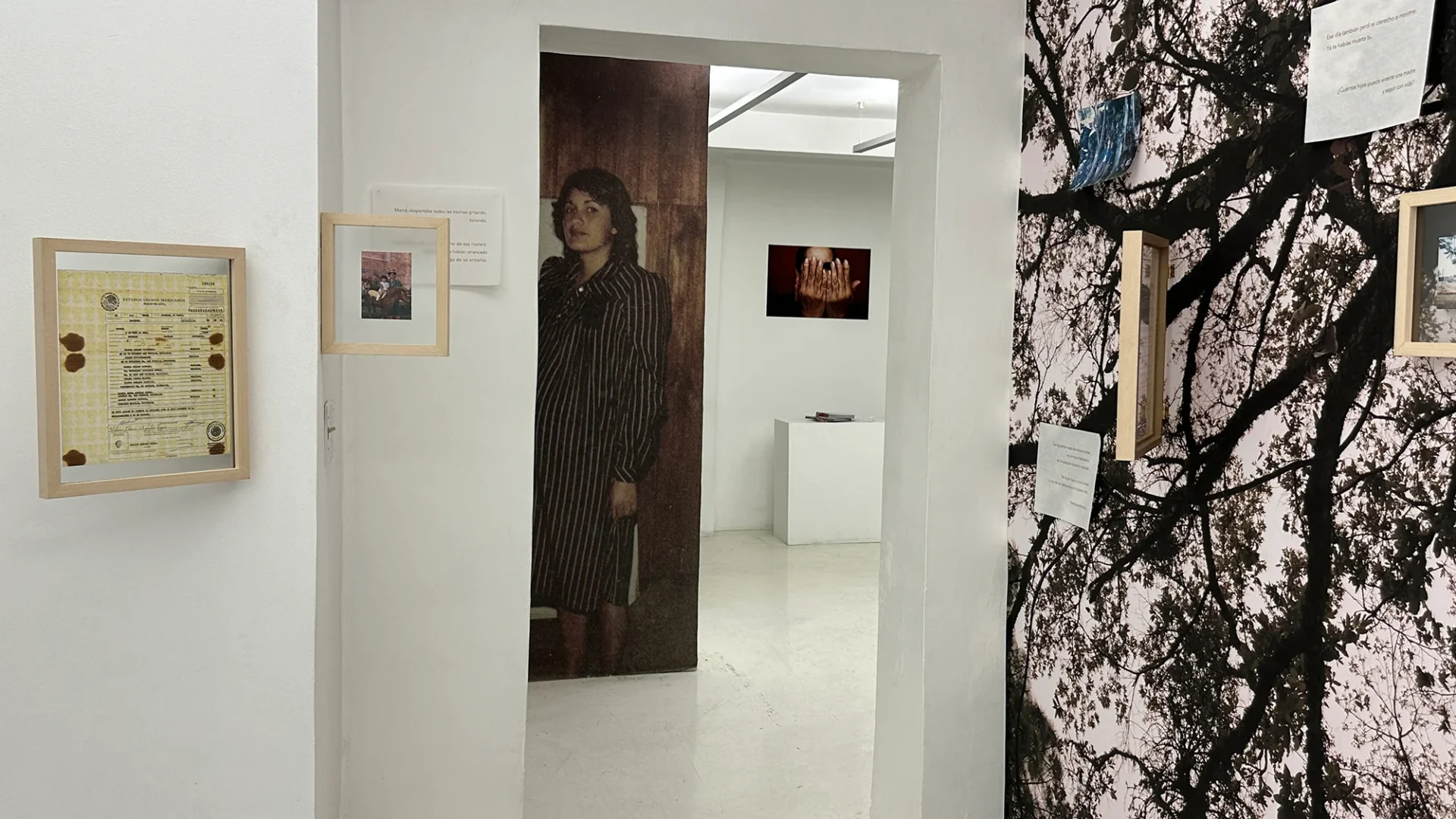
© Isabel Moreno Cortez, “Angel Miguel” installation
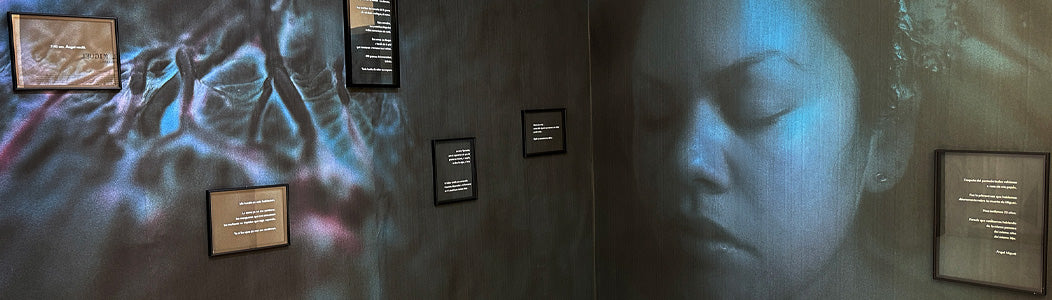
© Isabel Moreno Cortez, “Angel Miguel” installation
After five years of living with this project, what relationship do you have with Ángel Miguel today? Is the book a place where you return, a farewell, a conversation, or something that continues to evolve?
Through the years, Ángel Miguel has been many things in my life. It began as a need to share my story. It became a refuge, the place where I could go back to during every stage of my grief. Despite all the things I did trying to understand my loss: meditation, therapy, healing ceremonies and retreats, temazcales – and they all helped –, making this book allowed me to truly reach the knot of pain and accept I was not going back to being myself. I don’t believe one just overcomes losing someone that’s precious, I don’t think time has the power to completely heal that kind of pain, but it does transform it. I convinced myself to get up every day with a split heart and that little tiny part that will be missing forever. I became aware that I needed to create a new reality for I was a different woman.
Angel Miguel transformed into this new universe in which they both meet, converse, inhabit, exist.
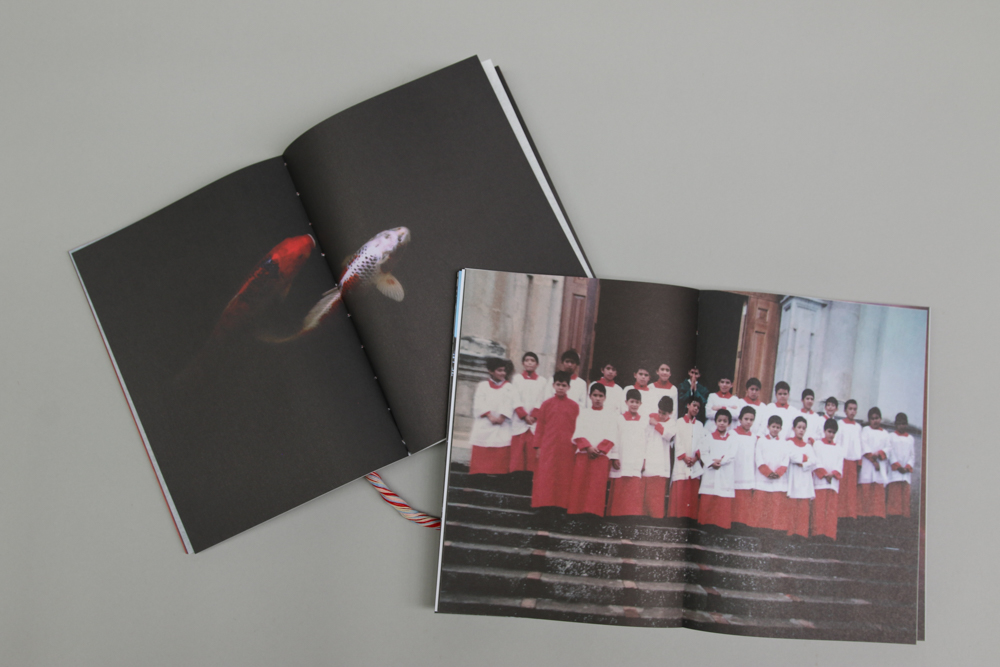
© Isabel Moreno Cortez, spreads from artist book “Angel Miguel”
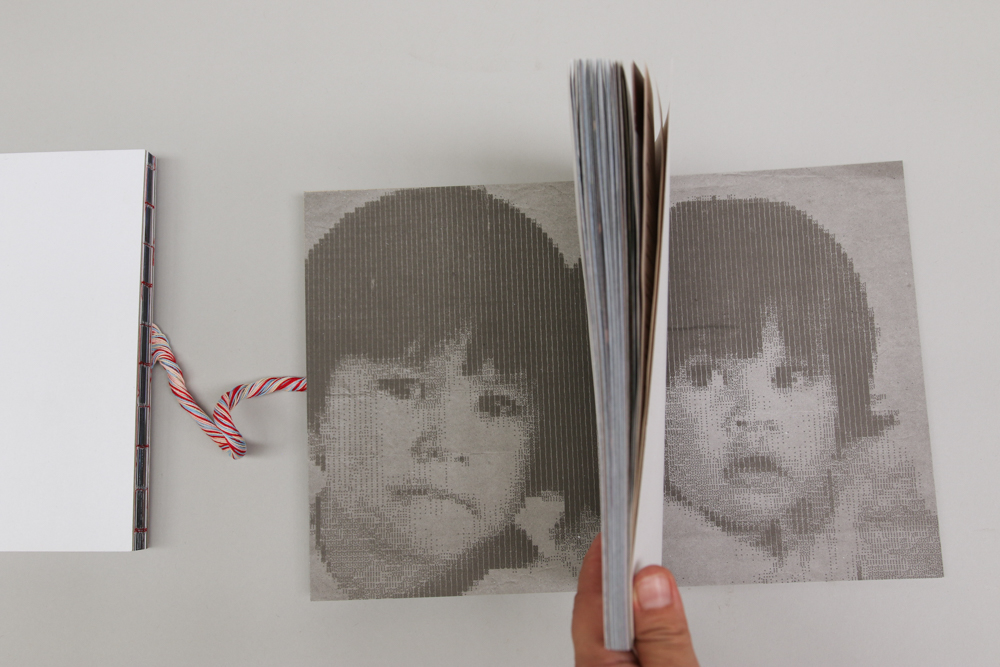
© Isabel Moreno Cortez, spread from artist book “Angel Miguel”
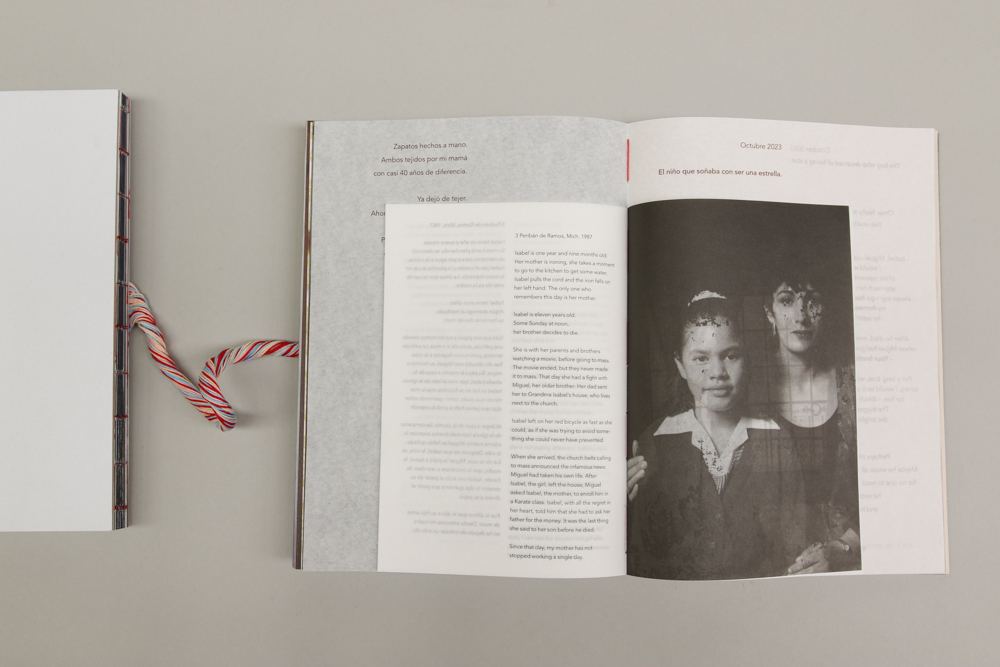
© Isabel Moreno Cortez, spread from artist book “Angel Miguel”
Isabel Moreno Cortez, México 1985.
She graduated from the Bachelor of Visual Arts: Painting in 2008, at the Universidad de Guadalajara (U de G). In 2017, she obtained her Master degree in Visual Arts: Photography, at the Universidad Nacional Autónoma de México (UNAM), School of Arts and Design. Her photography project: “Habitar la Piel. Cuerpos nuestros: identidad, memoria y huellas” received a mention of honor by the University.
She has been a member of the collective “The Patchwork Healing Blanket” since 2020, a group of women creating a social art piece, to shed a light on violence against women, children and mother earth. She contributed with several of her own works as well as the textile photography book “La Mariposa Azul” (The Blue Butterfly, 2021), a tribute to her son Ángel, who passed away during the 27th week of pregnancy, and to all beings who, like him, are born in silence.
She is the author of the Photobook As an artist, she works primarily in the fields of painting and photography, with a deep interest in photobooks and artist’s books, embroidery, handcrafted bookbinding, alternative photographic techniques and media, as well as other disciplines that intersect in the creative process to produce images. She uses art to express the soul’s motivations, to transform, to heal, to connect with others.
Ángel Miguel was published in 2023 by Hydra. It addresses the death of children and the scars such a loss leaves on those who survive them. It stems from the need to share the intense experience of the deaths of Ángel and Miguel—her son and her brother—and, in doing so, to survive their absence. She has participated in various solo and group exhibitions in Mexico, the United States, the United Kingdom, India, and Japan. Ángel Miguel has received three international nominations: 2024 Longlisted to the Photography and Moving Imagen Book Awards by the Kraszna Krausz Foundation in United Kingdom, 2025 Nominated to the Lens Culture’s Favorite Photobooks of the Year, 2026 Finalist for the Best Photography Book of the Year Award by PhotoEspaña.
The first publication was an author’s edition (2023-2024). One hundred copies were printed mostly by hand by the author, from which 23 copies were crafted to make the special edition. It includes a special chord made by Isabel and a fabric bag tailored by the author’s mother that contains both books.The offset edition of 1,000 copies was published in 2025. The project was the recipient of a co-investment grant, by the Ministry of Culture of México.
Follow Isabel Moreno Cortez:
instagram @i.morec / https://www.instagram.com/i.morec/?hl=es-la
email isabel.morec@gmail.com
How to purchase
Publisher’s website:
HYDRA + FOTOGRAFÍA
https://hydra.lat/products/angel-miguel-edicion-offset?_pos=1&_sid=fc35420cd&_ss=r
instagram: @lahydra https://www.instagram.com/lahydra/?hl=es-la
Posts on Lenscratch may not be reproduced without the permission of the Lenscratch staff and the photographer.
 Estudio EA