



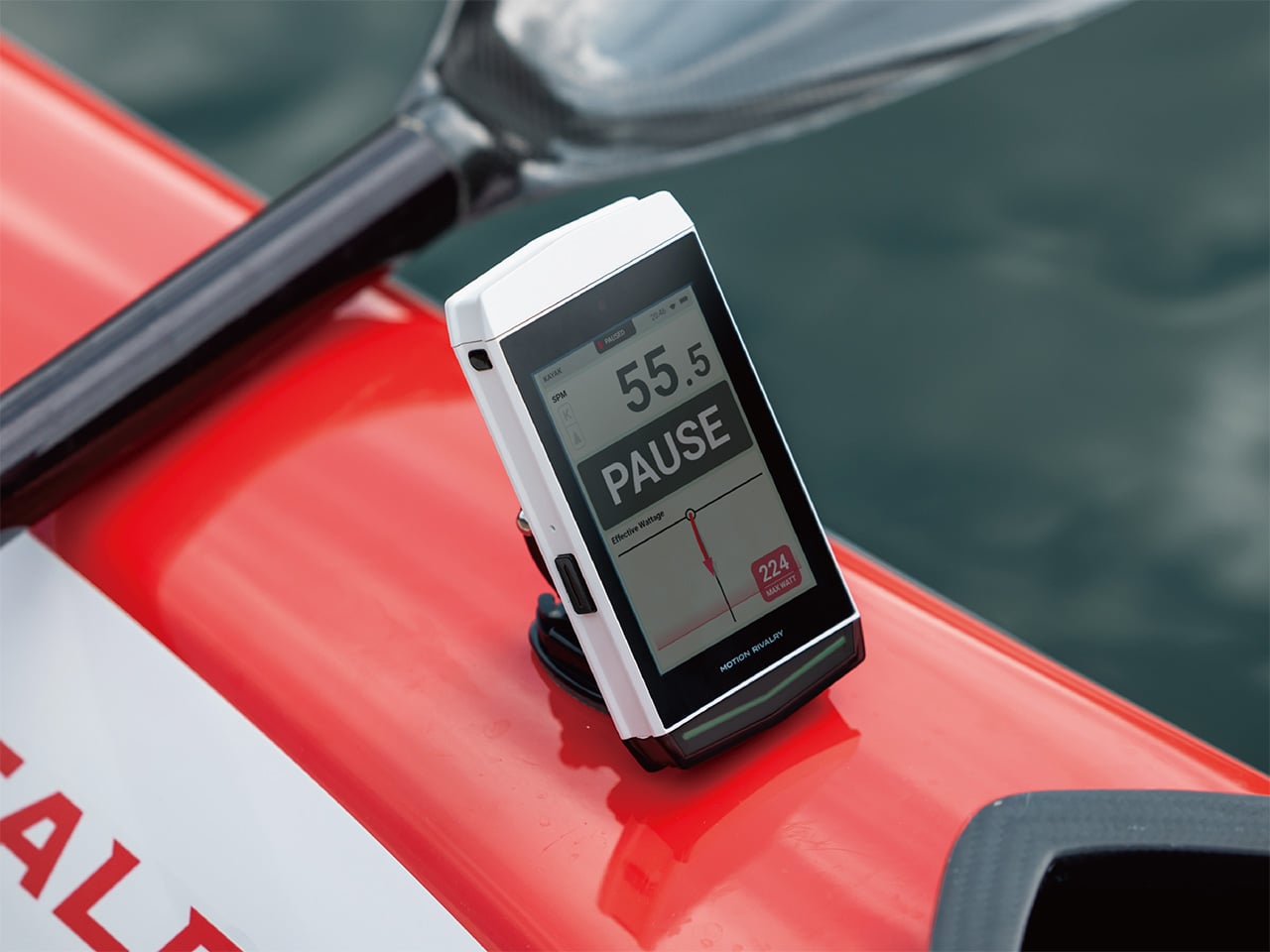

Athletes who used to buy a separate walkie-talkie, action camera, and wind meter for different pursuits are looking at a much lighter hardware bill these days. Motion Rivalry’s REACH folds all three into one modular sports GPS computer, snapping on whichever accessory a session calls for instead of stocking a shelf of standalone gadgets. The same unit adapts across cycling, rowing, kayaking, canoeing, and paragliding, with hardware you reconfigure instead of replace as training shifts from one discipline to the next.
The mechanism behind that swap is a single open-source connector at the top of the unit, accepting hardware modules in seconds rather than minutes of fumbling with tools. Instead of buying a new device for each need or sport, REACH treats its body as a base you keep building on, sport after sport. It’s less a finished gadget, more a foundation designed to grow alongside whatever discipline has your attention this season.
Designer: Motion Rivalry
Click Here to Buy Now: $359 $599 (40% off). Hurry, only a few left! Raised over $122,000.
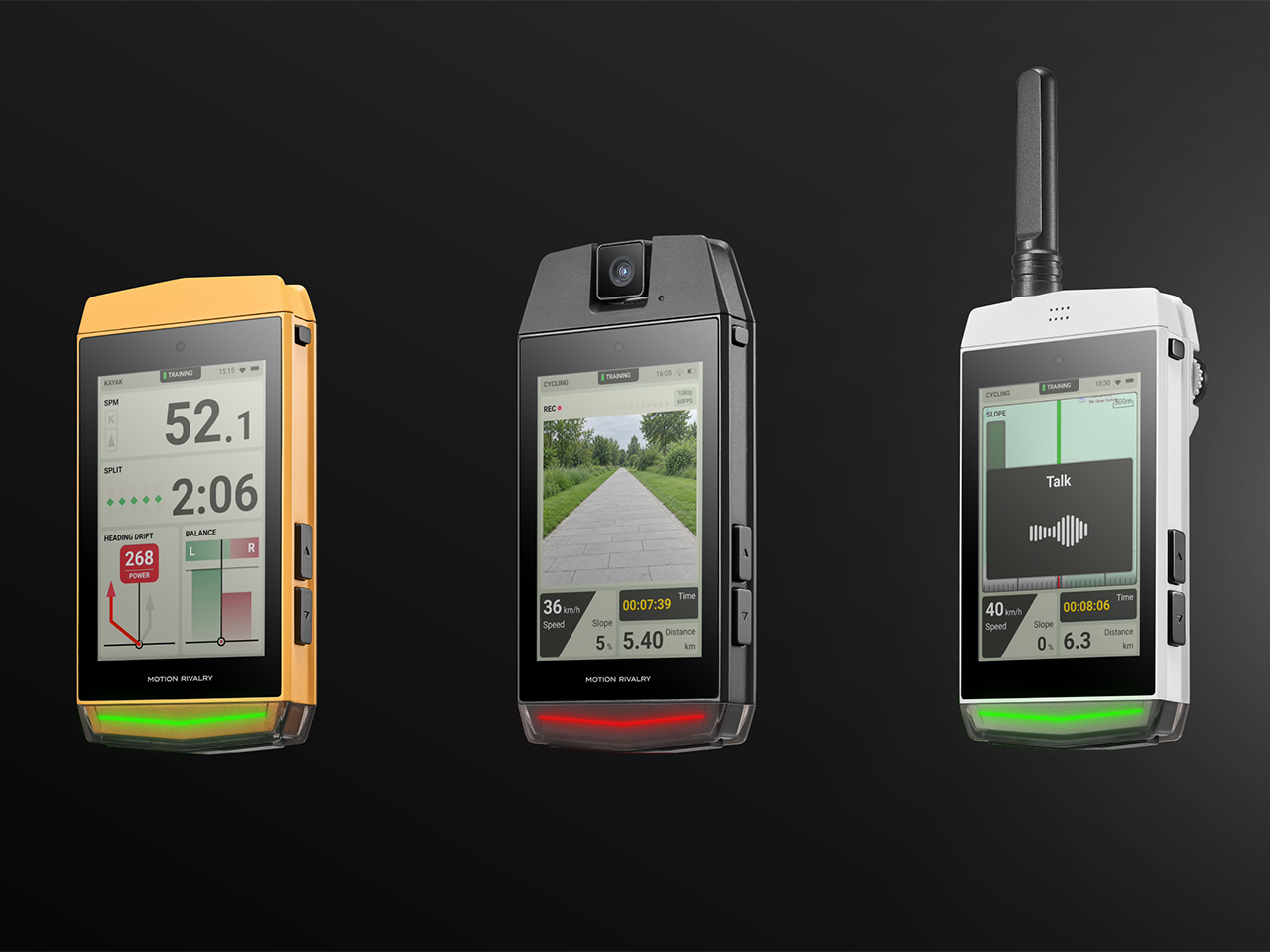
Two of the four available modules handle situational awareness. The Walkie-Talkie module lets a coach on the riverbank stay in contact mid-session, working across 0.6 to 1.2 miles (1 to 2 kilometers) of line-of-sight range with multiple channels. The Radar module covers what’s coming around you, using 24GHz mmWave sensing to detect objects between 16 and 98 feet away across a 100-degree field of view.

The other two lean into documentation and conditions. A Camera module records 1080p video at 60 frames per second from a rotatable, splash-resistant housing mounted where the head unit already sits, skipping a separate action-camera bracket. A Wind Meter module adds live wind speed readings down to 0.1 meters per second, along with humidity and temperature, numbers that matter more than they sound once you’re airborne.

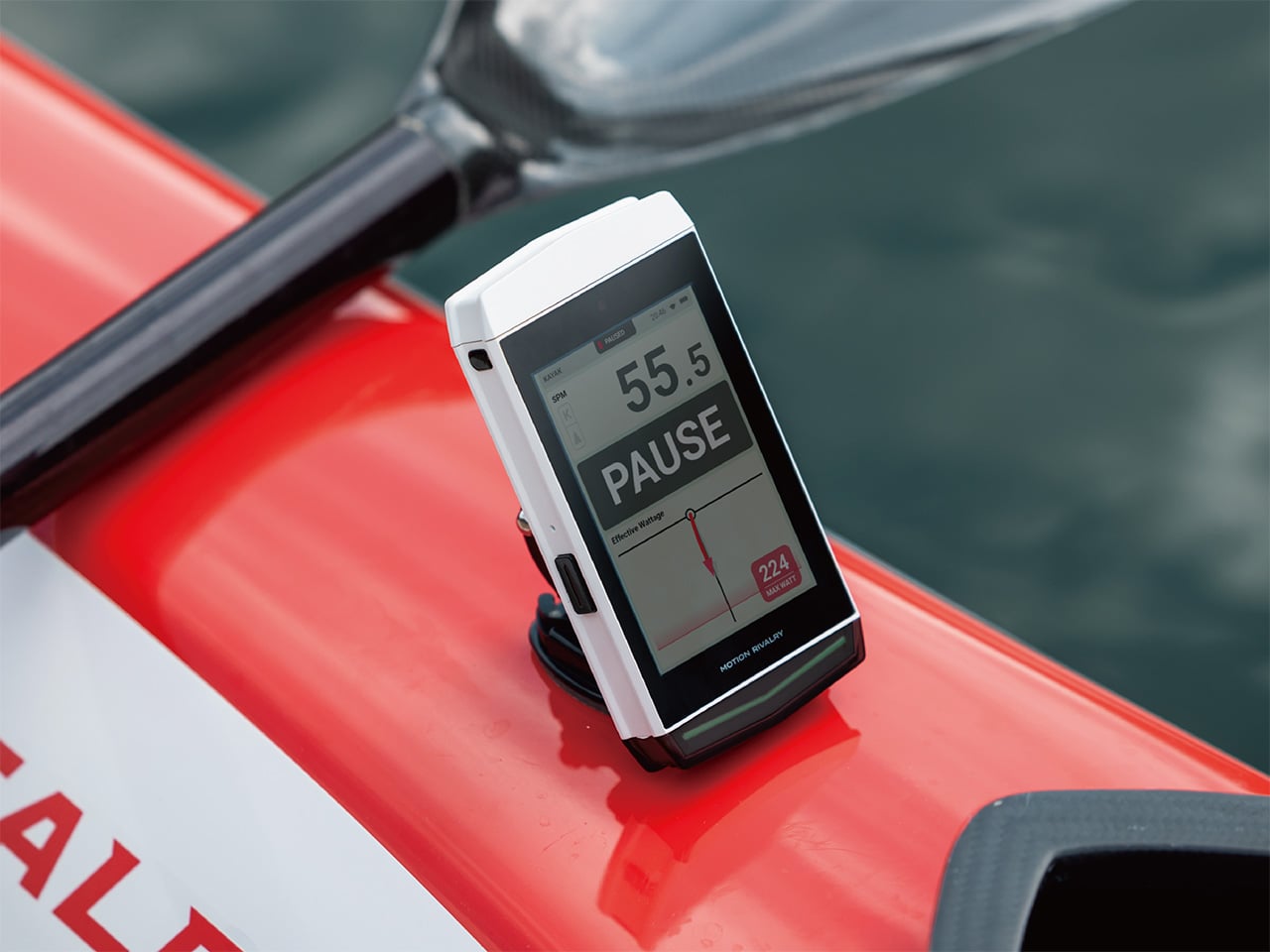
Rowing, kayaking, and canoeing put REACH’s fastest sensors to work. A 10Hz multi-constellation GNSS (most sports GPS units run 1 to 5Hz) locks position ten times a second, catching velocity changes within a single stroke rather than average splits over a lap. A 200Hz 9-axis IMU tracks heading drift, turning a wandering line into a number a coach can correct. REACH folds both into a Stroke Quality score, and Legacy Mode keeps it comparable to existing benchmarks.

On a bike, REACH estimates cadence and power without external sensors. It tracks linear and angular acceleration from the pedaling motion, then fuses and normalizes those readings to amplify the unique signal of your stroke while filtering out road noise. The result is a stable cadence reading without the need for extra hardware, precise to about 4 inches (10 centimeters) of elevation change.

The 3.5-inch display lays out speed, gradient, distance, and training stress score in a format built for glancing down mid-ride. Power estimates follow that same sensor-fusion approach, translating the normalized motion signals into a wattage figure without ever needing a crank sensor or power pedal bolted to the frame, one less accessory to charge, pair, or lose track of before a ride.


The same unit that tracked stroke rate on a river can be strapped to a flight harness by afternoon. In paragliding mode, REACH runs a dedicated vario for climb and sink rates, layers terrain maps adjusted for wind, and predicts landing zones from live wind direction and speed. Every reading here works toward one goal, keeping a pilot ahead of conditions that shift by the minute.

Catching a thermal updraft mid-flight is one thing; marking it for next time is another. A single press on REACH saves that exact location to the map, ready for your next pass, future flights, or anyone else in the flying community using the same site. Fly the same ridge enough times, and what used to be guesswork turns into a precision heat map built entirely by pilots who’ve actually flown it.
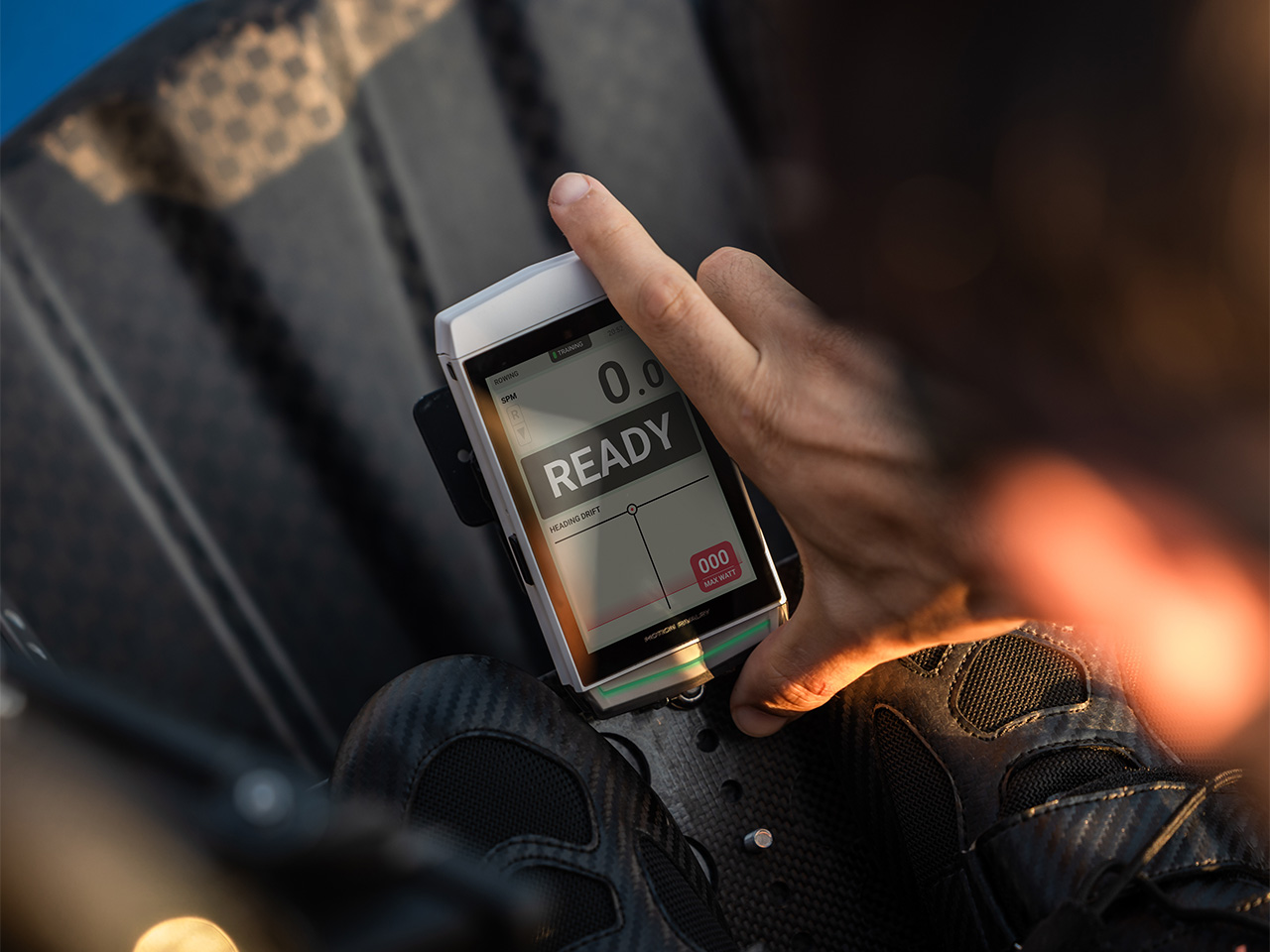
That Legacy Mode feature earns its own mention outside of rowing, too. Coaches who’ve spent seasons building benchmarks around specific equipment don’t want new hardware that outputs numbers in an unfamiliar format, no matter how good those numbers are. By matching its readings to formats already in use, REACH slots into existing programs instead of asking a team to relearn how it measures progress.
That data doesn’t stay trapped on the screen. The dedicated companion app on iOS and Android pairs over Bluetooth LE for route planning, reviewing a session, and Over-the-Air firmware updates once you’re back on solid ground. Sessions export as .FIT, .GPX, or .CSV and sync directly to Strava, so switching to REACH doesn’t mean abandoning platforms already in use. With 24GB of onboard storage, five sports’ worth of sessions won’t fill it.

Every one of those features lives inside a 5.5-ounce (156-gram) shell wrapped around a 3.5-inch display that stays legible in direct sunlight. An IPX7 rating handles rain, spray, and cold, while a 2,900mAh battery delivers up to 26 hours per charge. A programmable RGB strip along the base, assignable to stroke rate, split, or heart rate, glows green when you’re in the zone and a different color when you drift out, proof that REACH treats hardware as just another surface for good design.
Click Here to Buy Now: $359 $599 (40% off). Hurry, only a few left! Raised over $122,000.





 Estudio EA