

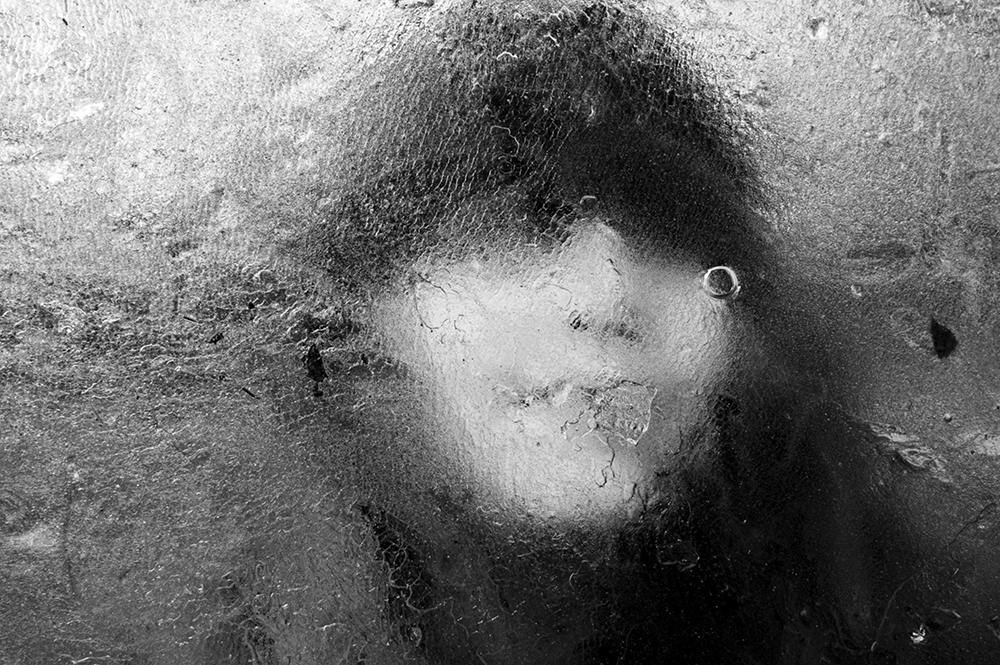

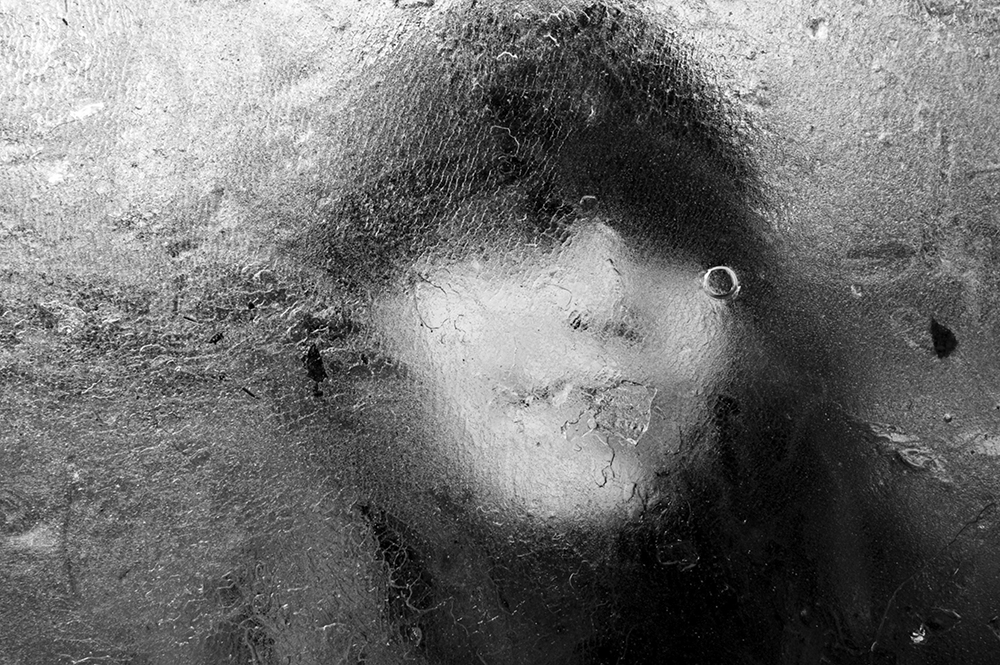
© Richard Provencio, Untitled, 2022
Richard Provencio, produces his art under the moniker richard richard richards. Something that has impressed me since I was first introduced to his work several years ago, when I heard him give a presentation about his practice, is how an anti-aesthetic is at work in his imagery. For example, the title of his publication, ric pics, Vol. 1, Loosey Goosey, makes me think of a term that skateboarders might use to describe an experience. It also captures in a vernacular way various types of performances that reflect the artist’s skateboarding background, and experience as a comedian.
Richard’s delivery of visual information mirrors this approach. Although each of his individual photographs depict paradoxical questions, small rebellions and forms of resistance—through the cumulative process of turning the pages through the sheer volume of images in his book—formal qualities regarding framing, references to his influences within the medium, and story structures begin to appear and calibrate in a very specific and personal vision.
Please tell us your name, where you are from, where you work, etc.
I’m richard richard richards, a visual artist, writer, and recovering comedian from San Diego. Since I spend decent amounts of time in Boston and Los Angeles, because I have family there, I also make a lot of work in those places, and wherever I am.
© Richard Provencio, Untitled, 2022
In what medium or media do you work (e.g., photography, sculpture, performance, etc.)?
I am something of a street, documentary, and autobiographical photographer and artist who in the past couple of years have begun focusing on making books and zines both independently and collaboratively. I have also been experimenting quite a bit lately with various multimedia projects and endeavors that include projection, music, improv, animation, drawing, writing, etc.
Primarily I’m a visual artist, but I do have a history in performing arts as I did stand up, improv, and some sketch comedy for the better part of a decade in years past. I’m not ruling out utilizing these platforms again. But, even if I were to retire my proverbial comedy cleats, I do find the skillset of a trained writer, comedian and improvisor to be incredibly useful both, when out working on the street as a photographer, or writing a post and other copy. I am learning to incorporate as many of my creative skillsets into my art making practice, whether it goes into the pieces themselves or into the marketing and public relations activities that I engage in, and I think it’s all starting to find it’s proper place in my practice.
Describe your practice (e.g., conceptual, activist, curatorial, interdisciplinary, etc.).
Nowadays, I get to wear many different hats beyond my street photographer beanie. A couple of years ago I got a big smile from Virginia Heckert during a portfolio review by describing my process as “playing jazz with the universe.” I consider this work to be a combination of feeling and reacting to the world around me, and, also hoarding. Of my photos that I tend to favor most are those that blur the lines between different genres, such as documentation and social commentary.
To me, having an irrefutable image, is like when a comedian writes a joke with a perfect punchline. It’s undeniable. And it is something that can hopefully land as truth with spectrums of audiences who otherwise would not want to hear the message in plain language. Good art can do that and that’s the elusive benchmark that I’m aiming for—making images that don’t just look awesome, but provoke deep thought or communicate some kind on message beyond what’s on the surface.
I’ve added bookmaking and book designing to my repertoire. Additionally, my pen and ink doodlings have started to make their way into some of my photographic pieces, so I am becoming more and more interdisciplinary as I free myself from the tyranny of labels and titles like “street photographer.”
© Richard Provencio, Untitled, 2020
Over the past few years I’ve been organizing and putting together both community and collective projection shows which typically incorporate photography, music and animation. I also co-run an artist talk series for emerging and established photographic artists called Present Tense. I do this with my friend and colleague, Louise Russell, through the non-profit organization Medium Photo, where I also serve on the board. Taking the advice of the late great Doug McCulloh, I’ve just tried to say “yes” to any and every art and photography opportunity that comes my way. So this is where I find myself, a bit all over the place but lots of overlap, especially in community engagement. As I continue to spread myself razor thin, I try to take as many pictures as I can in the margins of this life by bringing a camera with me any time I leave the house, and by always being on in a way. I do schedule dedicated free shooting days into my life, but as my projects, political activism, and family responsibilities pile on, it becomes less and less easy to find that time.
When did you get started as an artist?
As a kid I loved to draw. Mostly jets and helicopters, etc., basically as soon as I was old enough to hold a pencil. As I got into middle school, skateboarding became my main form of expression and my reason for being. Skateboarding is a performance art, like dance. It’s a culture and a way of life. For me, it was also what led me to pick up a camera. Initially, my friends and I would commandeer our parents’ camcorders, but eventually we’d save up enough birthday and Christmas money to buy our own video cameras. A few years later when I started working at a pizza place, I bought myself my own computer and my first point and shoot digital camera. A Canon Powershot with 3.2 megapixels!
My first cameras were in my hands as young as thirteen years old. My creative journey has been a long meandering path, with stops in the Army, playing guitar in college, and the wide world of comedy. But I would say 2015 was truly when the camera found it’s way back into my life in a big way, and I began down the rabbit hole that would eventually leave me feeling comfortable saying I am an artist.
© Richard Provencio, Untitled, 2020
What kind of training, formal or informal if any, have you received?
Much of my training is informal and self-directed. When it comes to photography, my formal training regarding the exposure triangle and the craft of making photos first began when I bought a Sony a6000, an entry level mirrorless camera, with the intention of filming my comedy sets with it. I was also gifted some how-to books on photography around the same time and then everything started to snowball. I went through countless books, took a couple classes at Palomar Community College (shout out to Amy Caterina, my first photo teacher and friend for showing me the greats and opening my eyes), watched almost every course on www.creativelive.com, and listened to insane amounts of podcasts, Youtube channels, started collecting photography monographs, and am still consistently checking out stacks of books from the library.
Now I run a monthly online photo crit and I’m in a couple of different artist collectives where I have the ability to learn and hone the craft. Because I didn’t go to an art school or attend a photography program, I kinda know that I don’t know much. But I have been so happy to have awesome teachers, mentors, friends, and supportive family members who have helped open doors. I think one of the most helpful things for me on this path has been my insatiable appetite to learn. In my family my wife and I have a saying and value that we’re trying to instill in our kiddo, which is ABL (always be learning). Most recently I find myself learning additional crafts, graphic design, book design, animation, etc., primarily to service my photographic arts practice.
© Richard Provencio, Untitled, 2026
In what directions have your projects evolved over time?
Photographically speaking, my work has evolved and devolved tremendously from just working off of pure intuition as a teenager, to mastering the craft. From being more intentional about how and when to shoot, to recapturing pure intuition with craft baked into my being, it’s a little bit full circle and perhaps a little bit of a devolution as well.
As far as the output goes, the work has changed from just taking photos, making collections and albums, to maybe posting on social media, making and selling printed projects, such as books, prints, etc., to organizing, executing, and participating in community projection shows and publications and starting to experiment with making conceptual multimedia pieces—the latest which incorporated elements of collage, drawing, painting, and art interventions.
Where would you like your practice to go?
I like the idea of exploring and creating more immersive photographic presentations and experiences. Most of the stereotypical photo art gallery and museum shows are a bit of a snooze fest to me. Even if they’re of photographers’ work that resonates with me, the presentation is almost always a hyper sterile white-walled building often in stark silence, which just doesn’t feel quite as all-encompassing as what I seem to be longing for. It’s one of the things I love about producing projection shows, is it’s easy to go big without having the cost of framing large. It also allows for the ability to show more work, and it is also easy to incorporate other elements like animation, film, video, and music, which is something much more than a fixed amount of photos spaced on a wall. Since it becomes something that’s more alive, I’m very interested in exploring these elements in the future.
That and delving deeper into bookmaking. I’ve made a handful of books and zines in the past two years and I have a couple of conceptual book projects that I’m working on where I’d like to experiment more with the format of a book itself in future projects.
Within what contexts does your work exist (print, digital, virtual, social media, etc.)?
My work certainly lives in print. I have one solo and a couple of group publications out, with more of each on the way. I also sell limited edition prints and have begun making original art pieces, not technically as prints but as physical objects. I have photos and different kinds of work in many places, including my website and social media. The community projection shows I’ve been doing the past couple of years only exist in memory now. A fair amount does transition into some kind of physical or digital notebook.
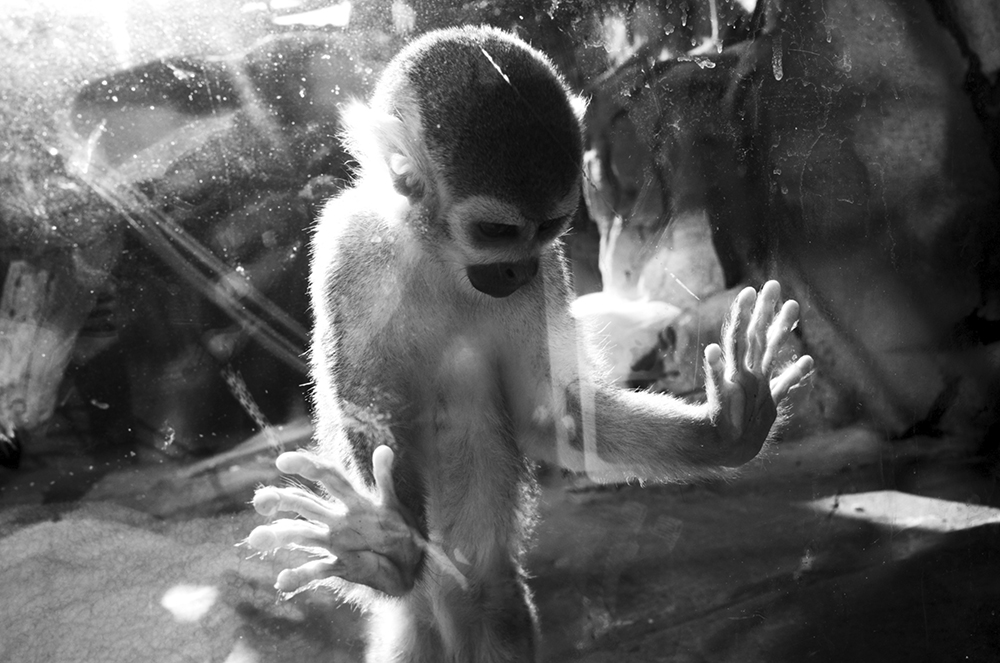
© Richard Provencio, Untitled, 2023
I see making books as analogous to making a music album. Someone who might like one of the songs enough to get the lyrics tattooed on their butt is probably the perfect person to buy the framed lyric sheet (which in this case would be a limited edition photo print), but most people are probably fine listening to the album every now and again. So, if all I had available were these relatively expensive framed lyric sheets, I’d be losing a lot of potential audiences who might be more into an album because it has more to offer.
Now that I’ve started making books it has opened my heart and my mind to focus more on that aspect of creation. Initially I was selling solo prints, because that’s what I thought art photographers had to do. It took time to realize that I am free to do whatever I want, so I’m trying to lean into various things that excite me these days.
While I’ve shown in both commercial and non-profit galleries, there’s all kinds of competition for these scarce opportunities. It’s honestly what got me into projecting my images with other photographers. When I saw Tadashi Onishi from the VoidTokyo collective in a YouTube video doing his street projection Rozou Project it was eye opening. And I thought, why wait for limited wall space to show work.
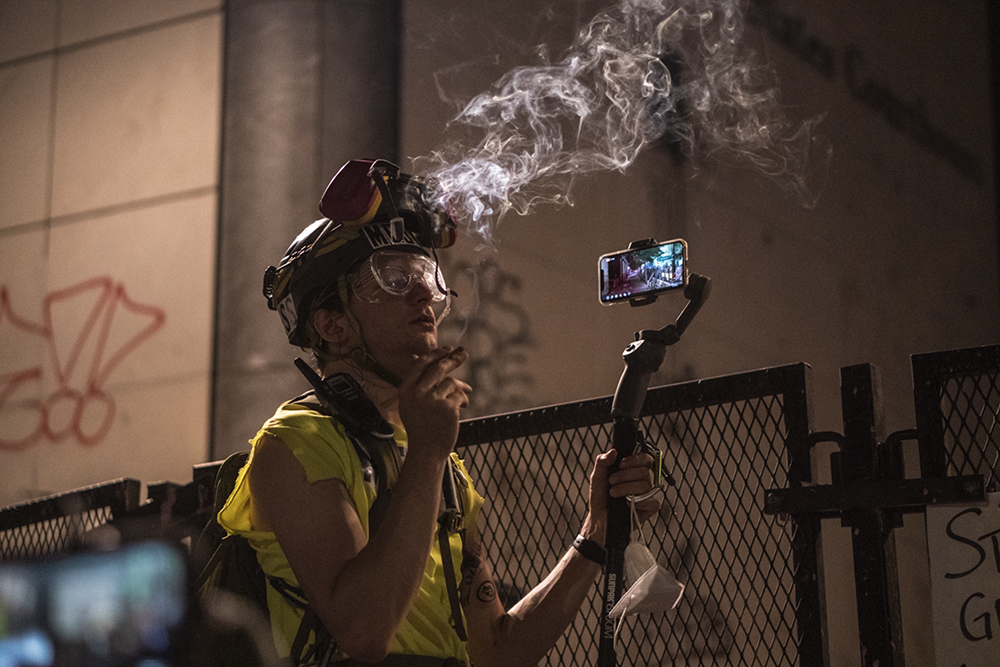
© Richard Provencio, Untitled, 2020
Some of your series capture wide-ranging genres and fields of activities. For instance, work you produced during the Covid pandemic aligns with social documentary work.
In 2019 I transitioned from a full-time job as a CPA into an occupation called documentary family, where you are embedded within a family for half to a full day to record their dynamics. I would be there 30 minutes before the kids woke up and leave 30 minutes after they went to bed, with everything in between. For about 15 hours of work, it’s a wedding photography pay scale with none of the stress. However, the shift between jobs happened during the full force of when the pandemic hit. So, my new pragmatic photo career was shattered, because people didn’t want strangers in their homes at the time due to social distancing and other issues. So, I pivoted, thinking why don’t I shift from family photojournalism to news photojournalism? Because there was civil unrest during the Black Lives Matter movement, it became a catalyst for documenting history and possibly making this practice a new career.
Then I learned that photojournalism, unlike what a lay person might view as an objective practice, is just like anything else. It’s not objective, in terms of editors, deadlines, and how stories can be presented. As a freelance photographer submitting work on assignment, you have little control over how your images are used. Some stories just don’t fit within a 24-hour period that ends with a 5 p.m. deadline.
I think what I learned after this experience was that I was done compromising my art or making work that I didn’t want to make, or have people tell stories with my work that didn’t jive with me. In turn, this led me to want to self publish on my website. When I describe myself these days, I typically say that I’m kind of like a street photographer and kind of like a documentary photographer, but I’m starting to hate those terms because of some of the baggage attached to them. I don’t claim to be a photojournalist, but some of the work is adjacent to that.
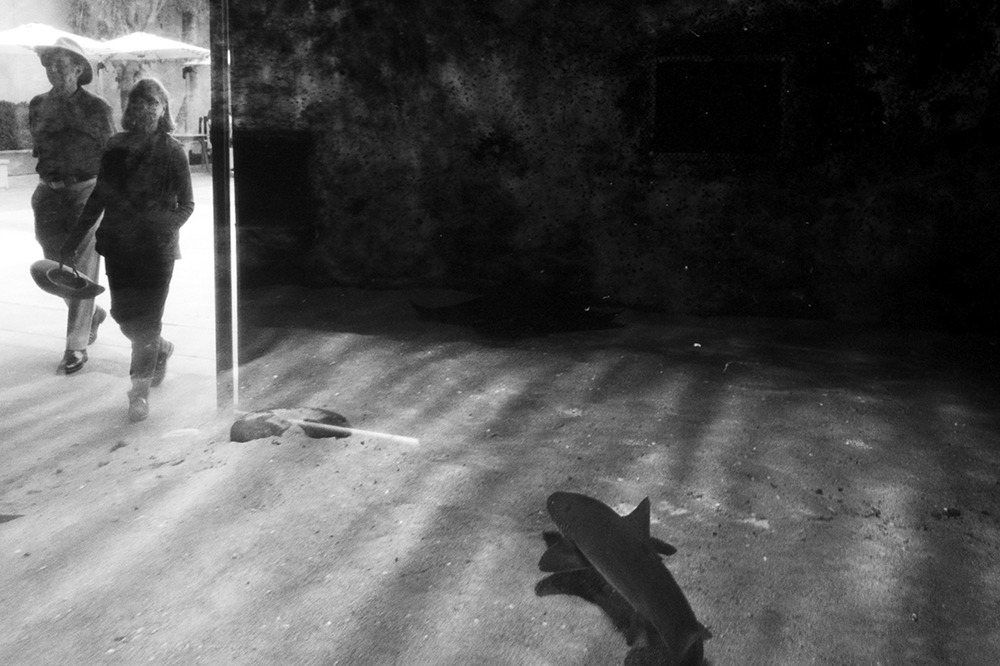
© Richard Provencio, Untitled, 2024
How long do your projects usually take?
How much time you got brother? Kidding, of course, but it really depends. I’m always taking pictures. What can take time is deciding how to group or organize the work in a way that feels like it’s ready to be born into the world. For example, my first book, ric pics Vol 1: Loosey Goosey, was a time-based project. I built an arbitrary container, where the book would feature 100 of my favorite pictures that I had taken over a one-year period. Since the pictures were already done, it was just a matter of culling, sequencing, and doing logistical tests for different printing options, which in turn happened easily within a span of three months. Conversely, I’ve been working on a reprisal of Gary Winogrand’s book, The Animals, since around 2020, and the project just hasn’t quite felt ready for producing something yet.
For my taste, I love retrospective books. Especially when all the work is just kind of mixed up in no particular order, just incredible photos where there’s something exciting and different on every page—like Elliott Erwitt’s book Personal Best. Combining images in this way goes against the conventional wisdom—which would be that one needs to partition work into specific thematic segmented projects—but I see the value of dynamically combining imagery in these looser ways. To me, it better depicts a [photographic] life. Everything happens all the time, life can be an absolute chaotic mess. The organizing of this mess is not where I find the beauty, it’s the careful framing of each individual moment, or presence that I seek. This is where I feel photography can transcend.
How did you come up with the branding, use of fonts, etc. that identifies your projects?
It’s just a very low-fi aesthetic. It’s not even a font, it’s just my handwriting from a digital tablet. I’ve been studying graphic design, color theory and composition principles that I’ve learned in photography. So, it has an anti-aesthetic quality to it and it’s easy. Since I like to draw and doodle, I thought why wouldn’t I just use my own handwriting. Particularly on my crit group flyers, where I’m filling in negative space with lettering, it would be a lot more work to manipulate and stretch fonts and texts, versus me just drawing on images which takes 20 seconds to achieve what I’m after. I do like that this gives things a personal touch.
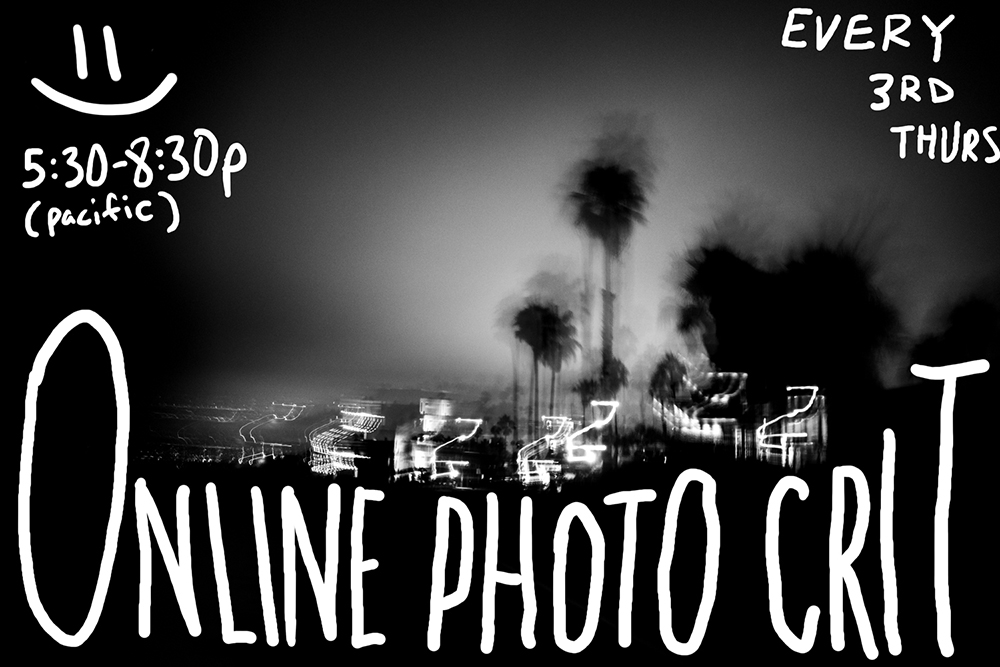
© Richard Provencio, Untitled, 2025
For instance, if no one else was designing announcements for Medium Photo, a San Diego group that I am involved in, then some of the information ends up including my design aesthetic.
How did you become involved in Medium Photo?
Medium is an organization that I learned about in 2018 or 2019, but sort of forgot about until 2022 after my exploration of photojournalism, which shifted for me during that period towards identifying as an artist. This led me to seek out organizations that focus on photography as an art form, and I was like, “oh yeah, what about that Medium Group.” Taking some classes at Palomar College around 2017-2018 was my first introduction to critiquing work, which I considered an incredibly valuable resource, and been thirsty for this ever since.
When I was first introduced to Medium, I kept hounding them about organizing some sort of critique for members, which eventually resulted in the opportunity of co-facilitating a quarterly Medium Photo program called Present Tense, with my now friend Louise Russell. In this program, artists’ works are selected by an invited juror, and it culminates in a conversational event between the artists and the public. Shortly after working on Present Tense, I was invited to join the board at Medium. Where I think I can provide value to an organization, is that I’m a doer and like to make stuff happen. And I believe that feedback is one of the most valuable assets that I photographer can have. So I’m grateful to be working on a program where this is a big part of the experience.
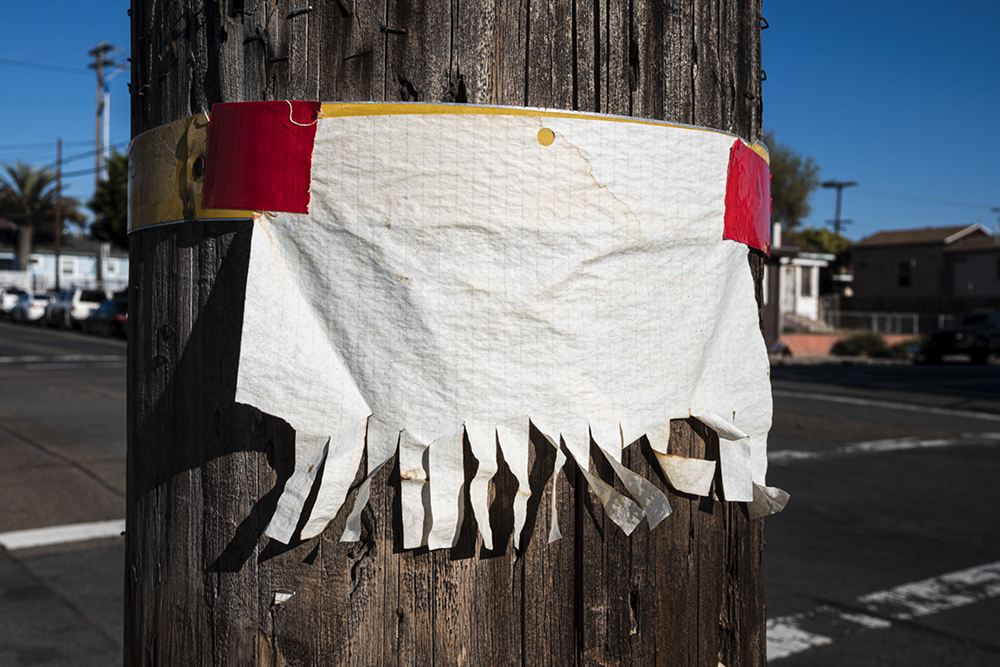
© Richard Provencio, Untitled, 2021
What level of visual literacy and art historical knowledge would you say is useful in understanding or appreciating your work?
The way that I try to make my work is like this: I want to make images that don’t need any wall text, artist statement, or written statement at all. I don’t think the images necessarily need to communicate explicit messages all the time. In fact, I like open-ended pictures just as much as I like pointed ones. But to me, it all has to be within the frame. That’s it. There are times when I’m making an image that, to me, will have a clear reference or homage to one of the masters that a lay person might not understand, but the general information the image is communicating still lands. The trained viewer might see something more, like a bonus or an easter egg in a film. If you’re paying attention, then you get extra fun and excitement. But if you’re just watching the movie and you don’t notice the main character from a previous film swimming through the final credit sequence, that’s cool too.
Although the actual answer is probably little to none, the more visual literacy you have and photo history you know about, the more you might appreciate what I do. Though if you go too far, you might see through all my tricks and be over it. Who knows?!
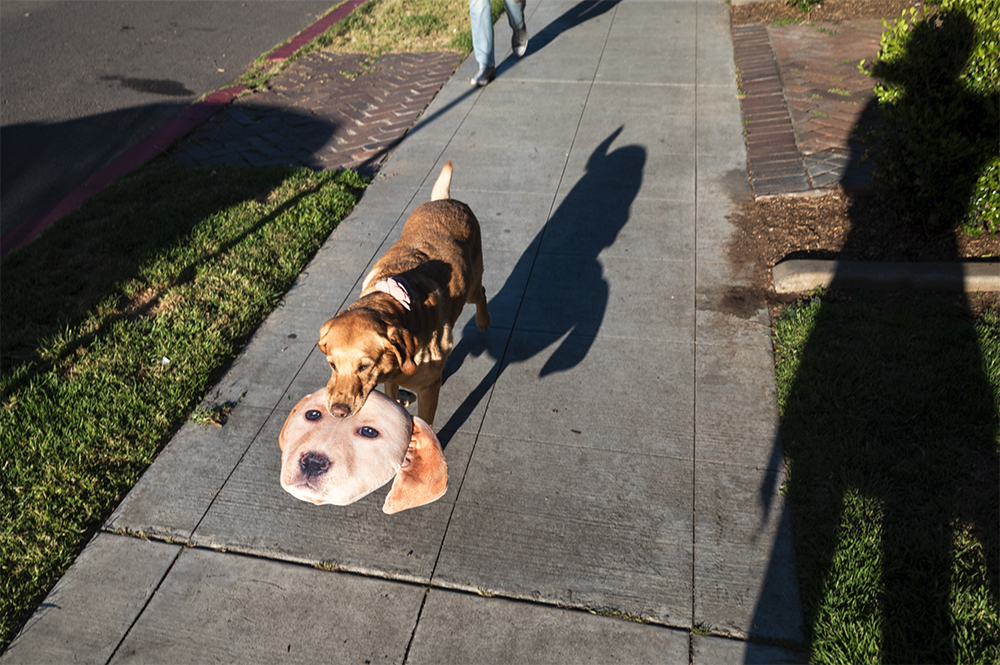
© Richard Provencio, Untitled, 2023
I can see how the pacing, timing, and structuring of comedic and other narratives might carry over into photographic media and presentation values.
There was an adjustment for me. Originally, I thought that I couldn’t have absurdist copy on my website if I wanted to be a serious photographer. If I’m this comedian, slash, photographer guy, then my work wouldn’t be taken seriously. What I’ve learned since, is that these are all forms of personal expression, which all goes into the same blender. The better I get at multi-layering the media that I use to express myself, the more true it becomes.
Something I absolutely love about my photography is that it’s based in reality, so when I share an image, the underlying questing that I am asking the viewer is, can you believe this. Aren’t these details of real life wild!? An in that way an image from real life, just by way of framing, or composing, or being present during a chance encounter can produce a kind of magic trick. And who doesn’t love a good magic trick?
Posts on Lenscratch may not be reproduced without the permission of the Lenscratch staff and the photographer.
 Estudio EA